
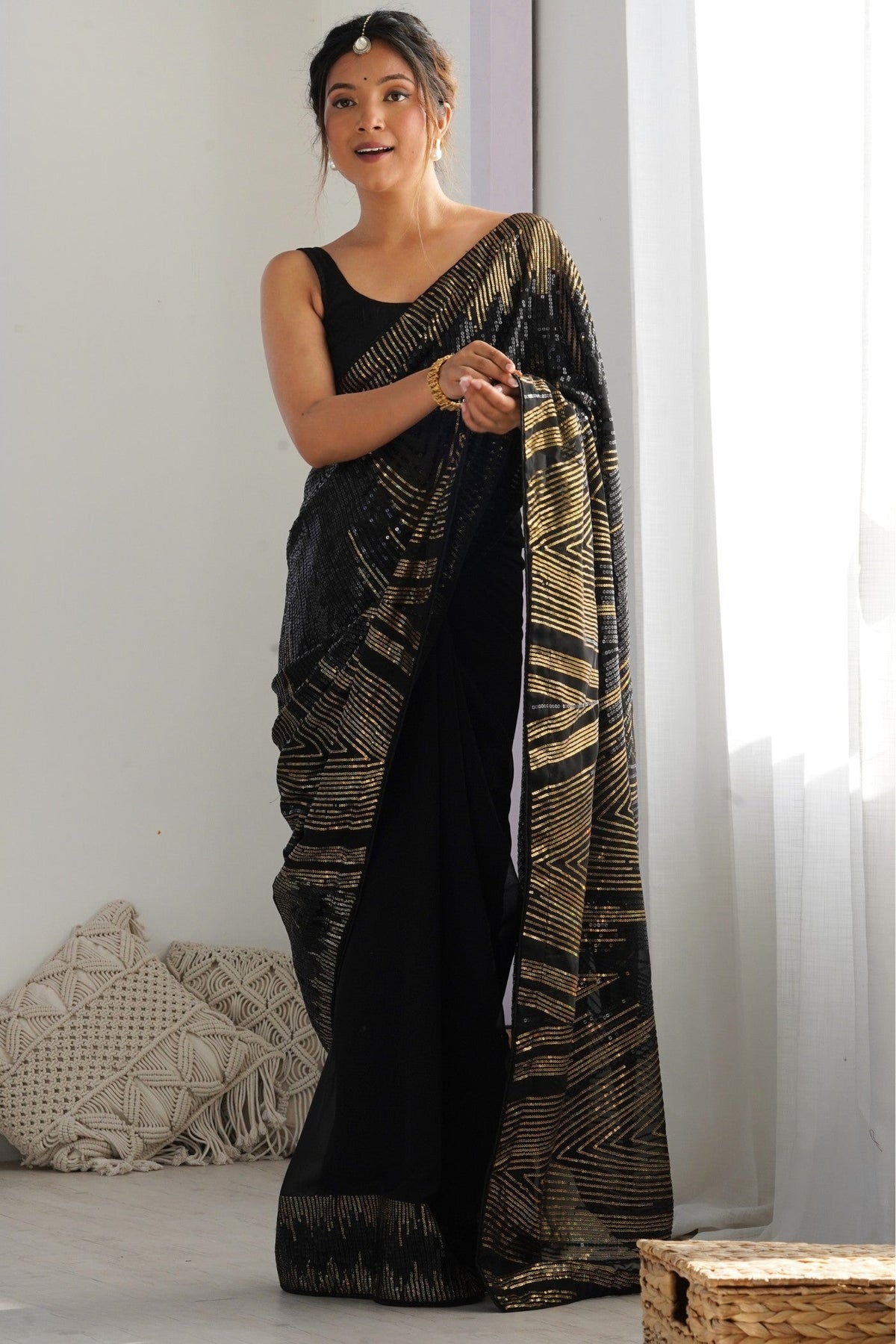
Butterfly Pallu Drape: How to Get the Fanned-Pleat Look, Step by Step (2026)

The butterfly pallu drape is a standard saree drape with one change: instead of five or six broad pallu pleats, you make twelve to sixteen very narrow ones, roughly an inch to an inch and a half each, and fan them across the shoulder so they open like wings. It takes two pins, not one. And it only works on a fabric light enough to hold a thin pleat without collapsing — georgette, chiffon, organza and satin crepe do it; a Kanjivaram will not.
That last part is the bit most tutorials skip, and it is the reason so many butterfly drapes look flat in photos. Here is the whole thing, properly.
What actually makes a butterfly drape a butterfly drape
Pleat count and pleat width. That's it. A normal Nivi pallu uses five or six pleats around three inches wide, laid flat on the shoulder. A butterfly pallu triples the count and halves the width, then spreads the top edge into an arc instead of stacking it.
Do the arithmetic on a 5.5-metre saree and it makes sense: the pallu section is roughly 1 to 1.2 metres of that length. Split into 3-inch pleats you get six. Split into 1.25-inch pleats you get fourteen — enough individual folds that fanning them reads as a shape rather than a mistake. Fewer than ten and it just looks like a badly pleated pallu.
The other half of the equation is weight. Our georgette and organza sarees sit in the 380-480g range; a woven silk saree runs 700-900g (we broke the full range down in how much a silk saree actually weighs). A 1.25-inch pleat in 900g of Kanjivaram silk has too much mass at the fold — it drops straight down and the fan closes within about ten minutes of wearing. In 400g georgette the same pleat stays open all evening.
Step by step: the butterfly pallu, in 7 steps
1. Start with the base drape as normal. Tuck the plain end into the petticoat at the right hip, wrap once around, and bring the fabric across the front.
2. Keep the waist pleats minimal. Five slim front pleats, not seven or eight fat ones. The butterfly look is a lean silhouette — bulk at the waist fights it. Tuck them in slightly to the left of the navel.
3. Measure the pallu before you pleat it. Take the loose end over your left shoulder and check the drop first — pallu tip somewhere between the back of the knee and mid-calf. Pleat before checking and you will end up unpinning everything.
4. Make the narrow pleats. Working from the pallu tip toward the shoulder, fold in 1 to 1.5-inch pleats, keeping every fold the same width. You want 12-16. Hold them together at the top with your thumb and forefinger — do not press them flat.
5. Pin at two points, not one. This is where most attempts fail. A single pin makes the pleats pivot around it and collapse into a bunch. Place the first pin at the shoulder seam and the second about three inches down the arm, both catching only the top two millimetres of the pleat stack and the blouse seam. Two anchor points hold the arc.
6. Fan the top edge. With the stack pinned, use your fingers to splay the upper edge of the pleats outward and slightly backward, so the top of the fan sits wider than the bottom. This is the wing.
7. Lock the fall. One tiny pin about eight inches below the shoulder, on the inside, stops the fan from folding shut when you raise your arm. If you're nervous about pin marks, our 4-pin method for pinning a silk saree without holes covers the safe placements.
The opinion: this is the one drape where a ₹4,000 saree beats a ₹40,000 one
Most saree advice runs in one direction — heavier weave, better drape, more presence. The butterfly pallu inverts it. The drape is defined entirely by how sharply thin fabric can hold a fold, so a sequinned georgette at around ₹4,600 out-performs a heavy pure-silk saree that costs ten times as much. If you own one good georgette or organza and one heirloom Kanjivaram, the georgette is the correct choice here, and it isn't a compromise.
Related: this drape is genuinely unflattering on stiff cottons and on tissue with a wiry finish. The pleats splay unevenly and the fan looks accidental. Save those for a classic Nivi.
Two things worth getting right first
A stitched fall changes everything. Georgette and chiffon are slippery; without a fall the pleats travel while you walk and the fan goes crooked by the end of the night. We covered what a fall and pico cost and when they're worth it in saree fall and pico, decoded.
Pick a blouse with a firm shoulder seam. Two pins need something structural to bite into. A soft, unlined noodle-strap blouse gives them nothing, and the whole fan drags the shoulder down.
Shop the edit: sarees that hold a butterfly pallu
All the prices below are our regular list prices — seasonal offers at checkout often bring these lower.
- Pitch Black Georgette Partywear Saree — ₹4,630. Sequin work on lightweight georgette; the fan catches light with every step. The safest first attempt.
- Peacock Blue Embroidery Georgette Saree — ₹4,031. Feather-soft georgette with embroidery kept off the pallu tip, so the pleats stay thin where it matters.
- Powder Blue Organza Designer Partywear Saree — ₹4,535. Organza is naturally crisp, which means the fan holds its arc with almost no coaxing.
- Beauty Pink Organza Partywear Saree — ₹5,480. Sheer with a subtle shimmer; a good pick for receptions.
- Wine Purple Georgette Partywear Saree — ₹4,794. Deep enough for evening, light enough for sixteen pleats.
- Olive Green Georgette Designer Partywear Saree — ₹4,629. The unexpected colour in a room full of jewel tones.
Browse the full georgette sarees and organza sarees edits, or the wider party wear sarees range if you're dressing for a cocktail or reception.
And if you want the other nine drapes side by side — Nivi, Bengali, Gujarati seedha pallu, Nauvari and the rest — our how to drape a saree guide lays out all ten with the body types and occasions each one suits.
Shop the edit by fabric weight
If you want the drape to do half the work, choose by weight rather than by colour. Our satin crepe sarees hold a 1.25-inch pleat about as well as anything we stock, and the lightweight chiffon sarees are the softest choice if you want the fan to move as you walk. Five of the six sarees above sit inside our ₹3,000 to ₹5,000 saree edit, which is where most butterfly-friendly fabrics land.
FAQ
How many pleats do you need for a butterfly pallu?
Twelve to sixteen, each about 1 to 1.5 inches wide. A standard pallu uses five or six pleats at roughly three inches. Below ten narrow pleats the fan doesn't read as a shape — it just looks like an untidy pallu. Sixteen is about the maximum before the stack gets too thick to pin cleanly at the shoulder.
Can you do a butterfly drape with a Kanjivaram or Banarasi saree?
Not well. Those sarees weigh 700-900g and the mass at each narrow fold pulls the pleats straight down, so the fan closes within minutes. The drape depends on light fabric holding a thin crease — georgette, chiffon, organza and satin crepe are the right choices. Keep heavy silks for a classic Nivi or seedha pallu drape.
How do you stop the butterfly pallu from collapsing?
Use two pins at the shoulder rather than one, roughly three inches apart, each catching only the very top edge of the pleat stack plus the blouse seam. A single pin lets the pleats pivot and bunch. Add one small pin about eight inches lower on the inside so the fan doesn't fold shut when you lift your arm.
Ready to try it? Start with a fabric that does half the work for you — browse party wear sarees and pick one light enough to fan.


Leave a comment
This site is protected by hCaptcha and the hCaptcha Privacy Policy and Terms of Service apply.