

How to Pin a Silk Saree Without Holes: The 4-Pin Method, Decoded (2026)

You need exactly four pins to hold a silk saree for a full day, and every one of them should go through a seam or a selvedge — never through open silk. That single rule is the difference between a saree that lasts twenty years and one with a permanent constellation of pinholes across the pallu.
Here is why silk behaves differently from every other fabric in your wardrobe, the four-pin placement that actually holds, and the honest verdict on belts, brooches and "no-pin" hacks.
Why a pinhole in silk never closes (and a pinhole in cotton does)
Cotton yarn is spun from short staple fibres twisted together. Push a pin through it and the fibres shove aside; wash it once and they migrate back. The hole disappears.
Silk is a continuous filament — a single unbroken strand reeled off the cocoon, often several hundred metres long. A pin does not push a silk filament aside. It splits it. Nothing migrates back, because there are no short fibres to migrate. What you get is a small permanent aperture that widens every time the drape takes weight.
Zari makes it worse. Zari is not a thread — it is a fine metallic strip (silver-gilt in traditional weaving, polyester-cored in most accessible modern versions) wound around a silk or cotton core. A pin passing through zari lifts that metallic wrap off its core, and the lifted end catches on everything afterwards. This is why the loose glittering thread on an old saree is almost always in a spot that used to be pinned.
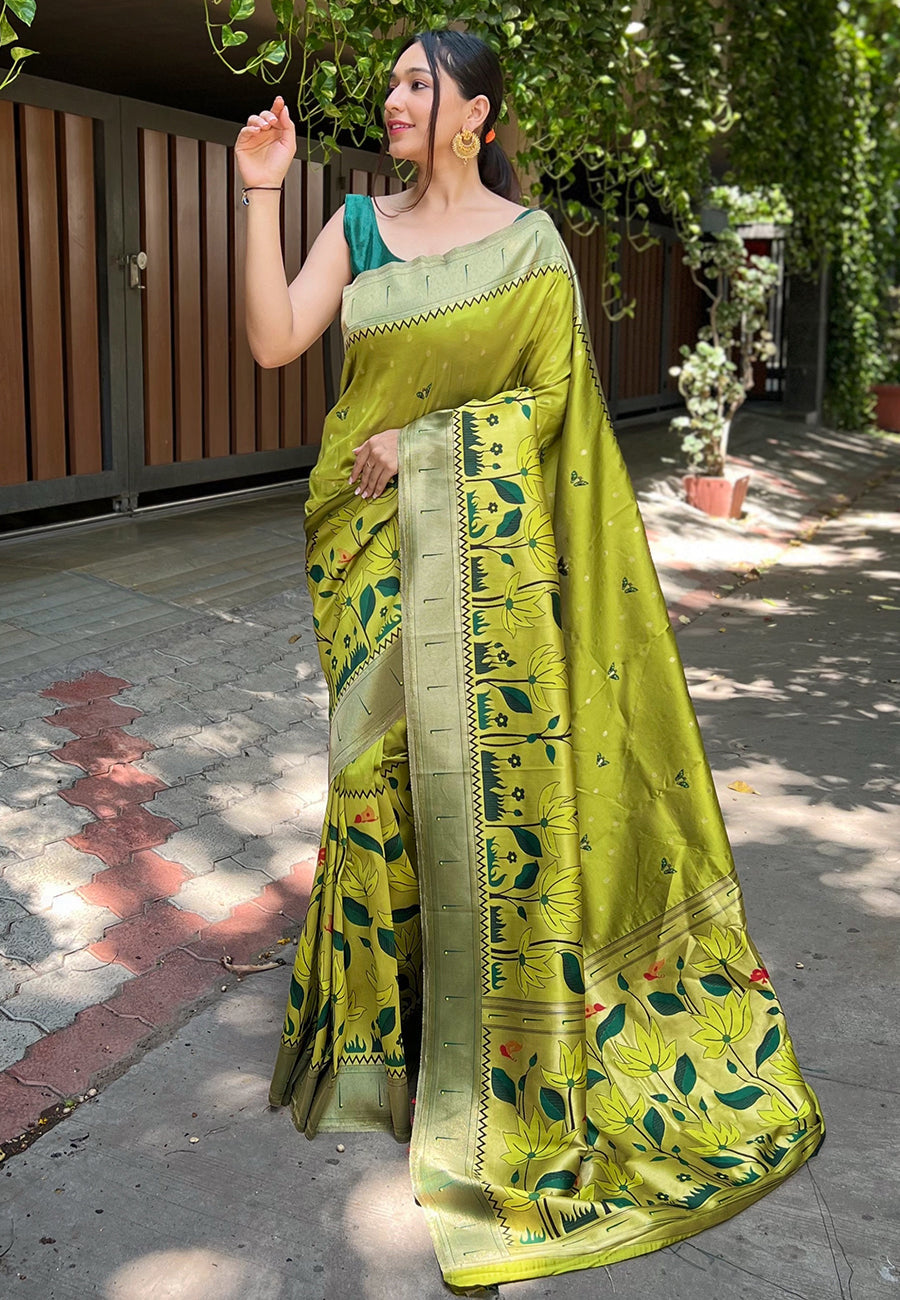
The 4-pin method
Four pins. In this order. Each one goes through a structural layer, not through the face of the fabric.
- Pin 1 — the pleat stack, at the waistband. Gather your pleats, then pin horizontally through the top edge only, catching the petticoat waistband cord. Horizontal, not vertical: a vertical pin runs along the warp and tears down the pleat when you sit.
- Pin 2 — the shoulder. Pin the pallu to the blouse shoulder seam, not to the blouse fabric. The seam is four layers of stitched cloth; the pin has something to bite. Angle it toward your neck so the weight of the pallu pulls against the pin head, not off it.
- Pin 3 — the pallu pleats, at the shoulder. One small pin holding the pallu pleats together, placed 2–3 cm below the shoulder pin, through the folded edges where the layers already overlap.
- Pin 4 — the left waist, through the selvedge. This anchors the upper drape so the saree does not rotate. Always through the selvedge — the finished self-edge of the fabric, where warp density is highest and the weave is tightest.
Use fine dupatta pins for silk, not the thick nappy pins from the sewing box. A standard safety pin is roughly 1 mm at the shaft; a dupatta pin is around half that. On a Kanjivaram border you can feel the difference the moment it goes in — a fine pin slips between warp threads, a thick one displaces them.

Three places you must never pin
- Through the zari border. Pin just inside it, on the plain ground, never through the metallic band itself.
- Through a single layer of the pallu face. If the pin is only going through one layer, it is going through silk with nothing behind it — that hole will show against light for the rest of the saree's life.
- Through tissue or organza anywhere except the seam. Sheer weaves have almost no thread density to absorb the puncture. On tissue, pin only into the blouse or the petticoat.
The belt question: styling, not structure
Waist belts and kamarbandhs are everywhere in 2026, and every second reel presents them as a pin-free alternative. Here is our position, and it is not the popular one: a belt is not a substitute for Pin 1.
A belt holds pleats against the body by friction. Friction works on lightweight crepe and georgette. It does not work on a heavy woven drape — a full Paithani or a bridal-weight Kanjivaram carries several hundred grams in the pleat stack alone, and by hour three that stack has slid a full centimetre and taken your pleat line with it. Wear the belt over the pinned pleats. It looks sharp and it adds a second point of hold. It just should not be the only thing holding you together at a wedding.
Brooches are the reverse case — useful, but they still puncture. A brooch pin is thicker than a safety pin. Fasten it through the pallu pleats where layers overlap, or through a small piece of matching fabric tacked to the underside as a backing patch. Magnetic saree clips genuinely leave no hole, and they are excellent on soft silks and crepes; on anything with real weight they slip.

You already have a pinhole. Now what?
Do not pull at it. Lay the saree flat, lightly steam the area from the reverse side with a cloth between the iron and the silk, and use a blunt needle or your thumbnail to nudge the surrounding warp and weft back toward the gap. On a tightly woven ground this closes a fresh hole surprisingly well. On zari it will not — a lifted metallic wrap needs a darner, and a good one can re-couch it for a few hundred rupees at most saree-alteration counters.
Two more habits that save more sarees than any technique: unpin before you fold, and never store a saree with pins in it. A pin left in a folded saree for a season leaves a rust mark that no dry cleaner removes.
Shop the Edit
Weaves where pinning technique actually matters — and a couple where it forgives you.
- Ochre Yellow Woven Tissue Paithani Saree — ₹5,606. Tissue ground, so pin into the blouse seam only.
- Sycamore Green Zari Woven Titli Royal Paithani Silk Saree — ₹5,999. Titli motif border: keep every pin inside the plain ground.
- Puce Purple Woven Kanjivaram Saree — ₹4,647. A structured Kanjivaram drape that holds its pleat line with just the four pins.
- Prussian Blue Bandhani Gaji Satin Mirror Work Silk Crepe Saree — ₹3,390. Light satin crepe — the one drape where a belt alone genuinely holds.
Prices shown are regular list prices; seasonal offers at checkout often bring these lower. Browse the full Paithani sarees and Kanjivaram sarees edits, or the wider silk saree collection.
New to draping? Start with our complete saree draping guide, then get the pleats right with the 5-finger pleat rule. If your saree still isn't sitting right, the problem is usually the fall and pico, not the pinning.

Frequently asked questions
How many safety pins do you need for a saree?
Four is enough for a full day: one horizontal pin through the pleat stack at the waistband, one through the blouse shoulder seam, one holding the pallu pleats together, and one through the selvedge at the left waist. More pins do not add security — they add puncture points and pull the drape out of line.
Do safety pins damage silk sarees permanently?
Yes, if pinned through open fabric. Silk is a continuous filament, so a pin splits it rather than pushing it aside, and the hole does not close with washing. Pinning through seams, selvedges and overlapping layers avoids this almost entirely, which is why placement matters more than pin count.
Can I wear a silk saree with a belt instead of pins?
On lightweight crepe, georgette or satin, yes — a belt holds pleats by friction well enough for a few hours. On a heavy Paithani, Kanjivaram or bridal-weight drape, no. Pin the pleats first and wear the belt over them; treat it as a second point of hold, not the only one.
Shop by weave — and pin accordingly
The four-pin method shifts with the ground you are draping. If you are choosing a saree around how you like to pin it, start here:
- Sheer grounds, seam-only pinning: browse our shimmering tissue sarees — beautiful, but so low in thread density that every pin belongs in the blouse or the petticoat, never in the fabric face.
- The one weight a belt really holds: our satin crepe sarees are light enough that friction alone keeps the pleat stack in line — which is exactly where the Bandhani crepe above sits.
- Fluid, forgiving pleats: georgette sarees fall softly enough that one fine dupatta pin through the pleat stack does the whole job.
Ready to drape something worth pinning properly? Explore the full silk saree collection.


Leave a comment
This site is protected by hCaptcha and the hCaptcha Privacy Policy and Terms of Service apply.