
Paithani Sarees (पैठणी साड़ी) — Authentic Paithan Weave

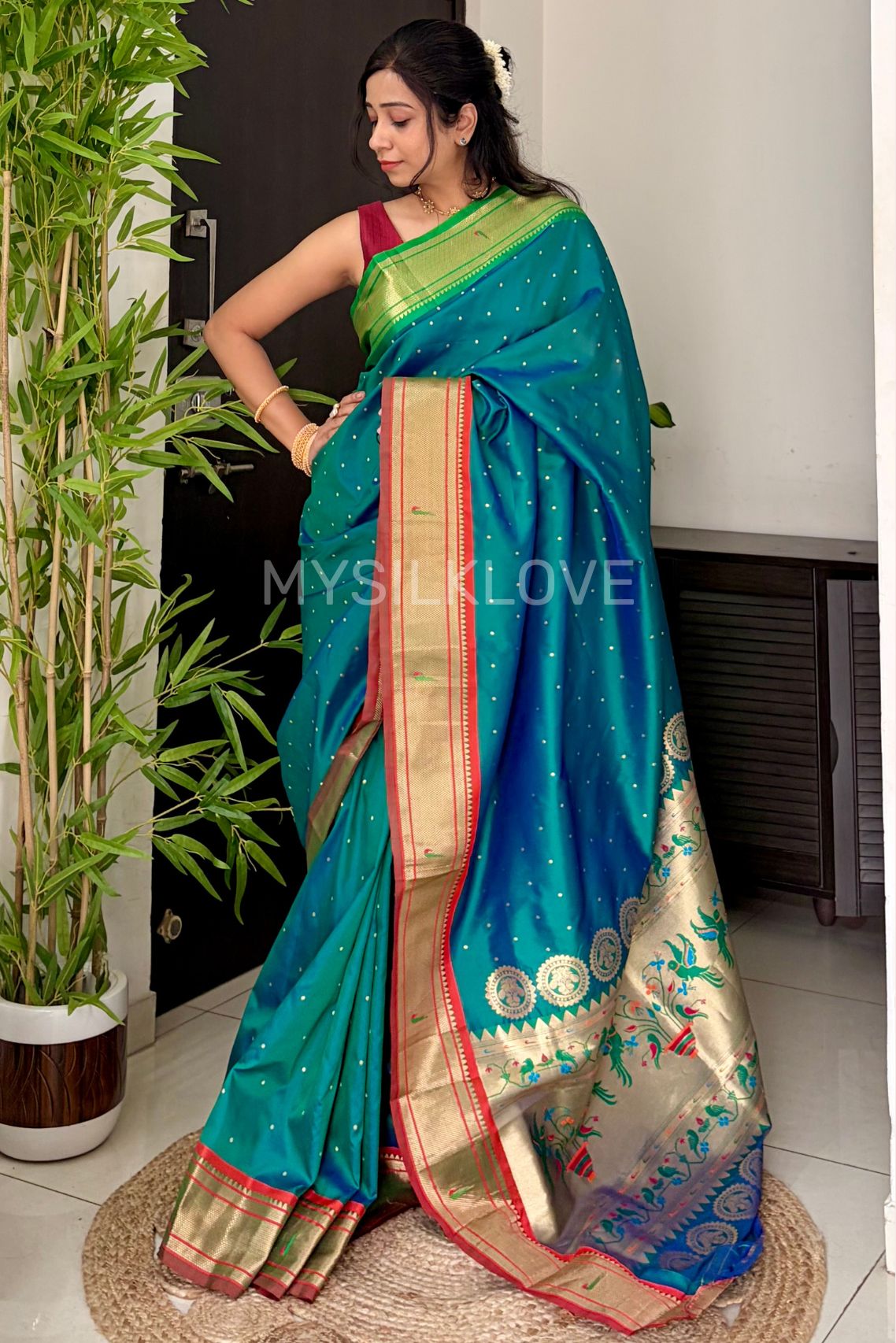
Peacock Green Woven Paithani Saree
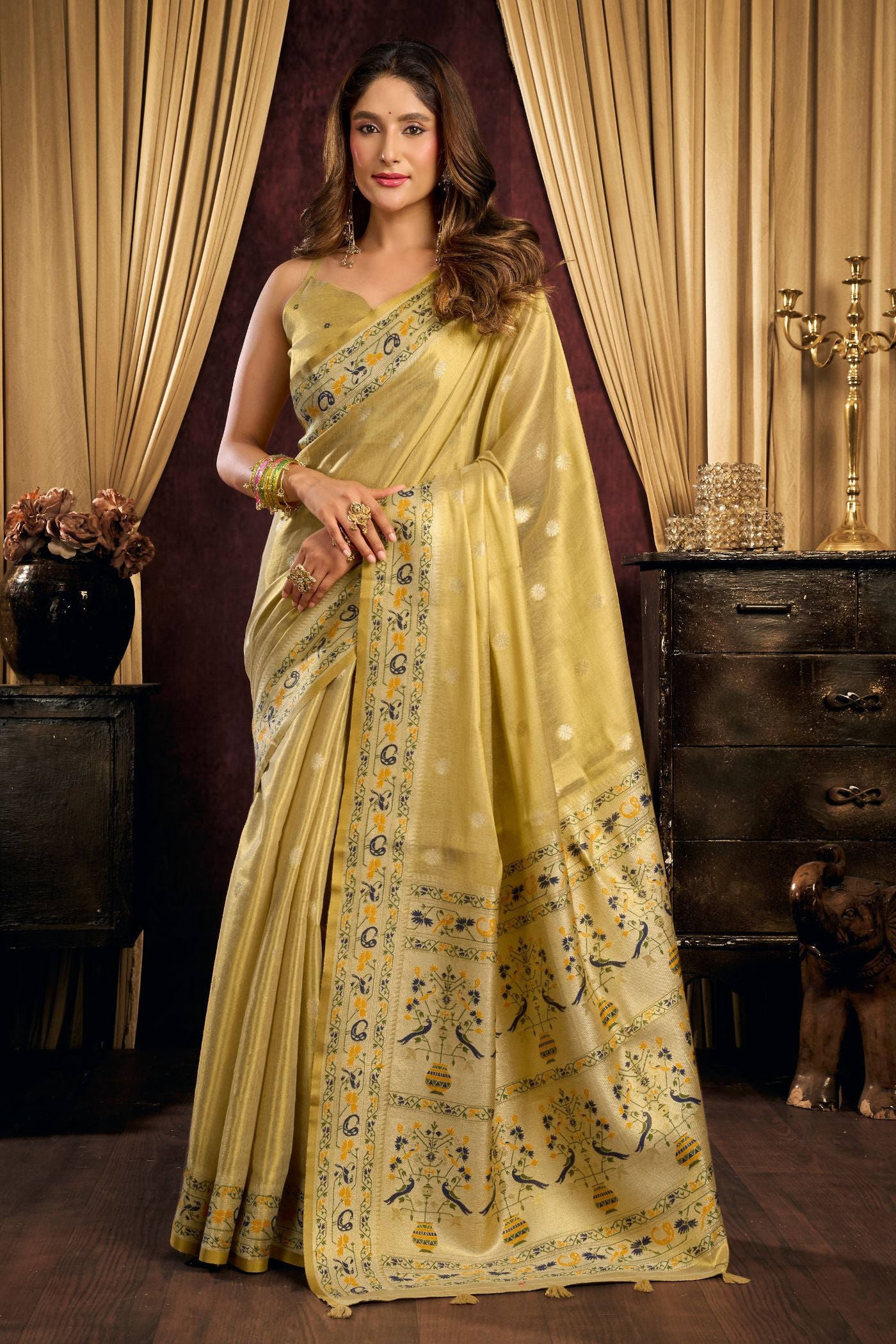
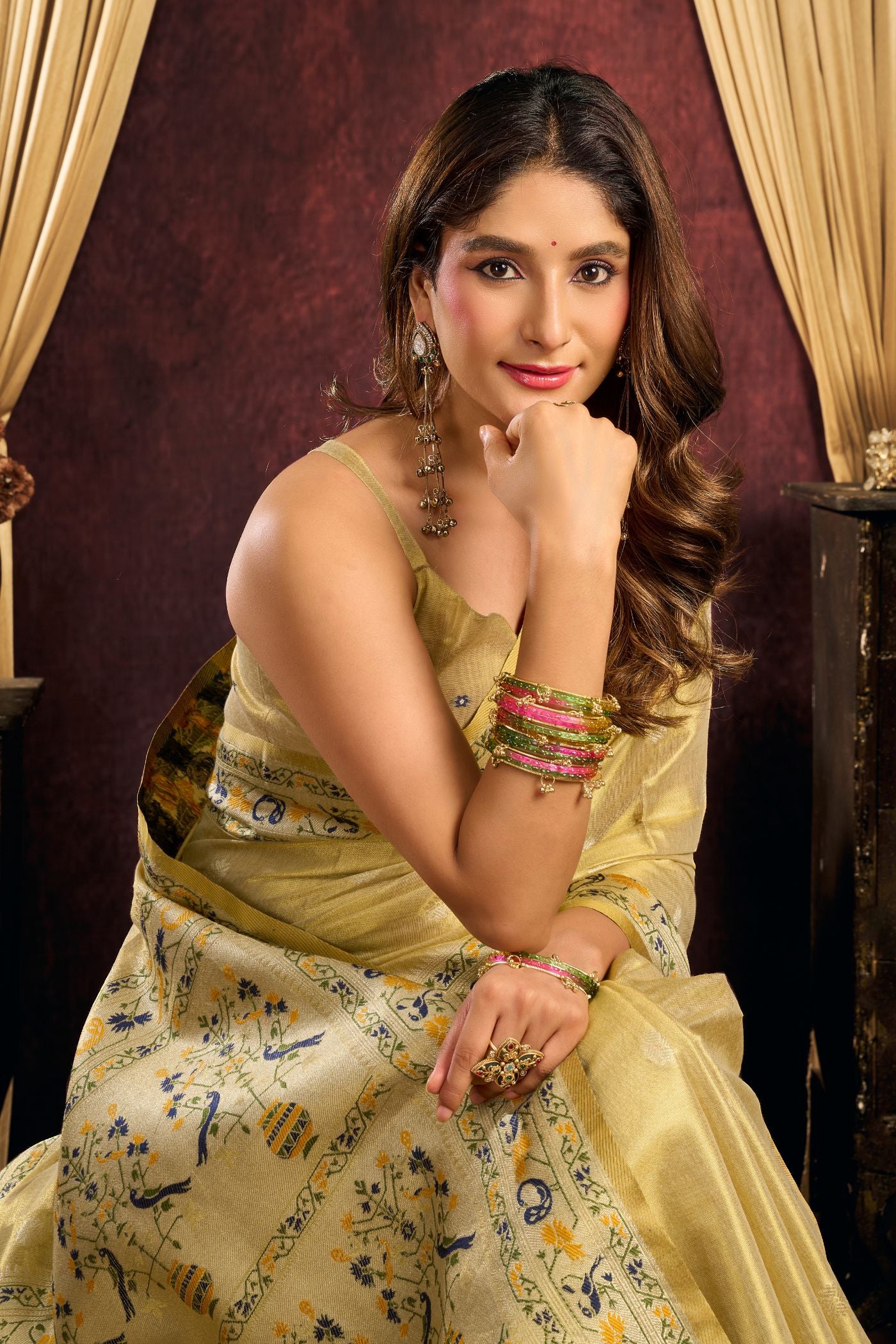
Ochre Yellow Woven Tissue Paithani Saree
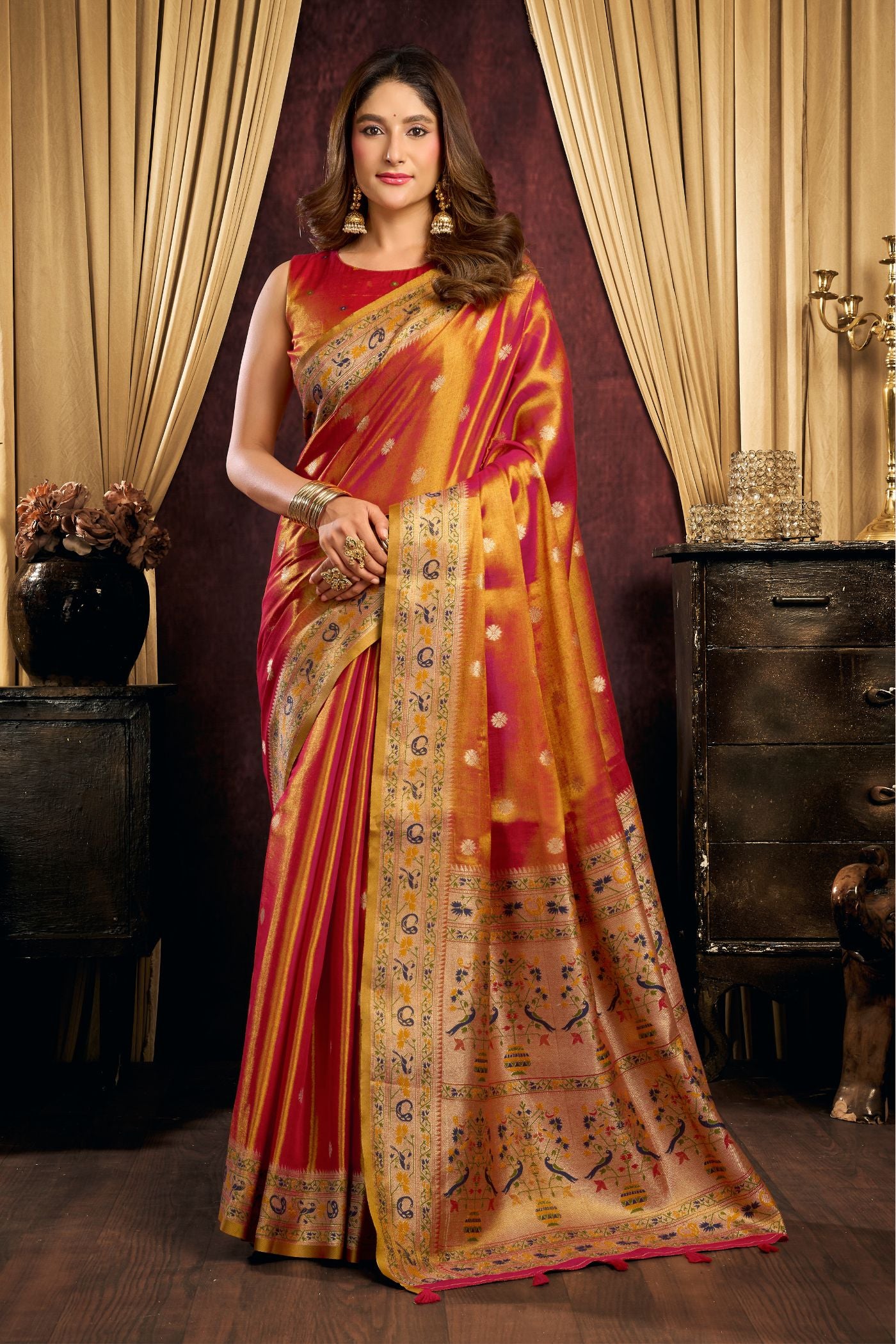
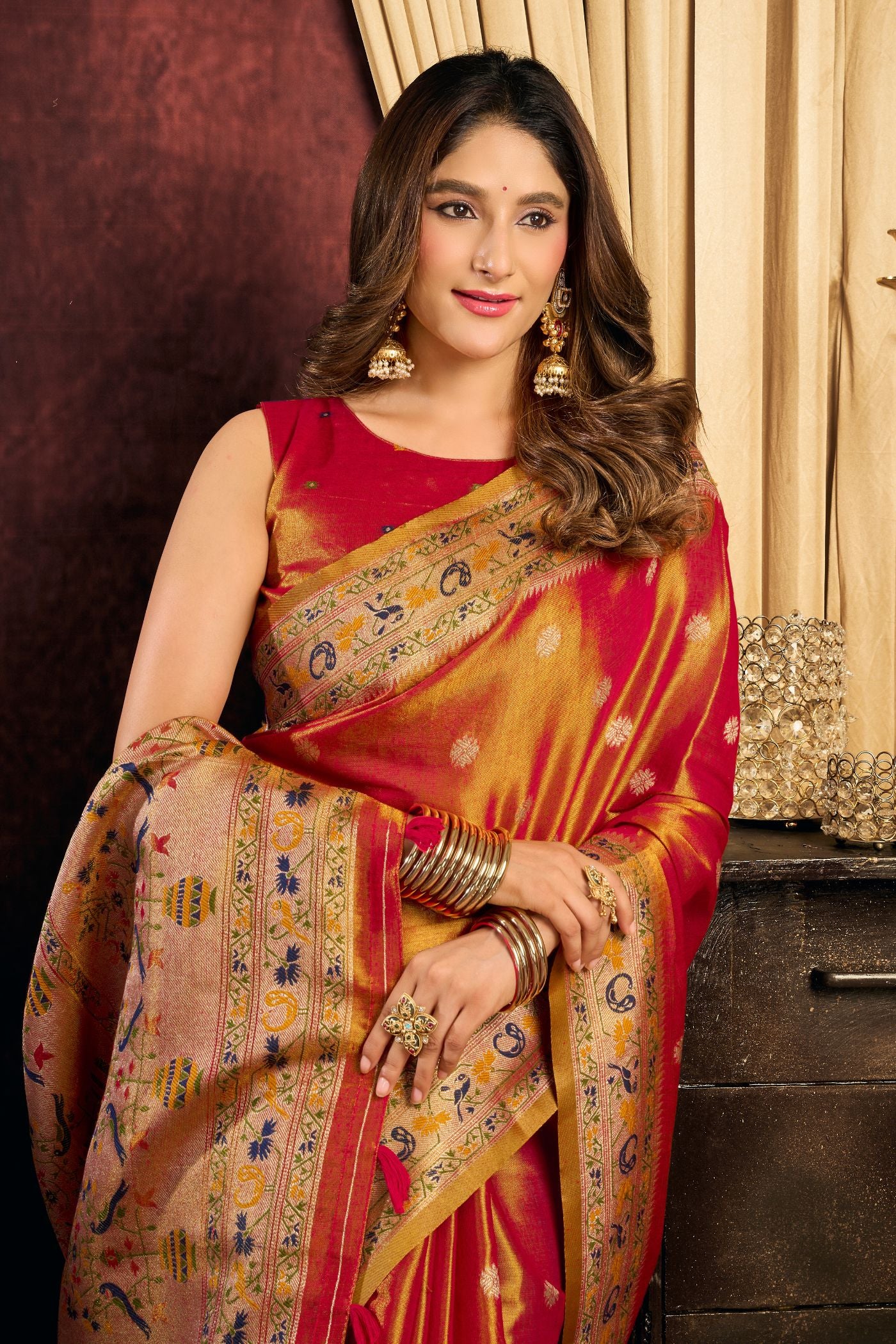
Pumpkin Orange Woven Tissue Paithani Saree
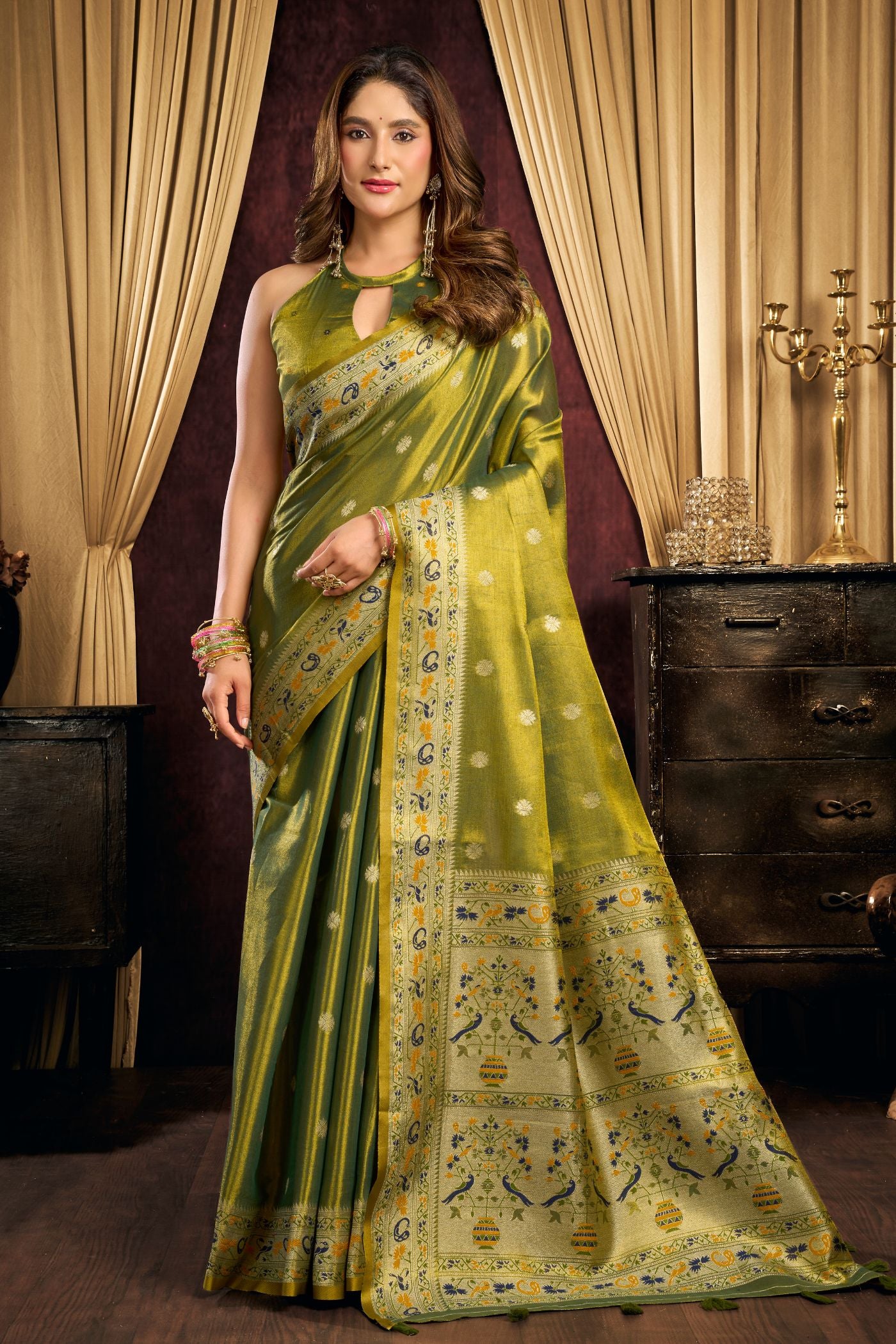
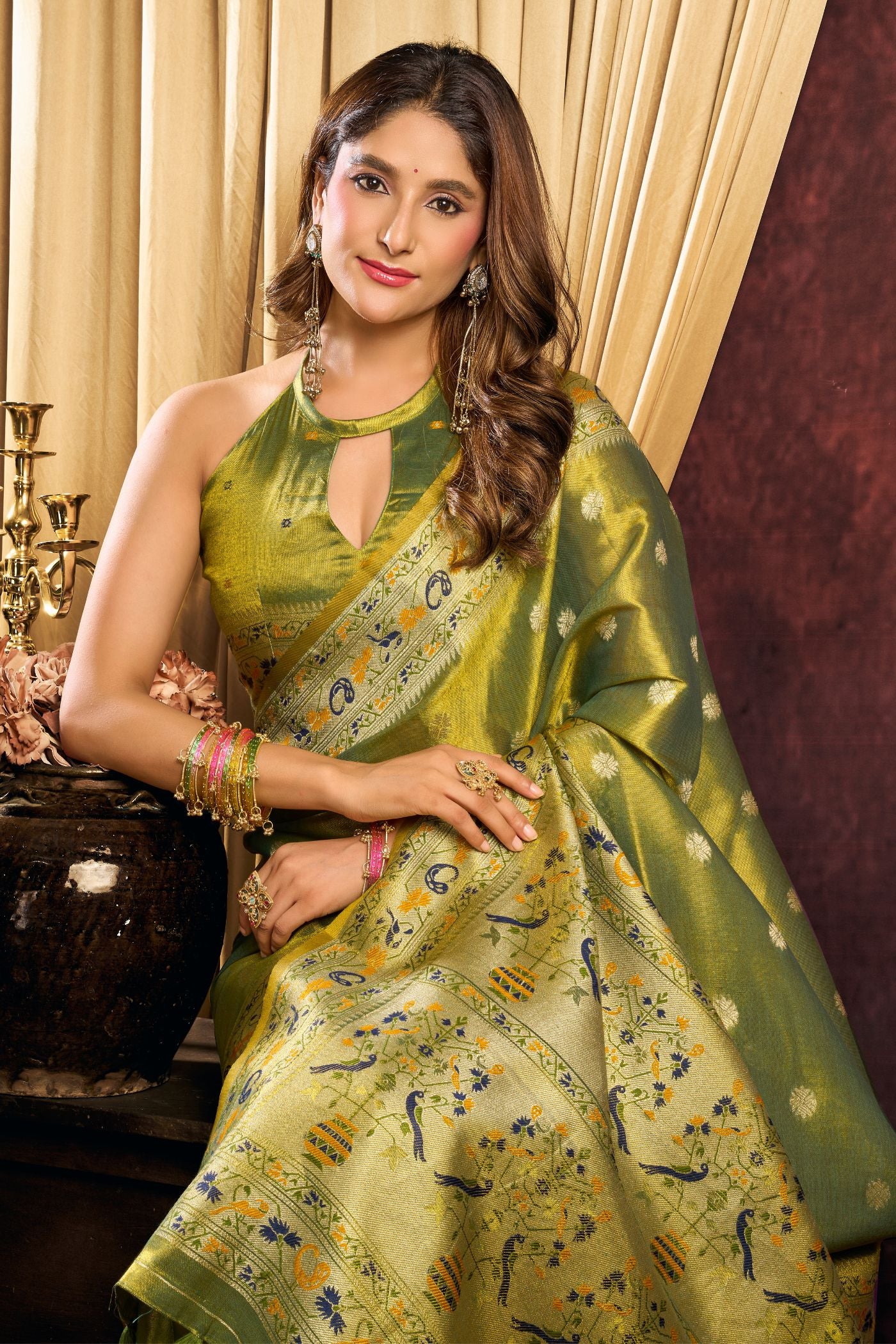
Pistachio Green Woven Tissue Paithani Saree
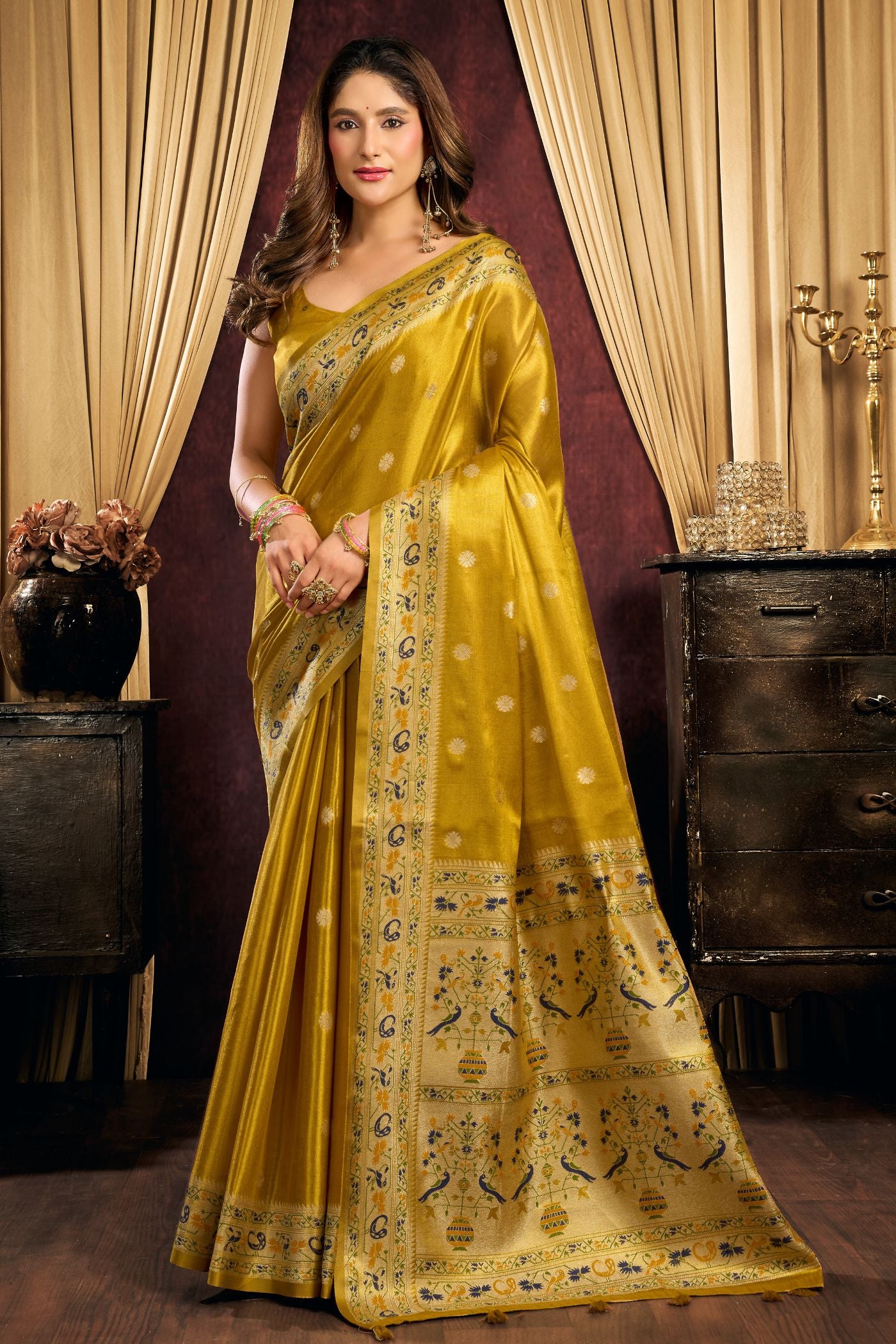
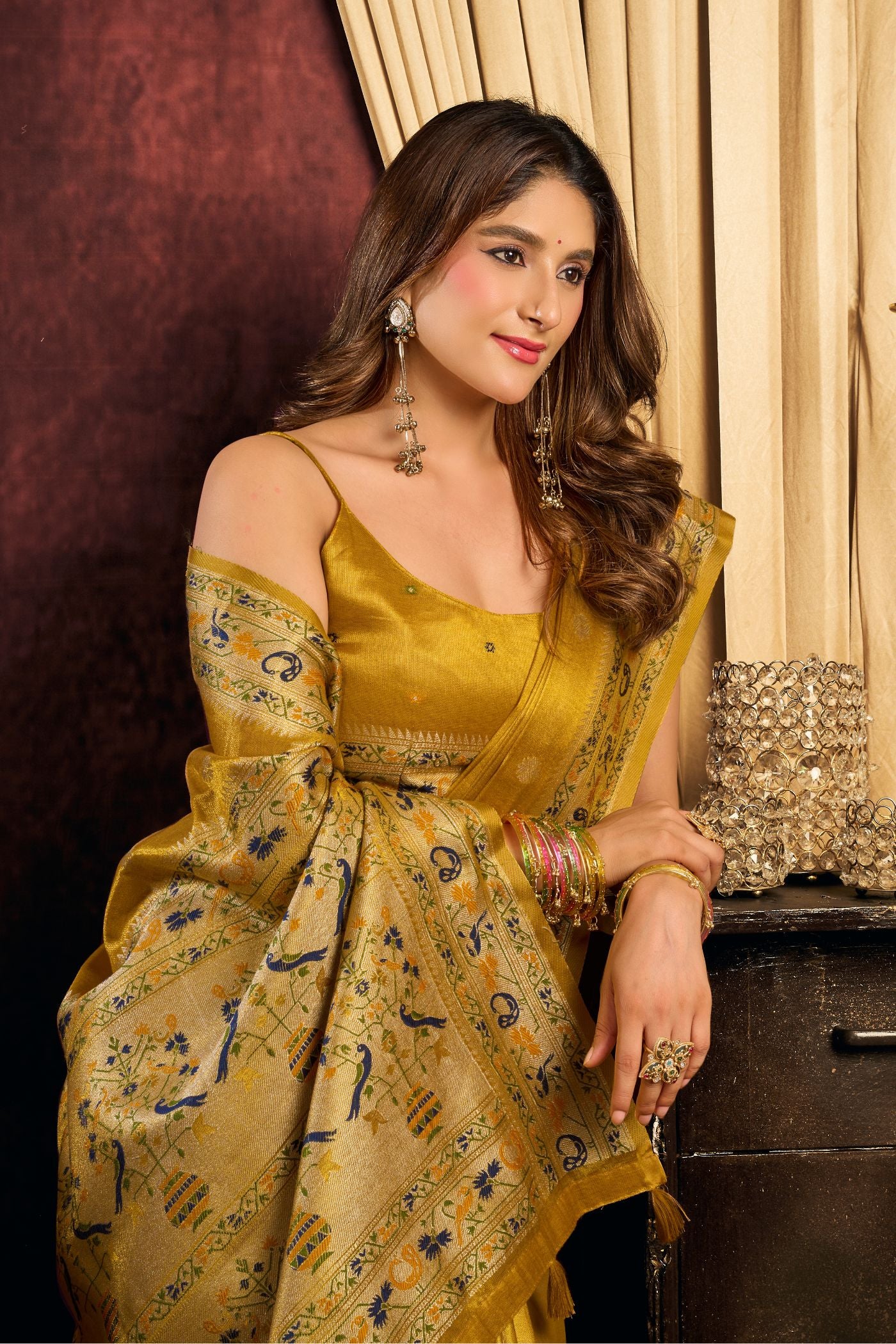
Golden Yellow Woven Tissue Paithani Saree
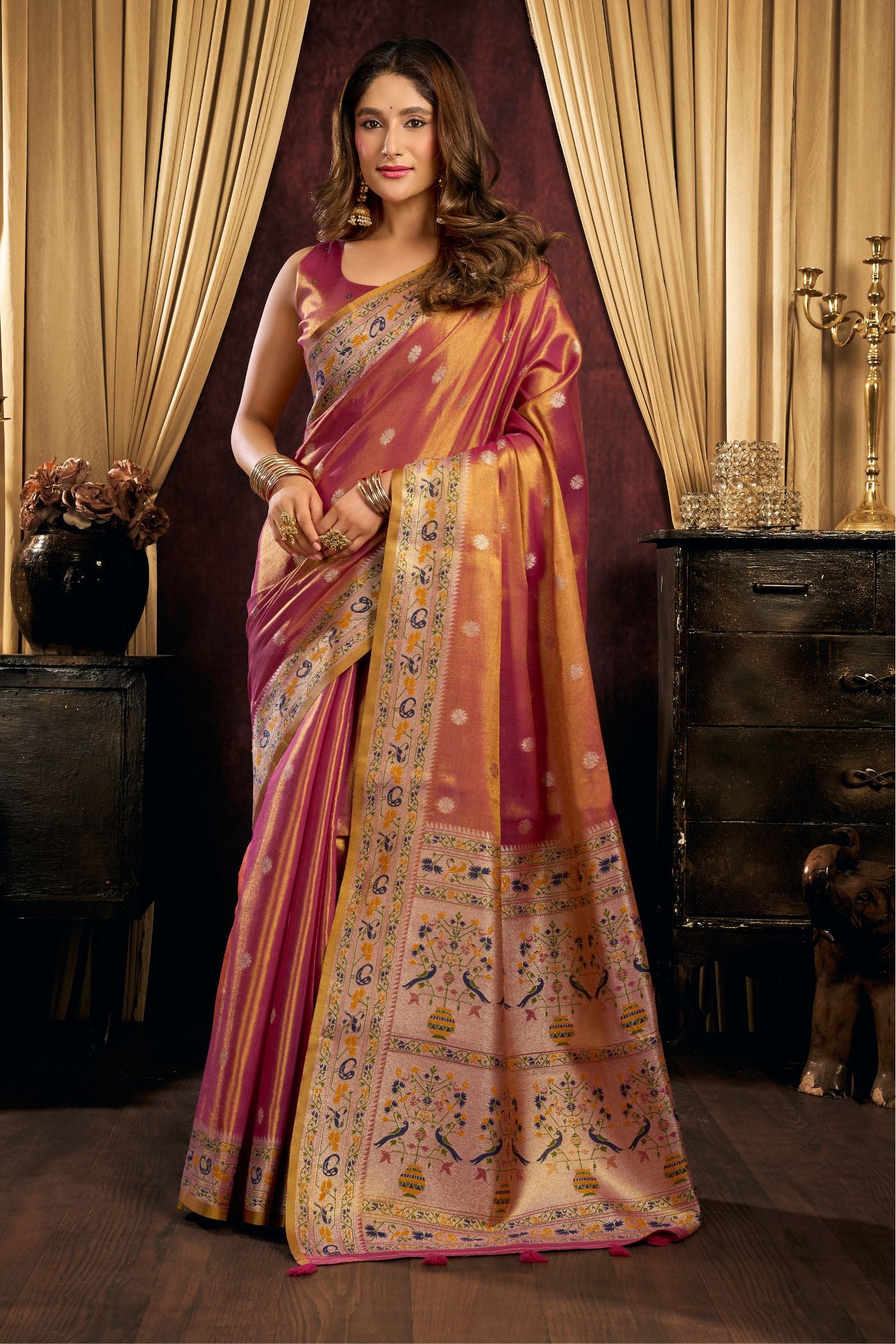
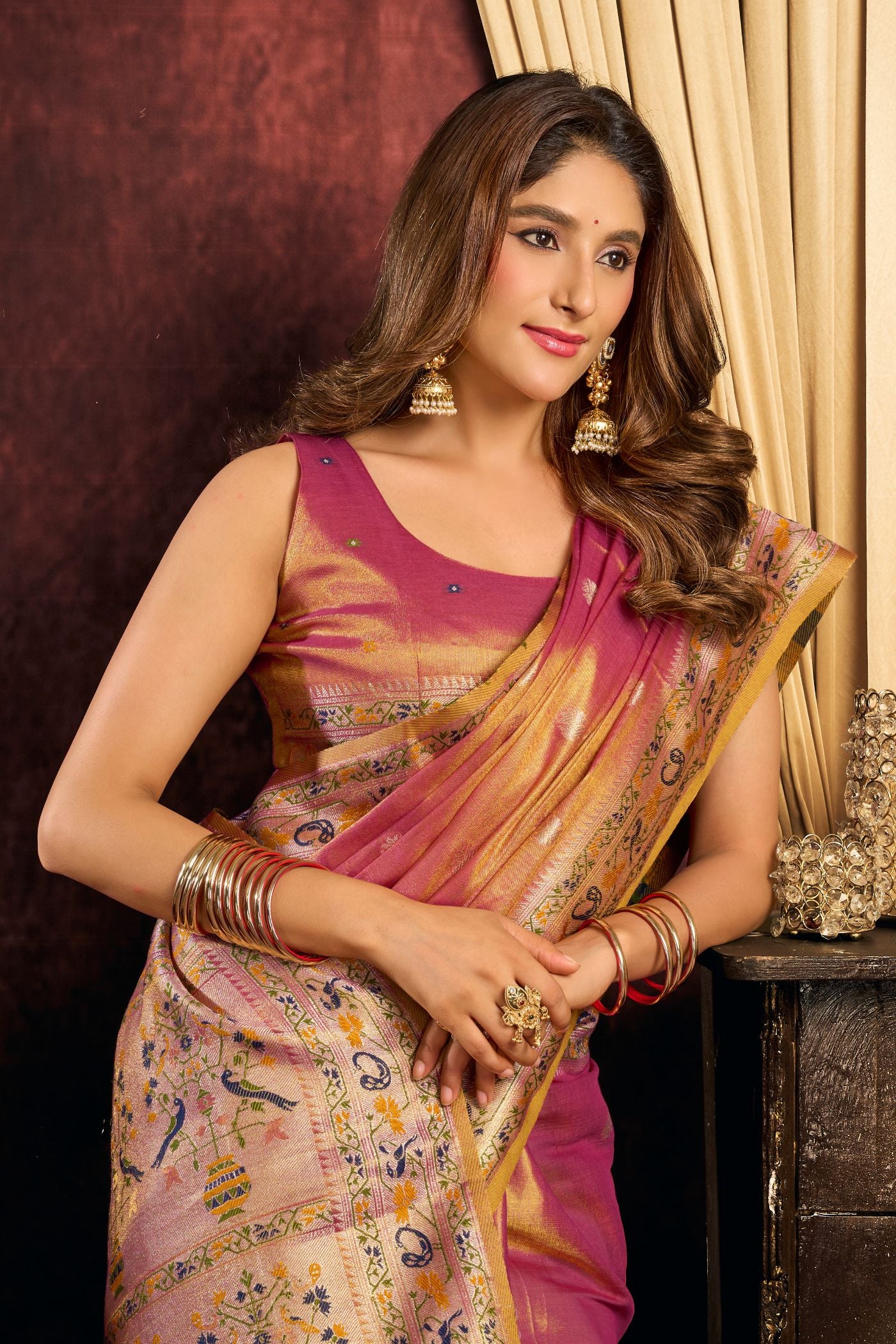
Orange Peel Woven Tissue Paithani Saree
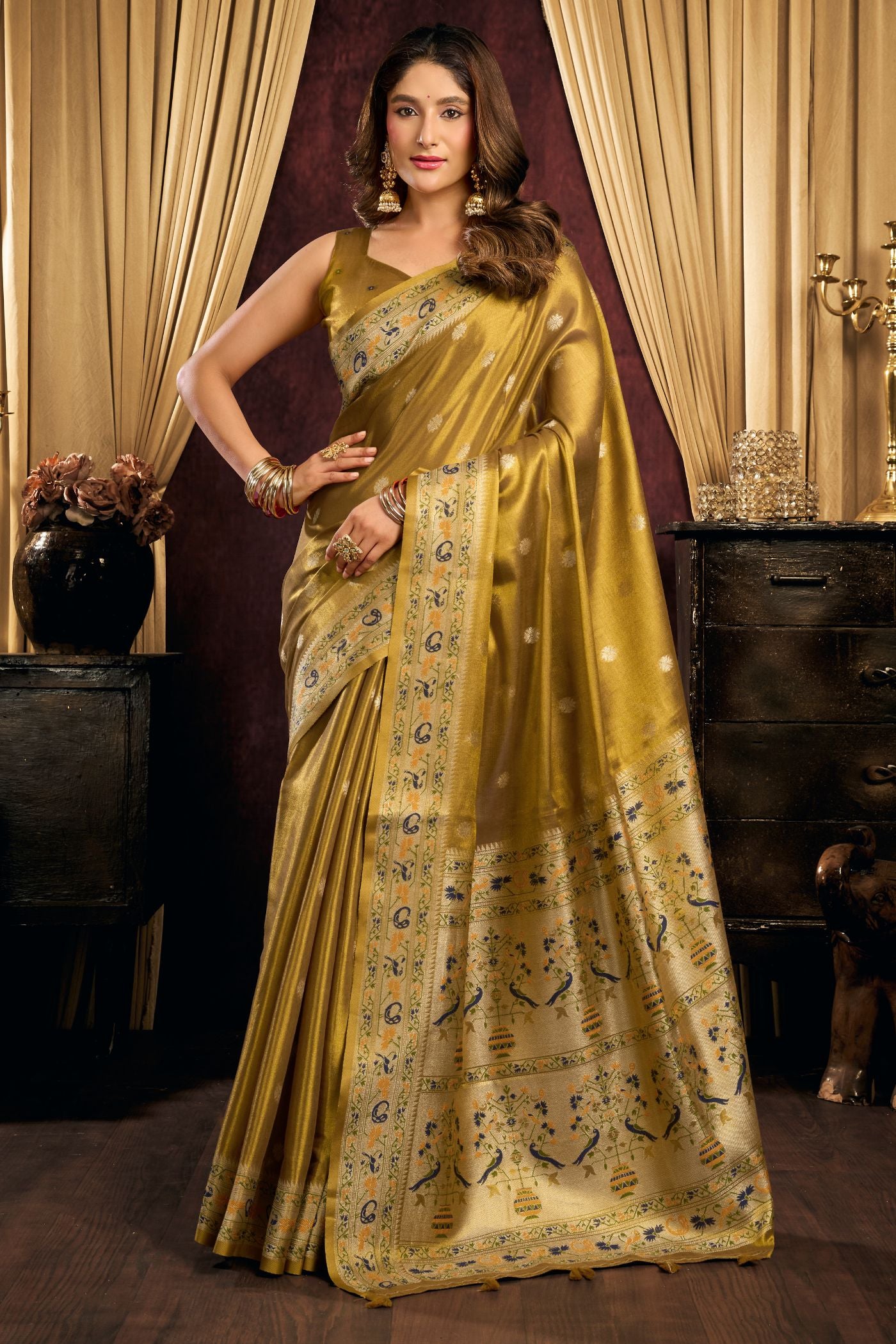
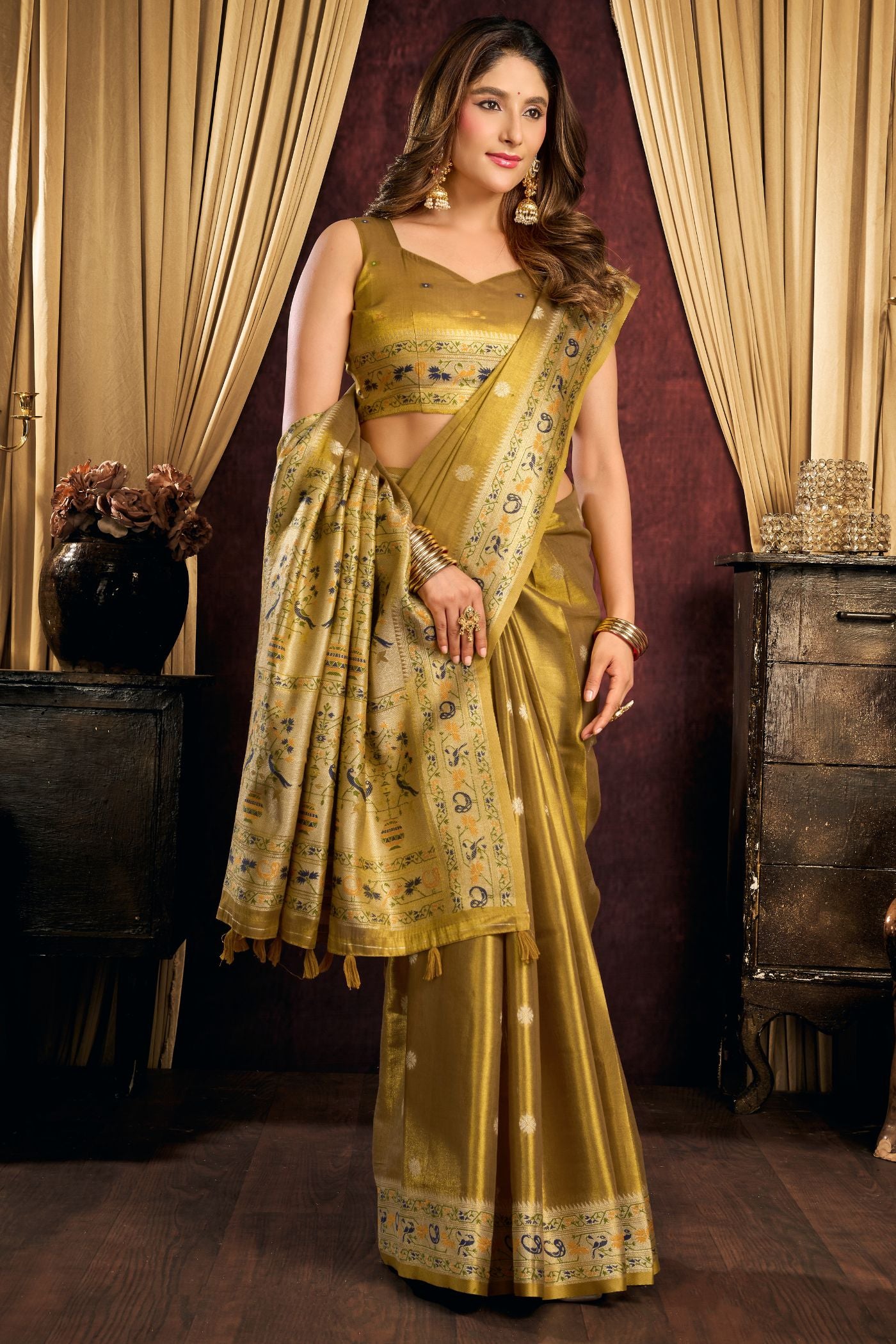
Fern Green Woven Tissue Paithani Saree
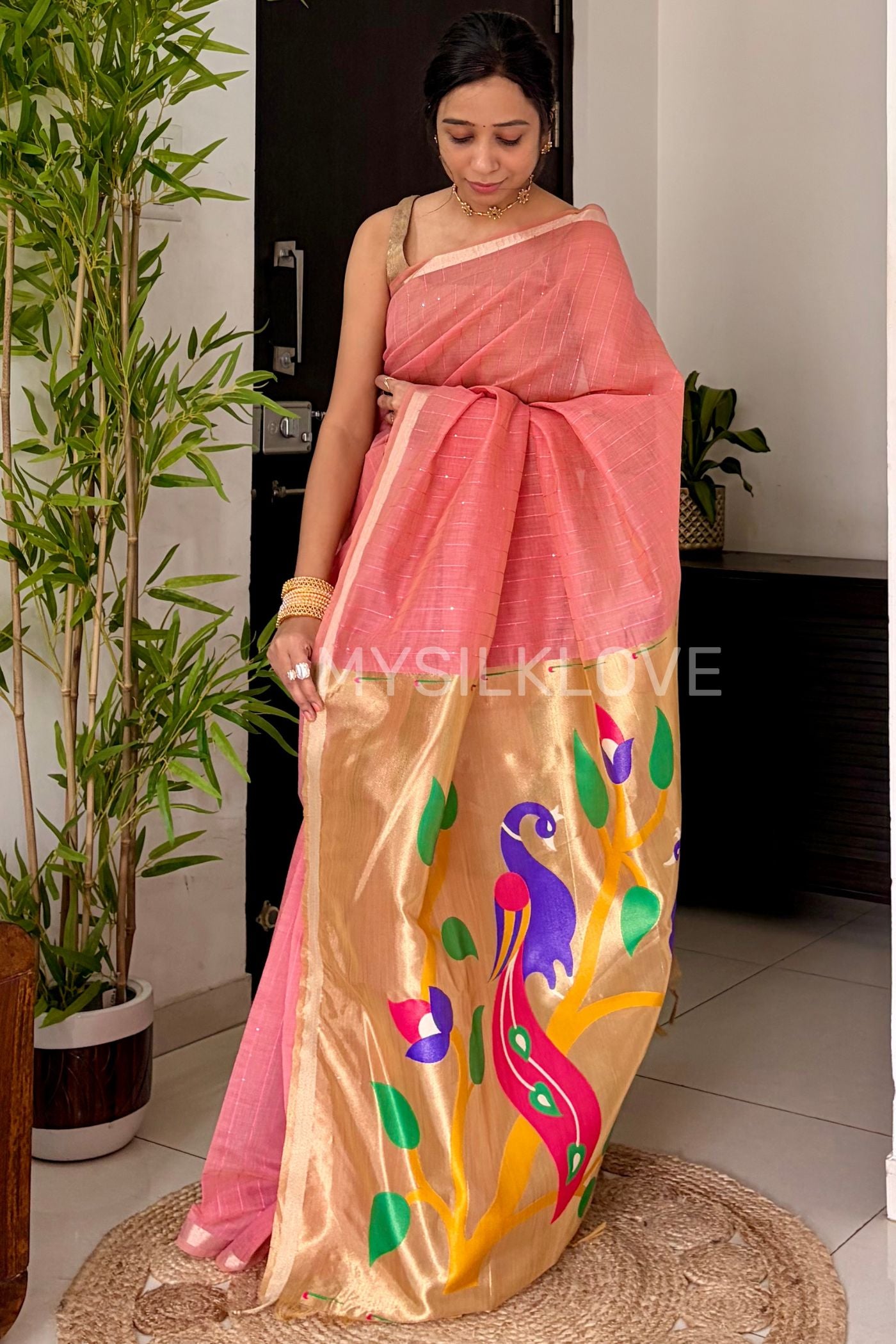
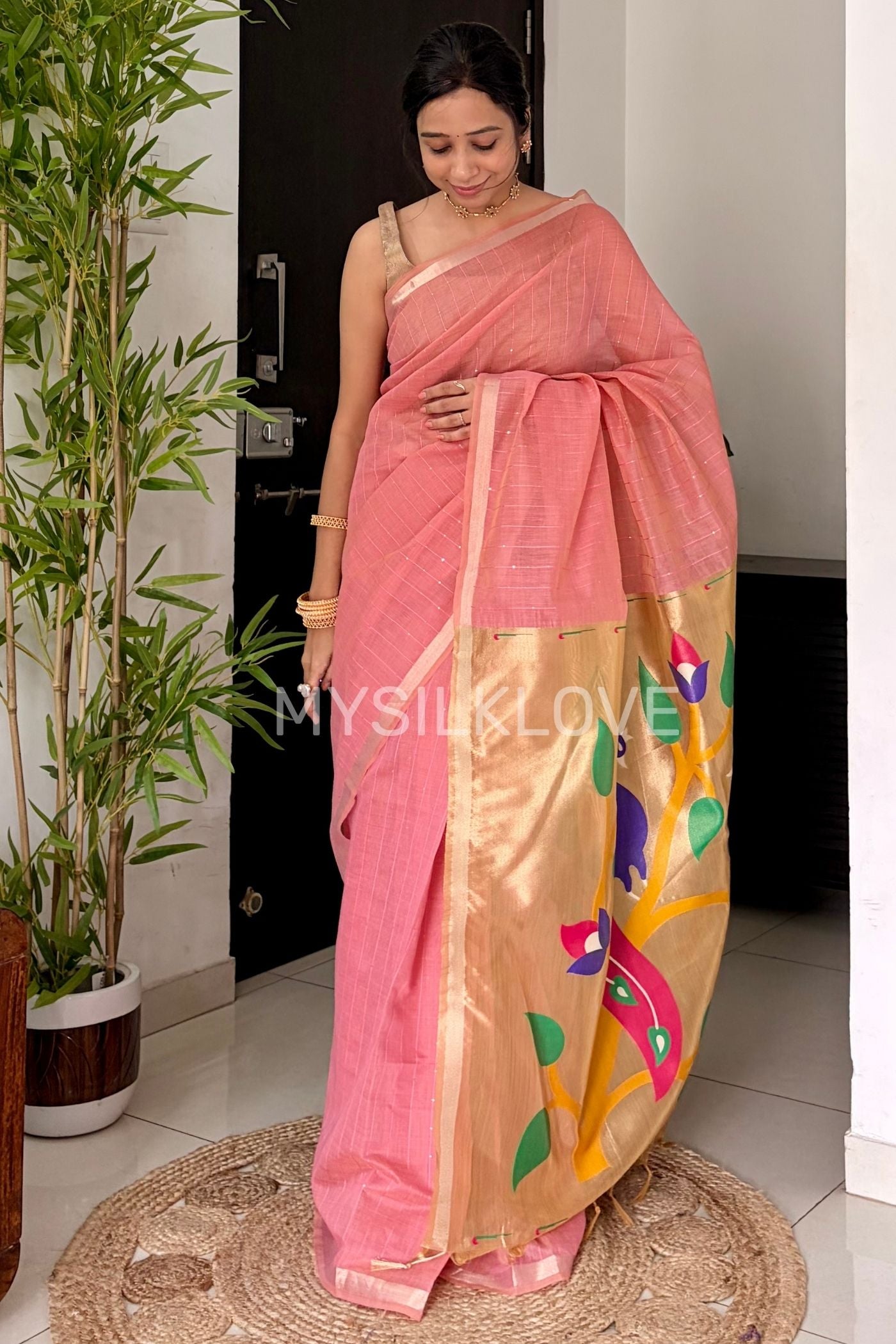
Froly Pink Chanderi Paithani Saree with Peacock Pallu
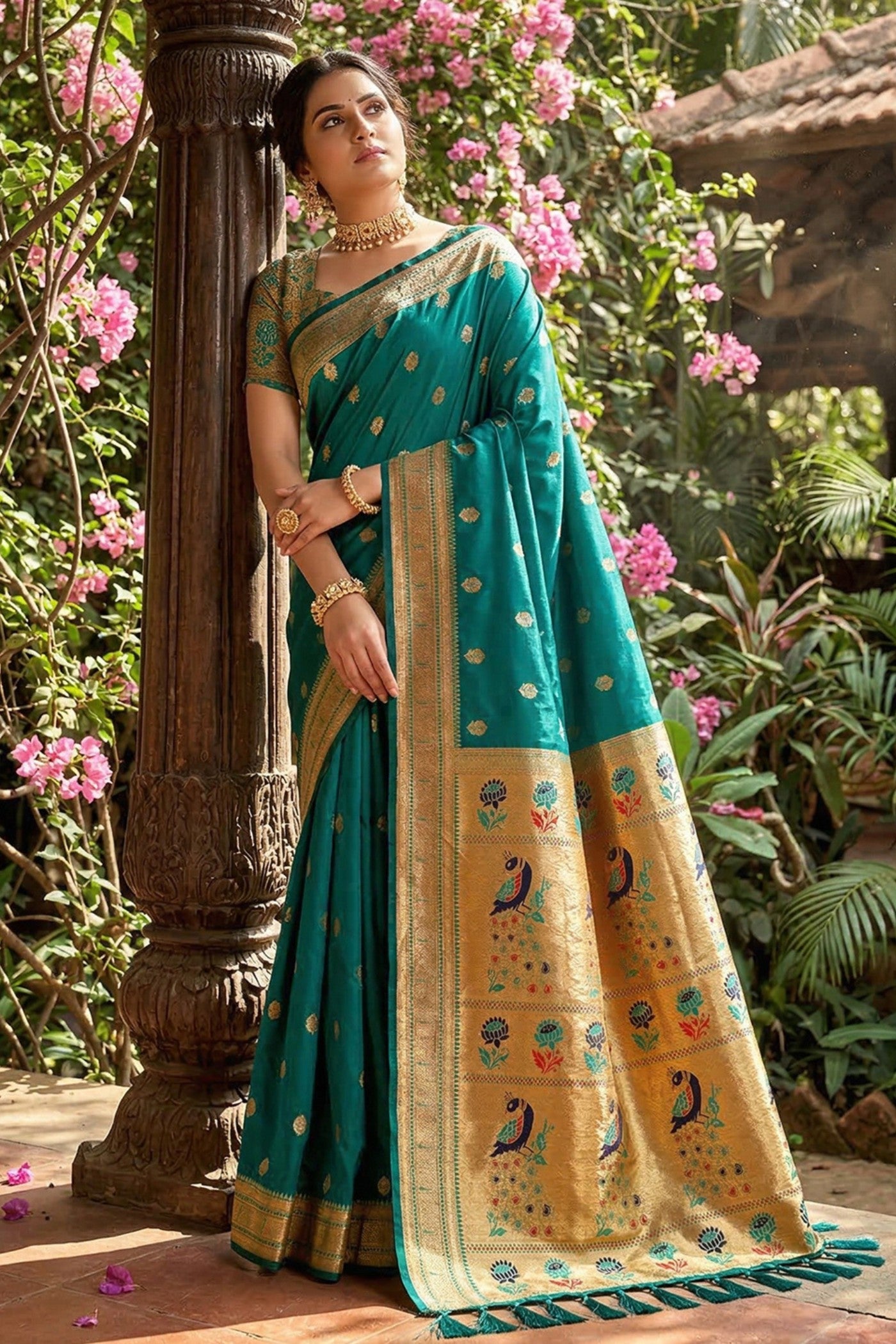
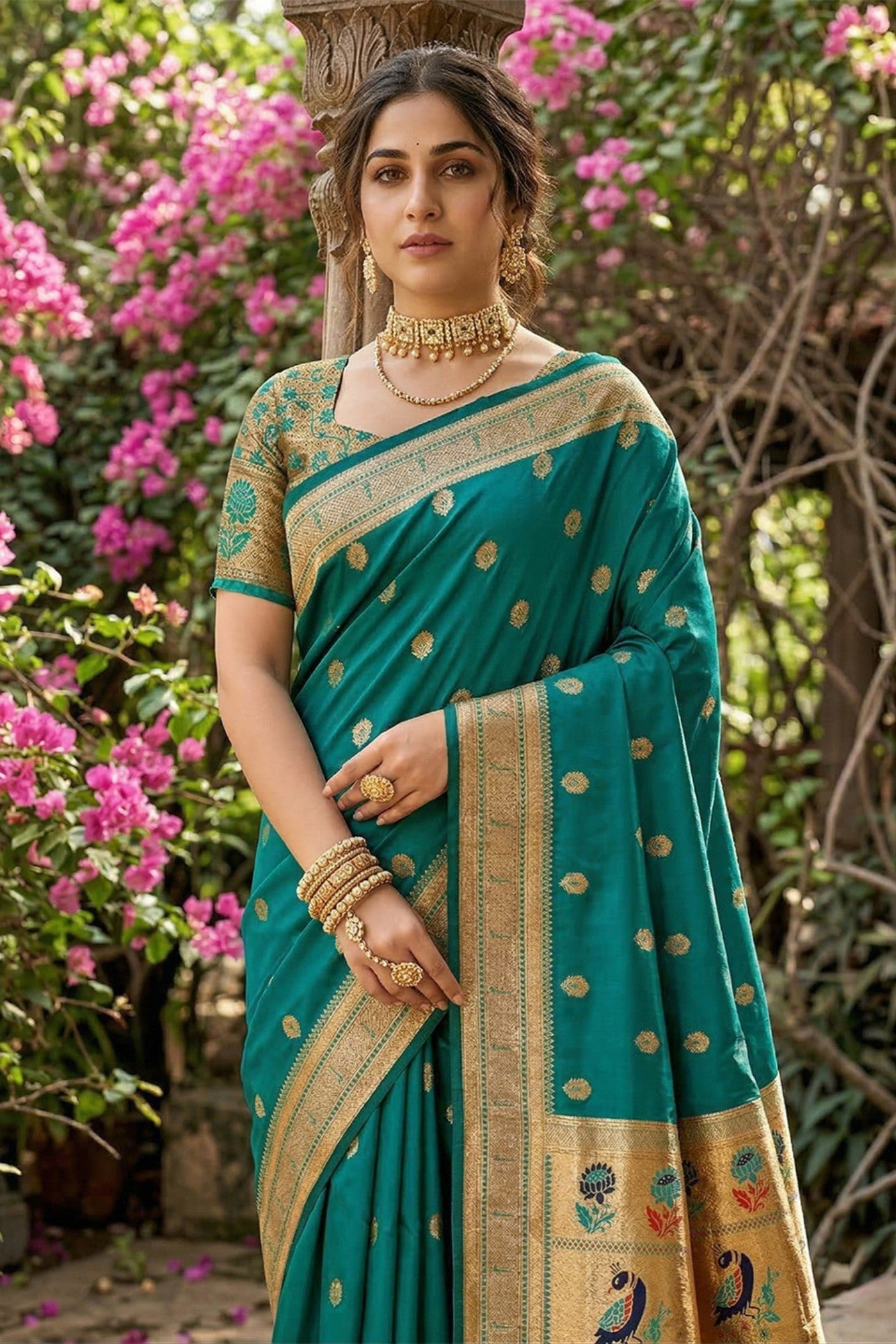
Neptune Blue Zari Woven Paithani Saree
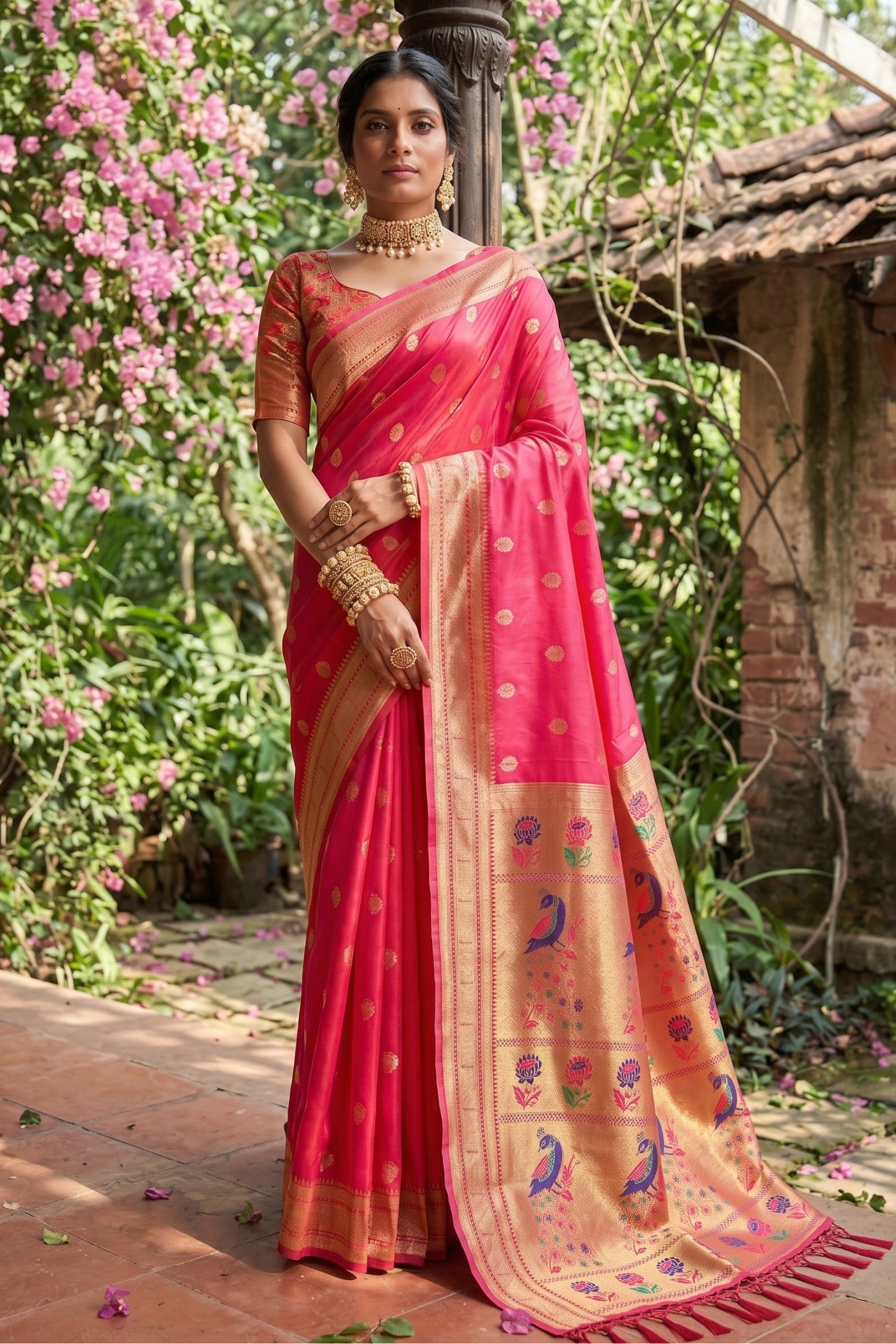
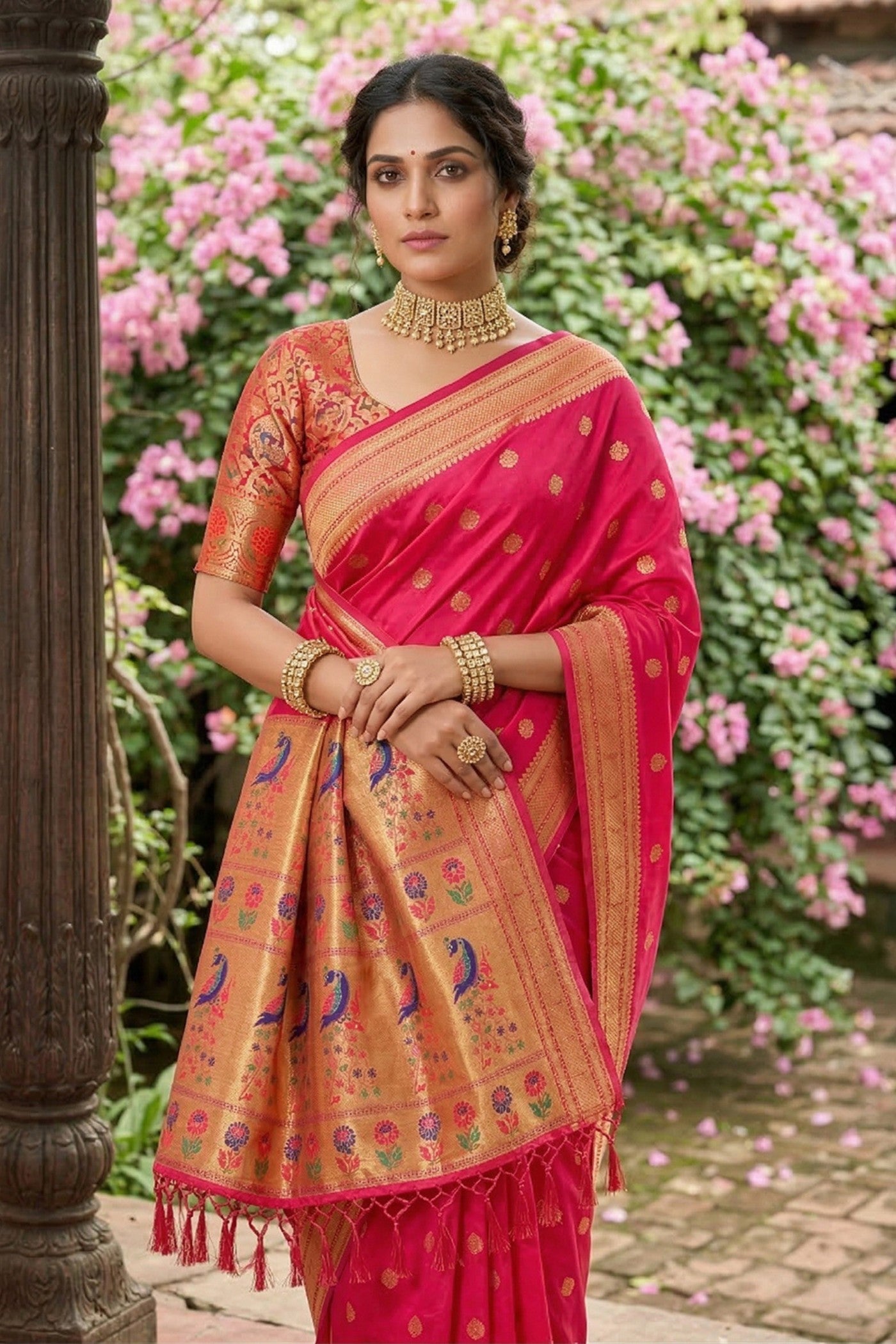
Cupid Pink Zari Woven Paithani Saree
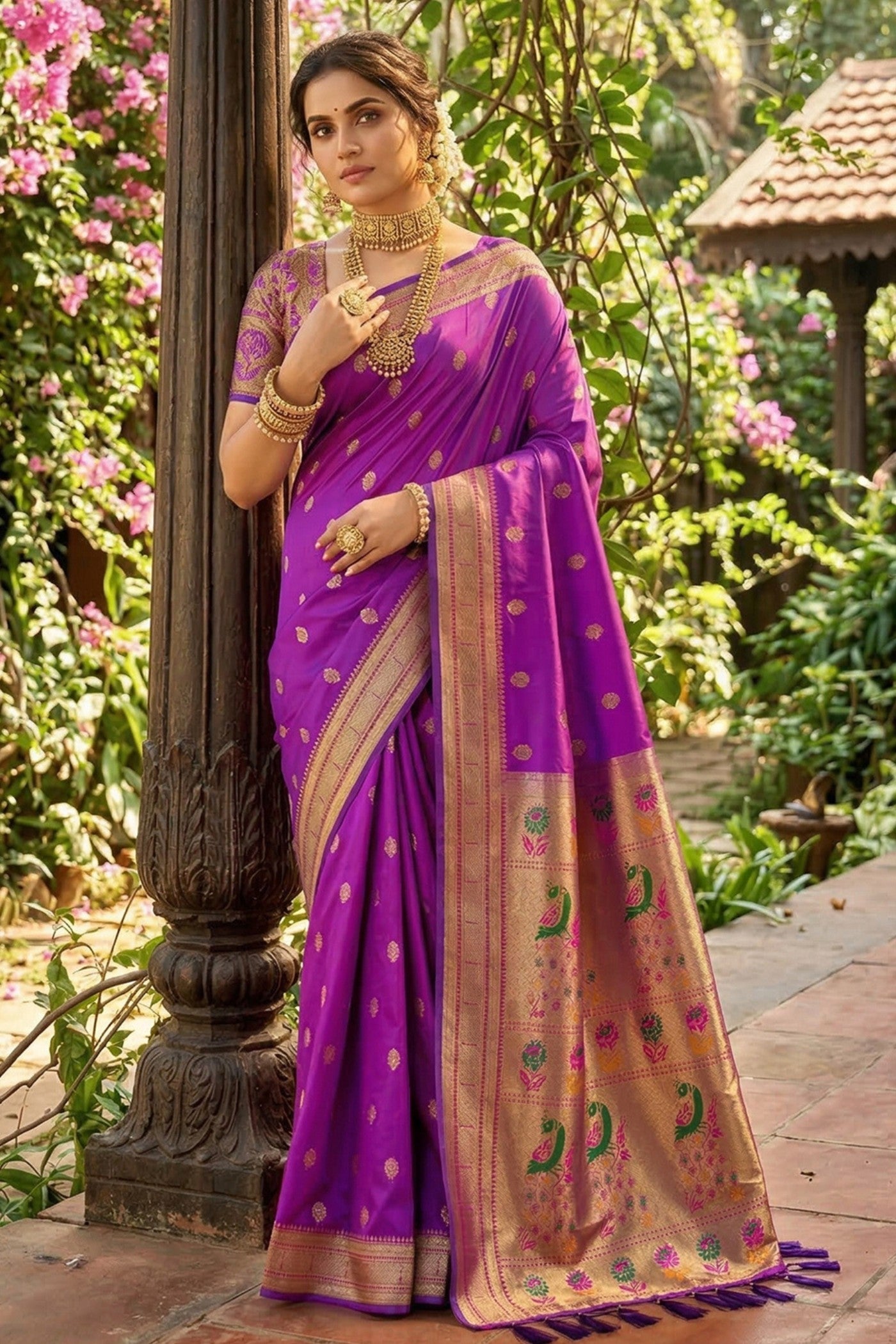
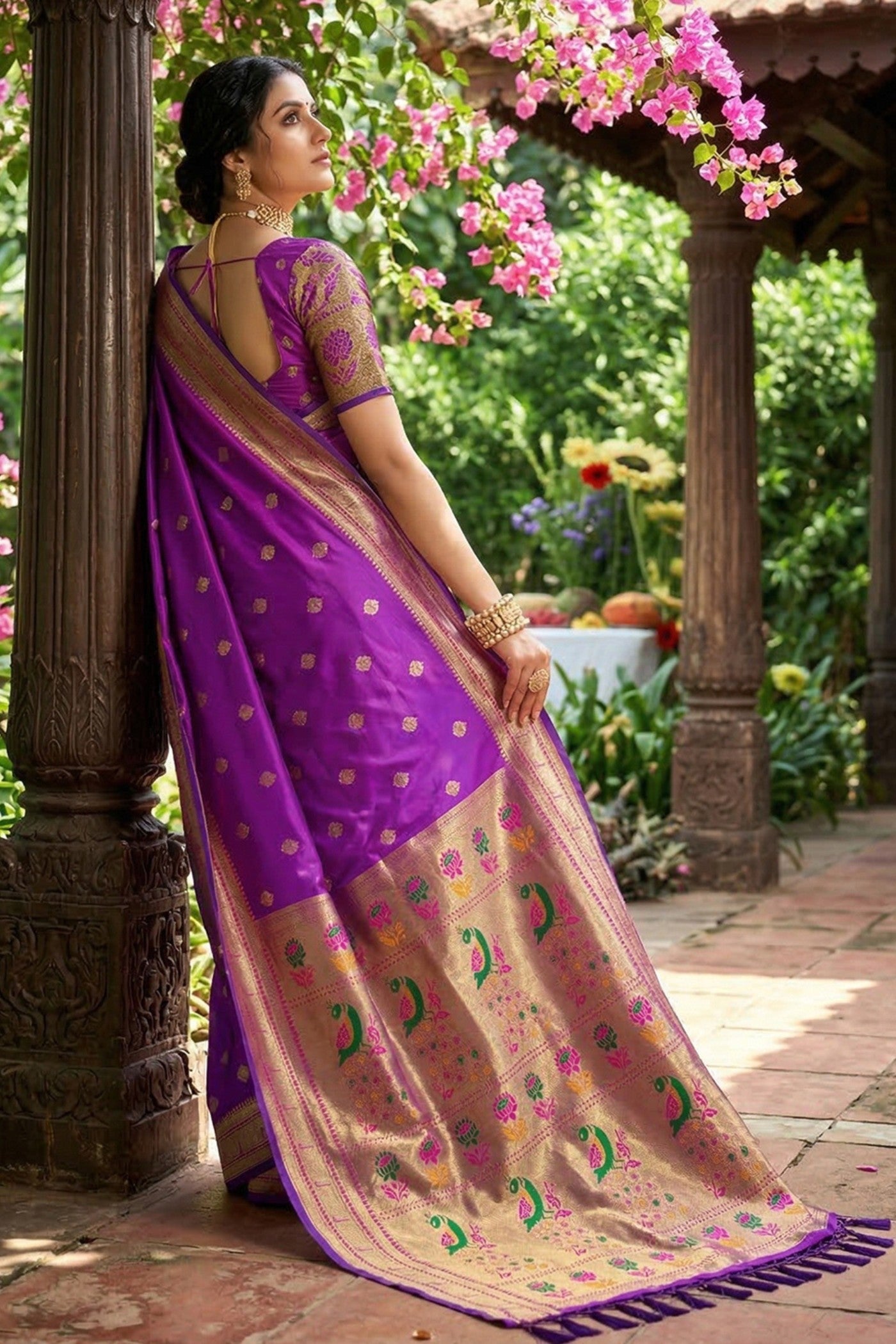
Plum Purple Zari Woven Paithani Saree
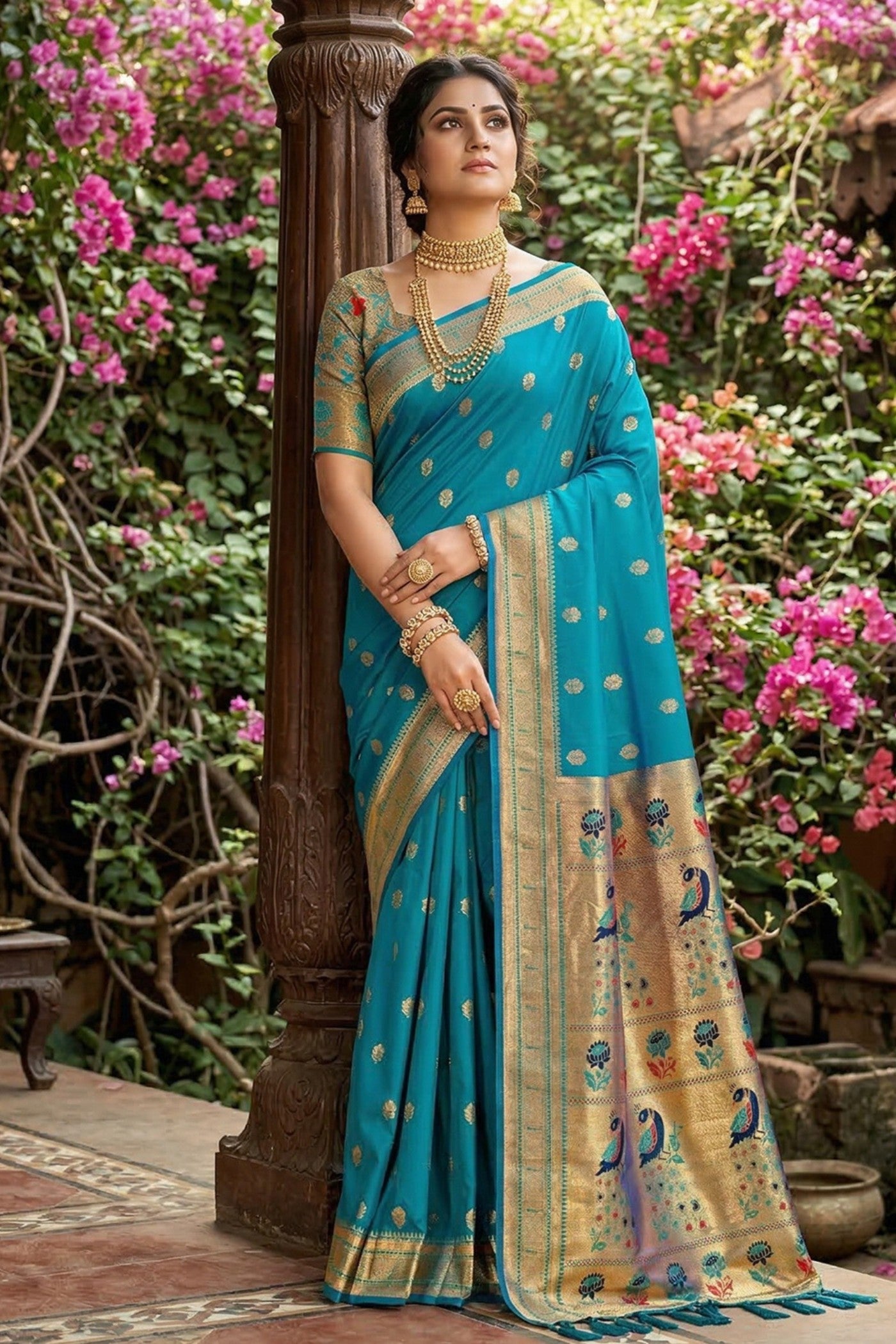
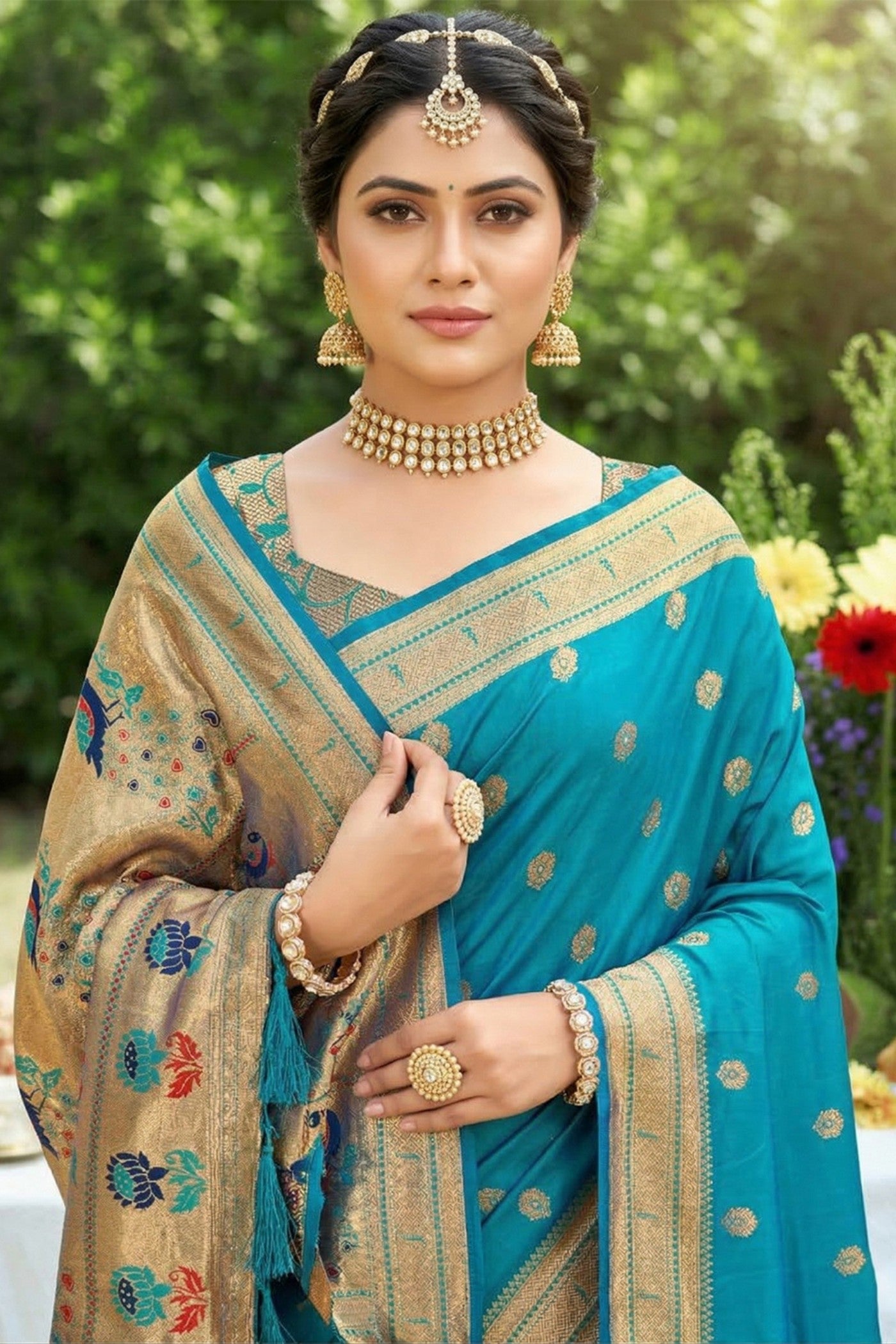
Ocean Blue Zari Woven Paithani Saree
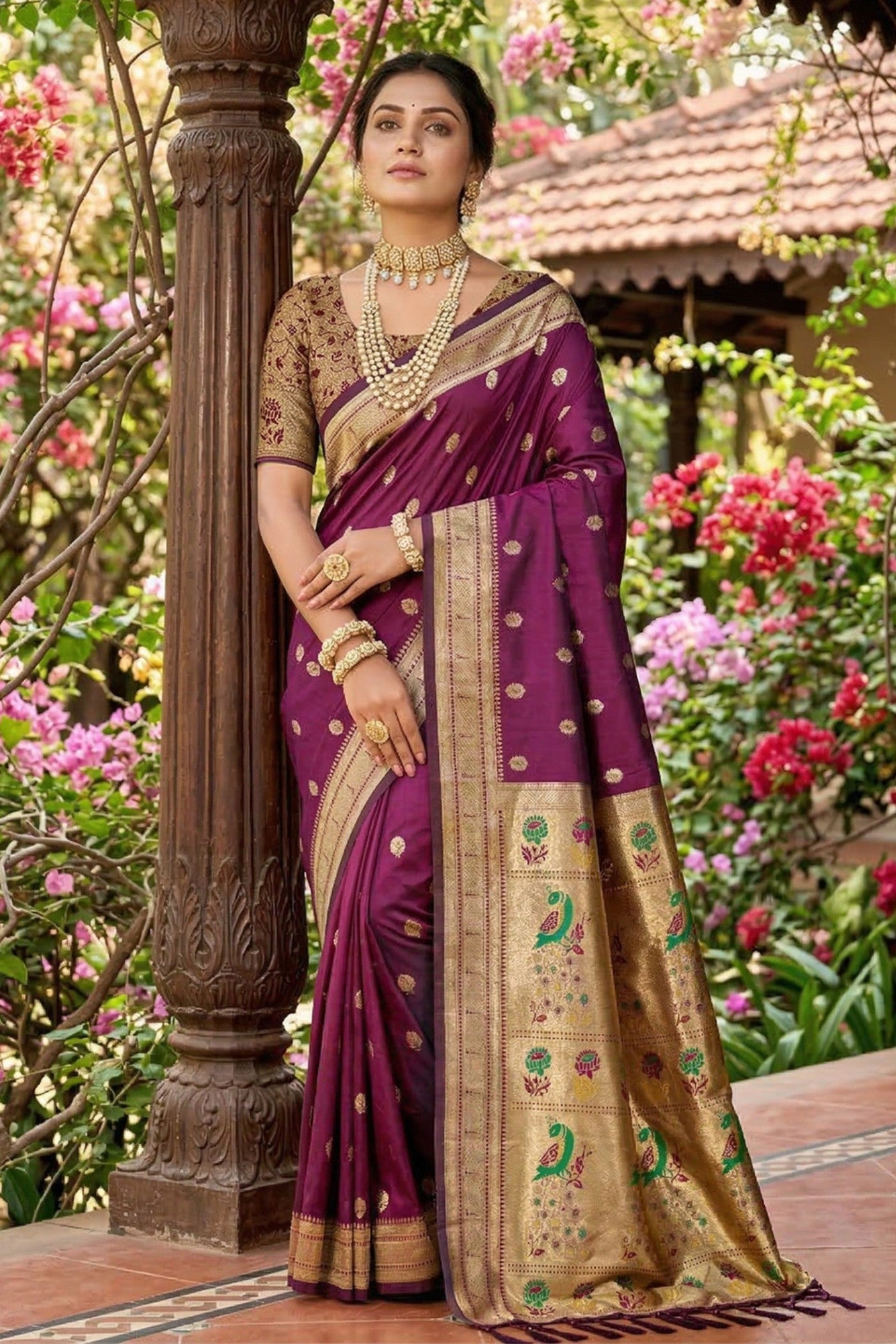
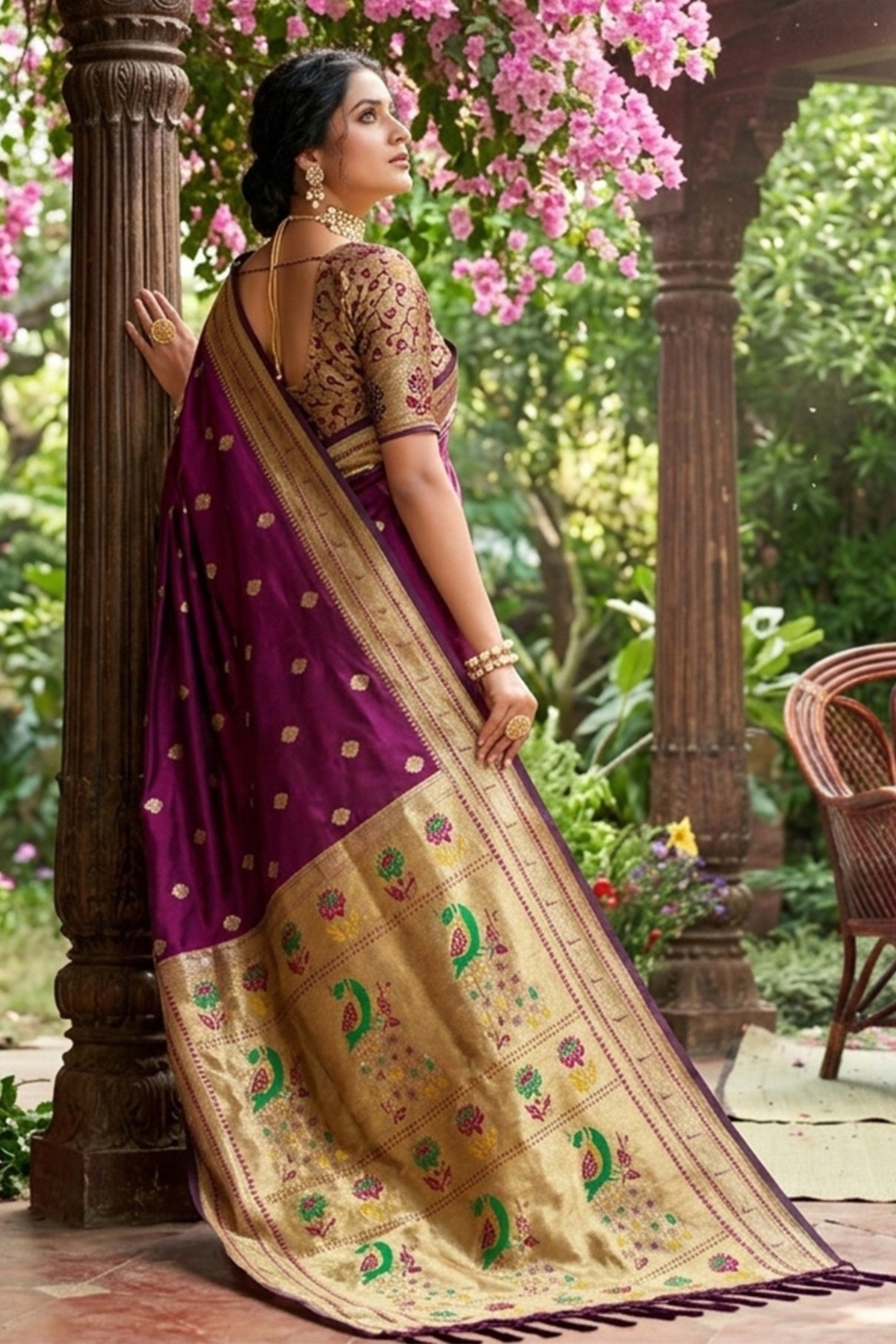
Crocus Purple Zari Woven Paithani Saree
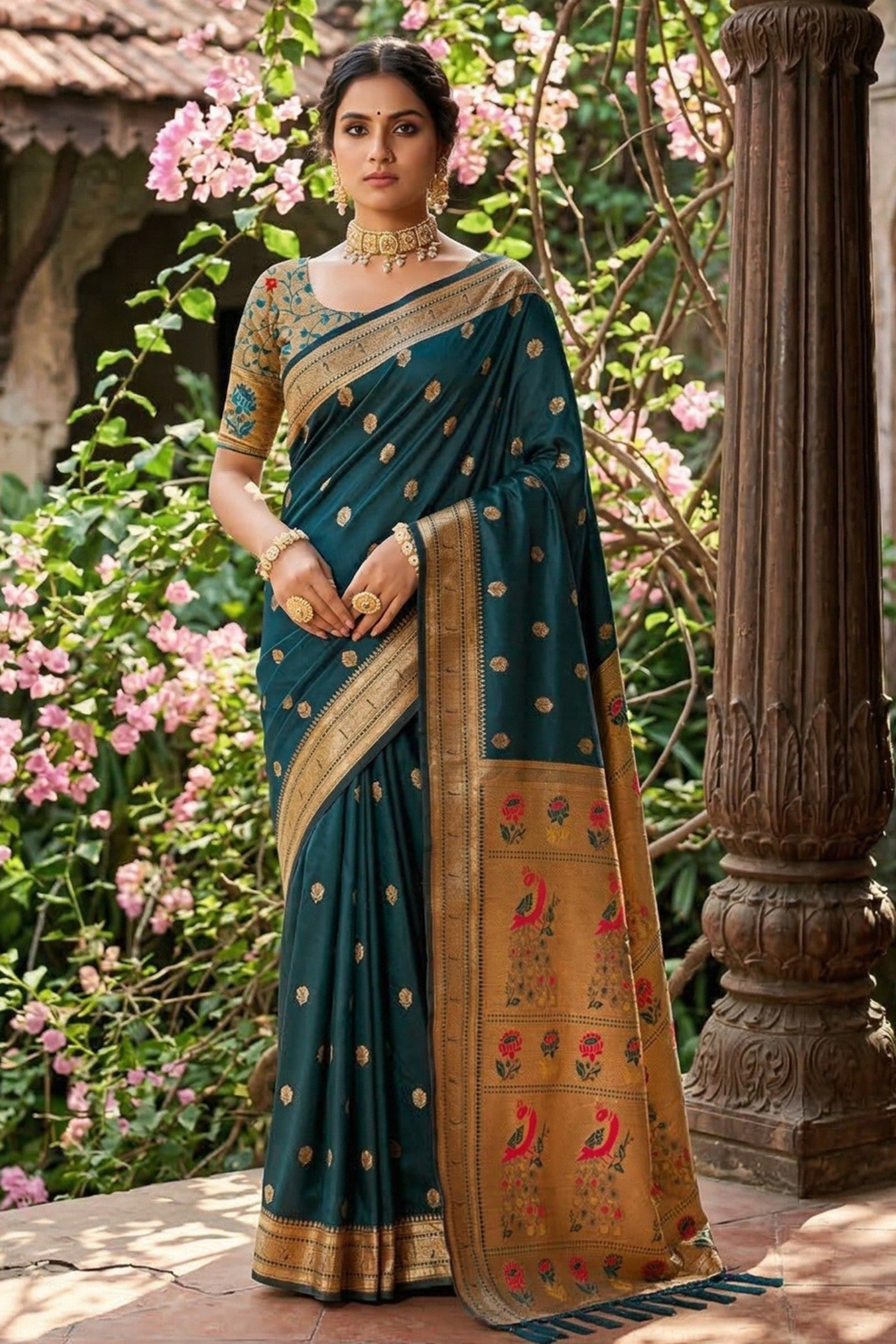
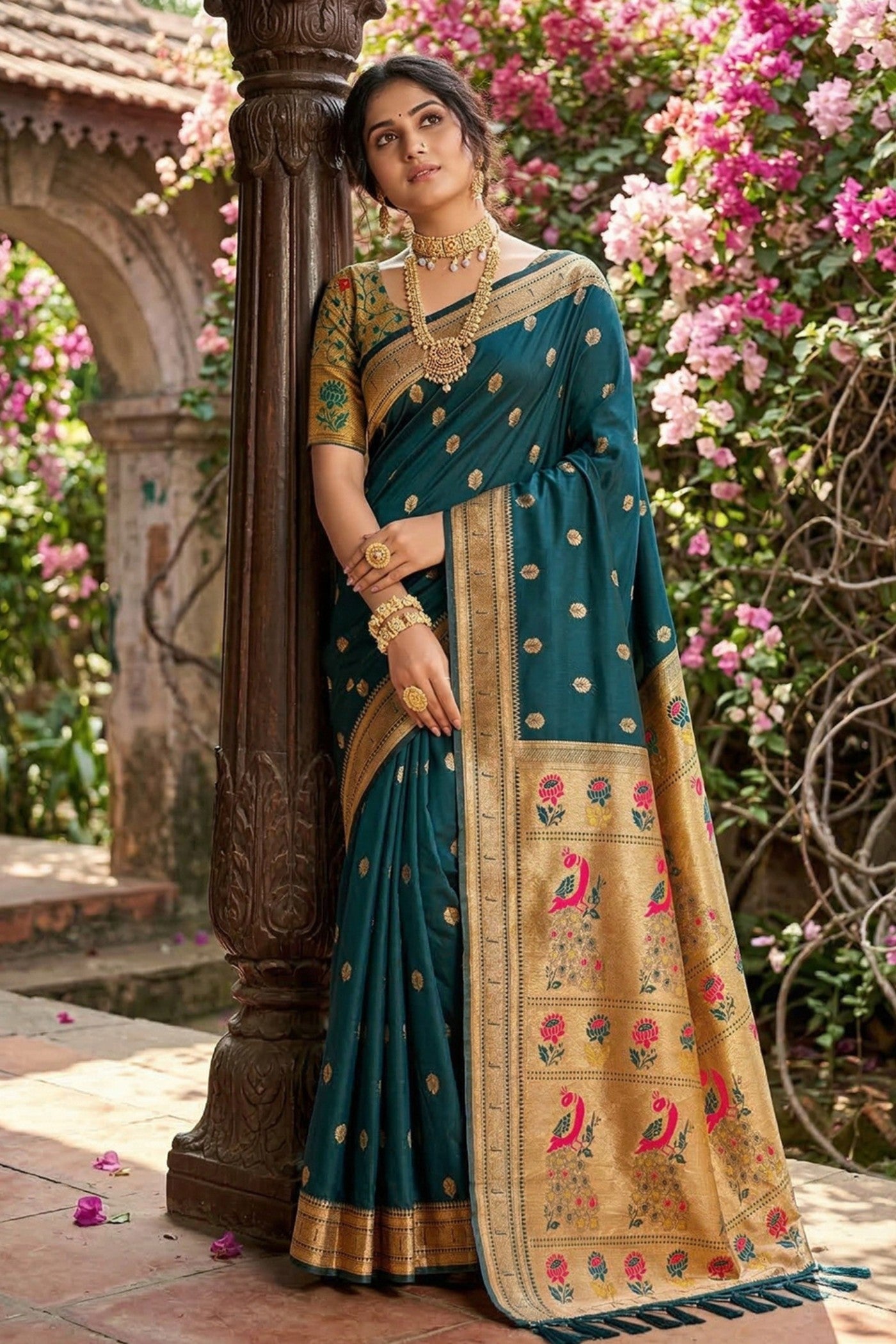
Bottle Green Zari Woven Paithani Saree
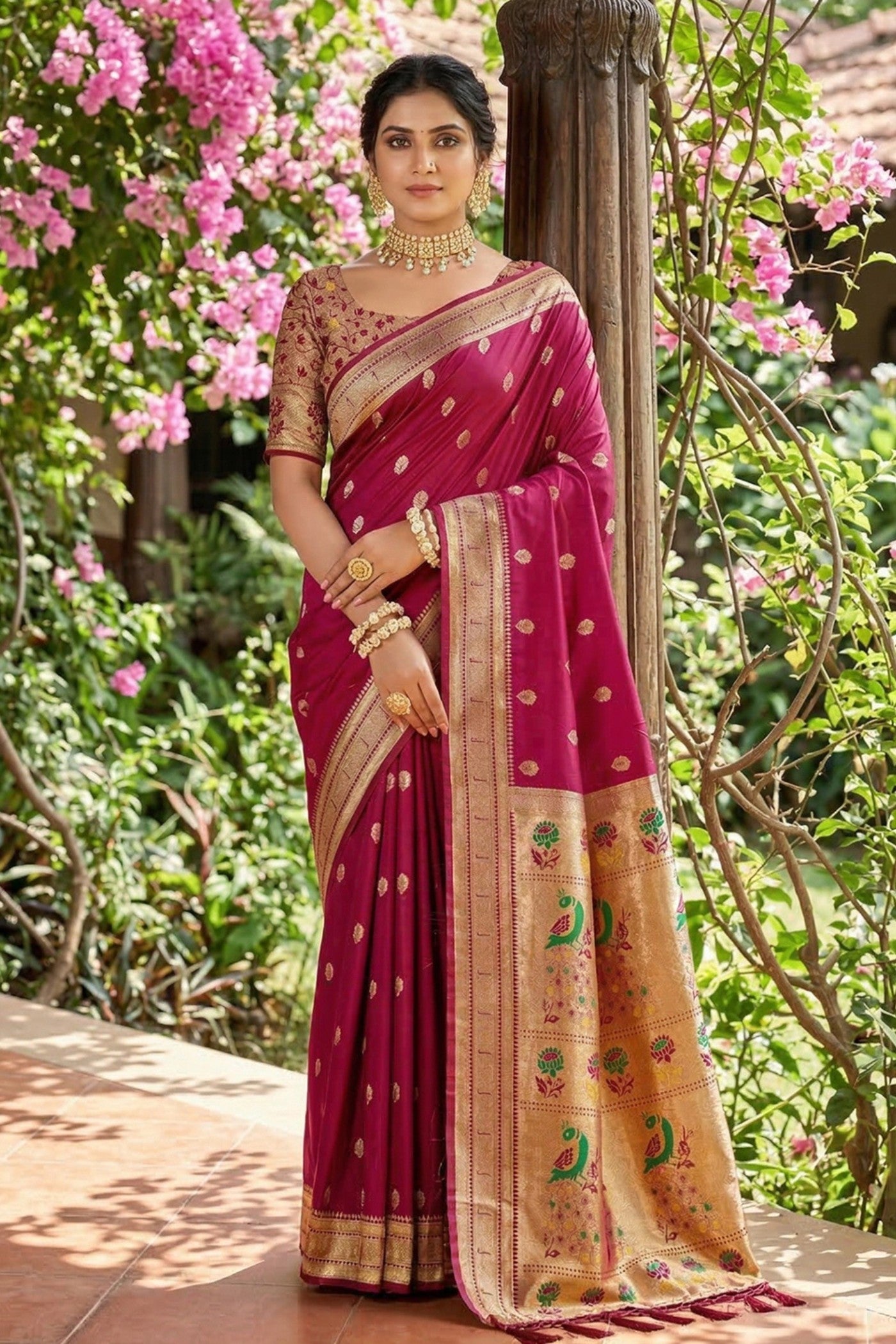
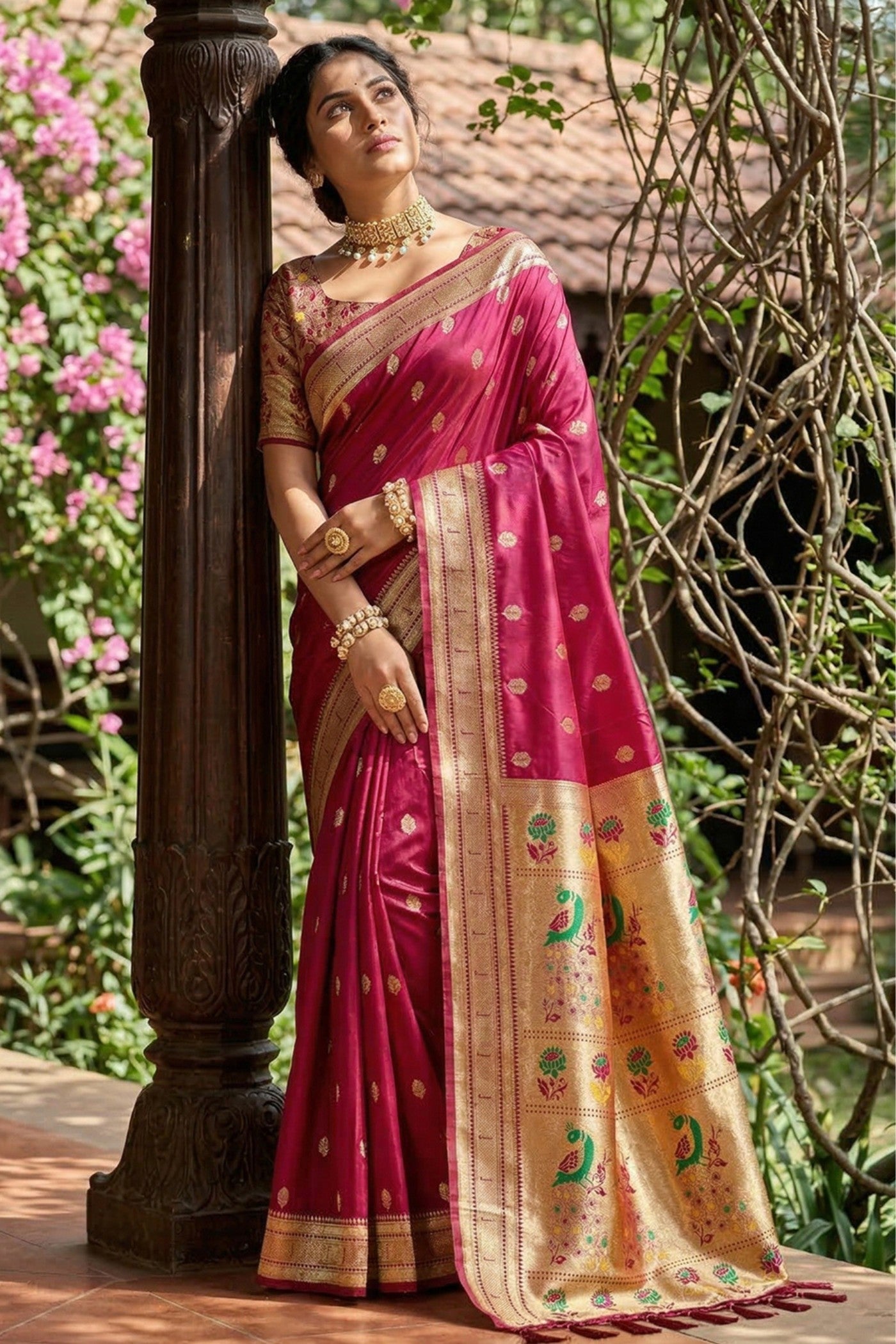
Dark Rose Pink Zari Woven Paithani Saree
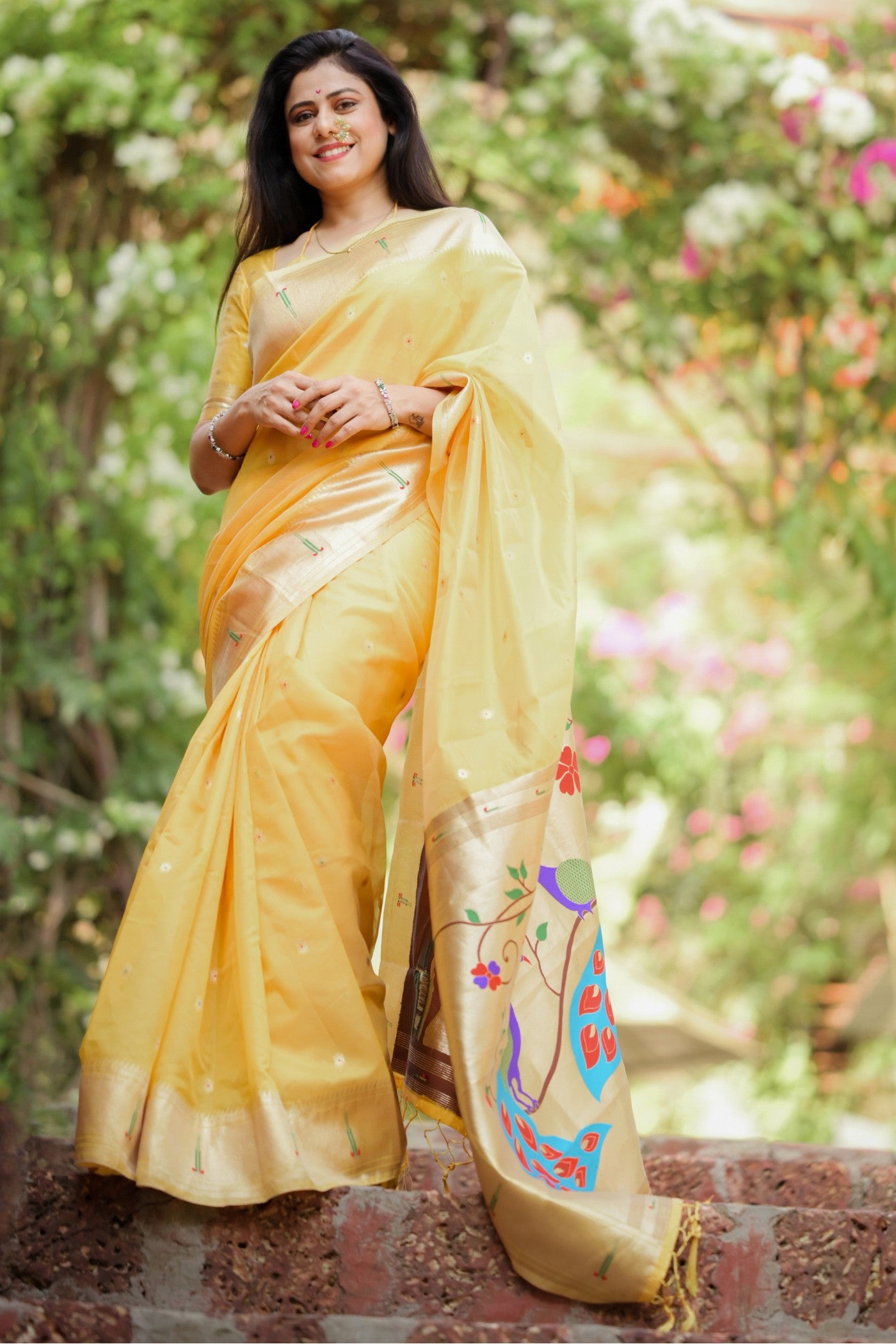
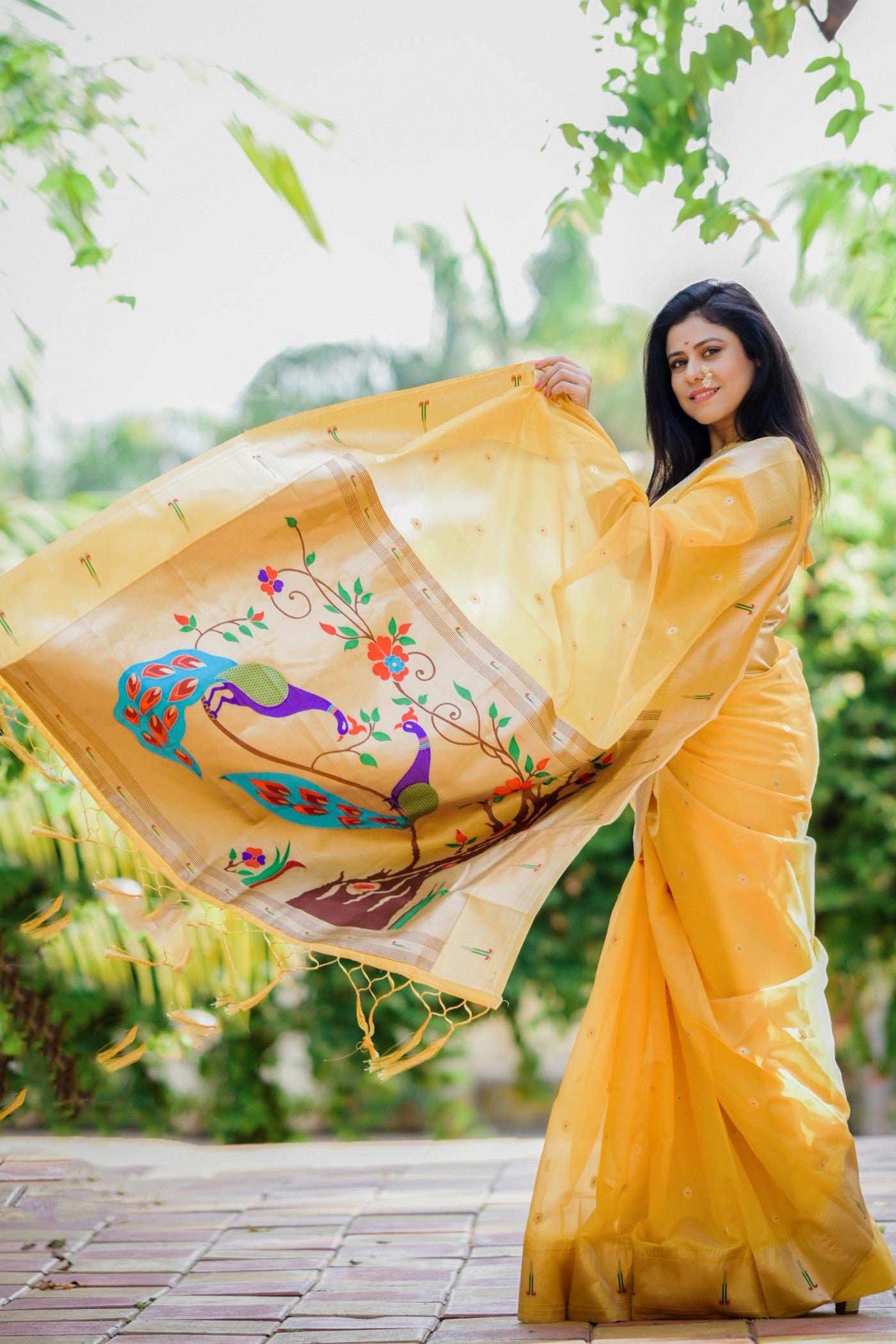
Bumblebee Yellow Organza Woven Paithani Saree
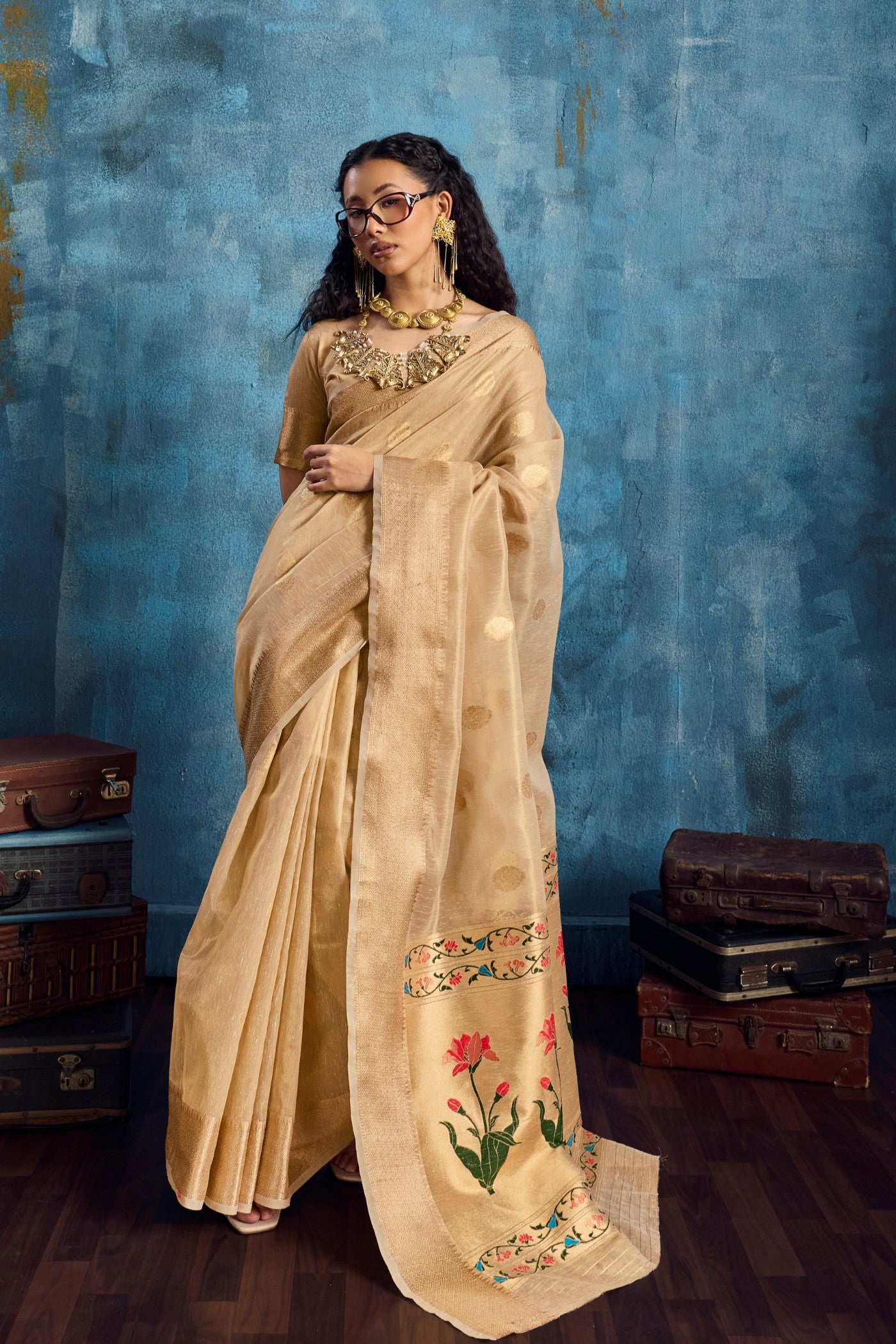
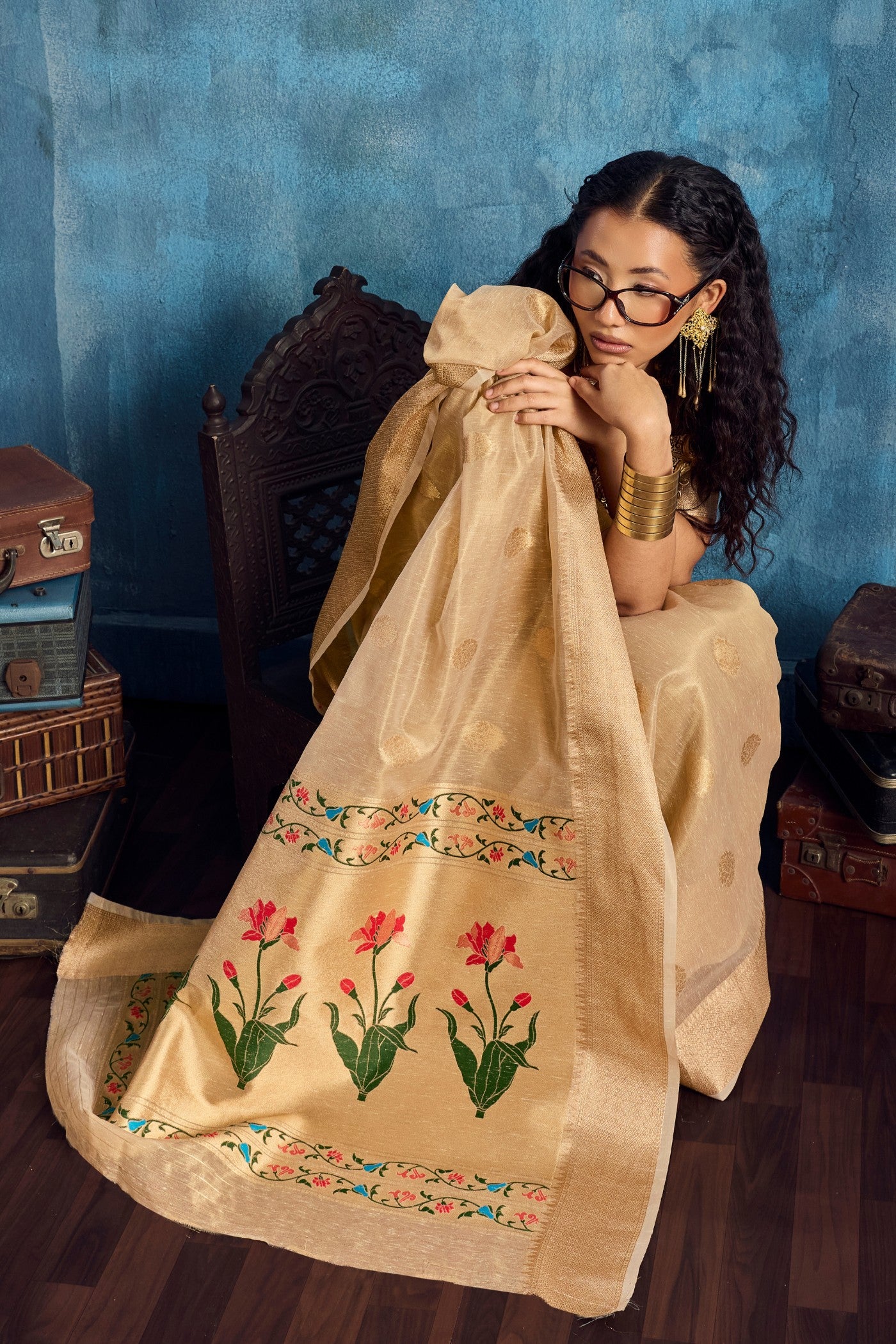
Pastel Cream Zari Woven Tissue Paithani Saree
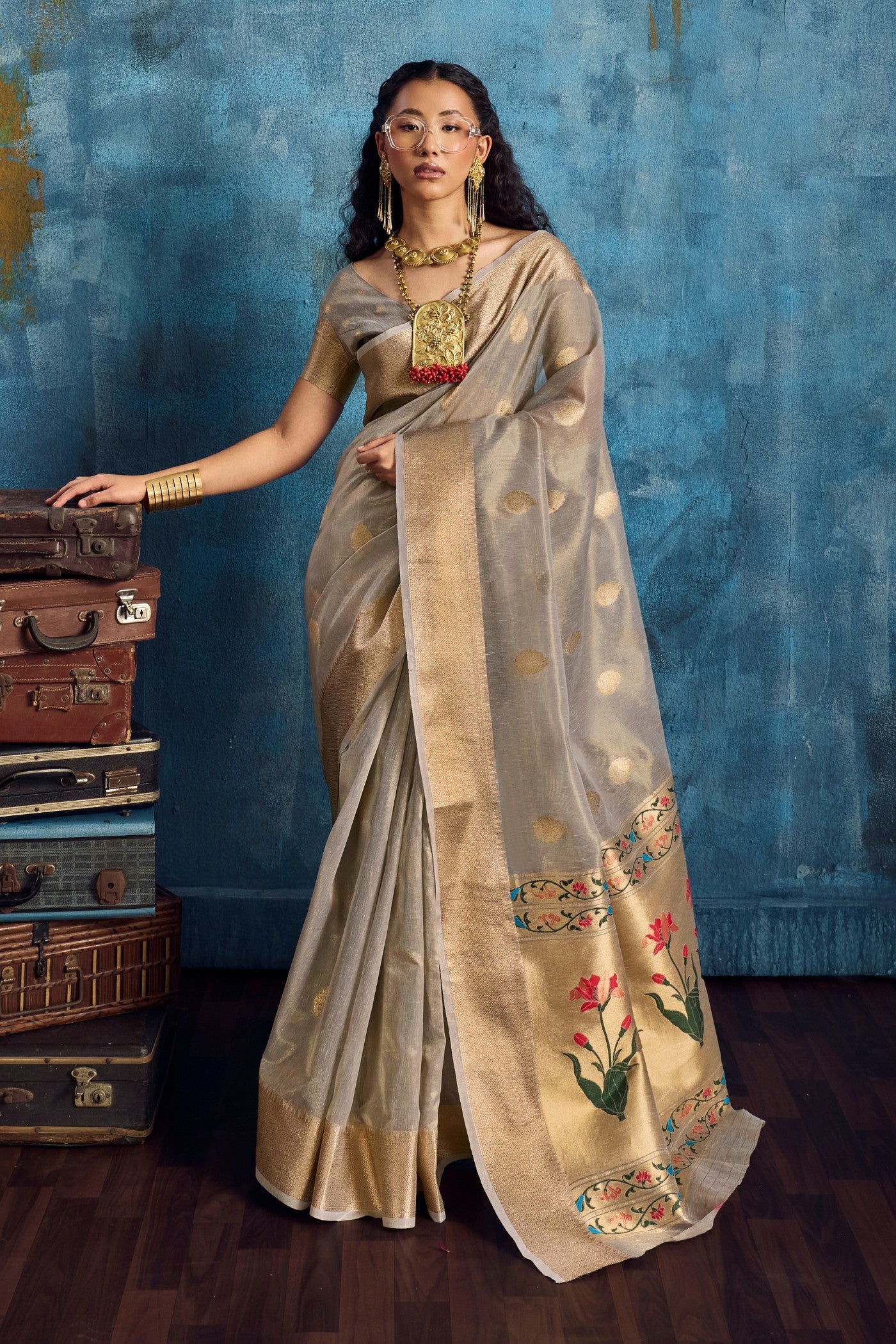
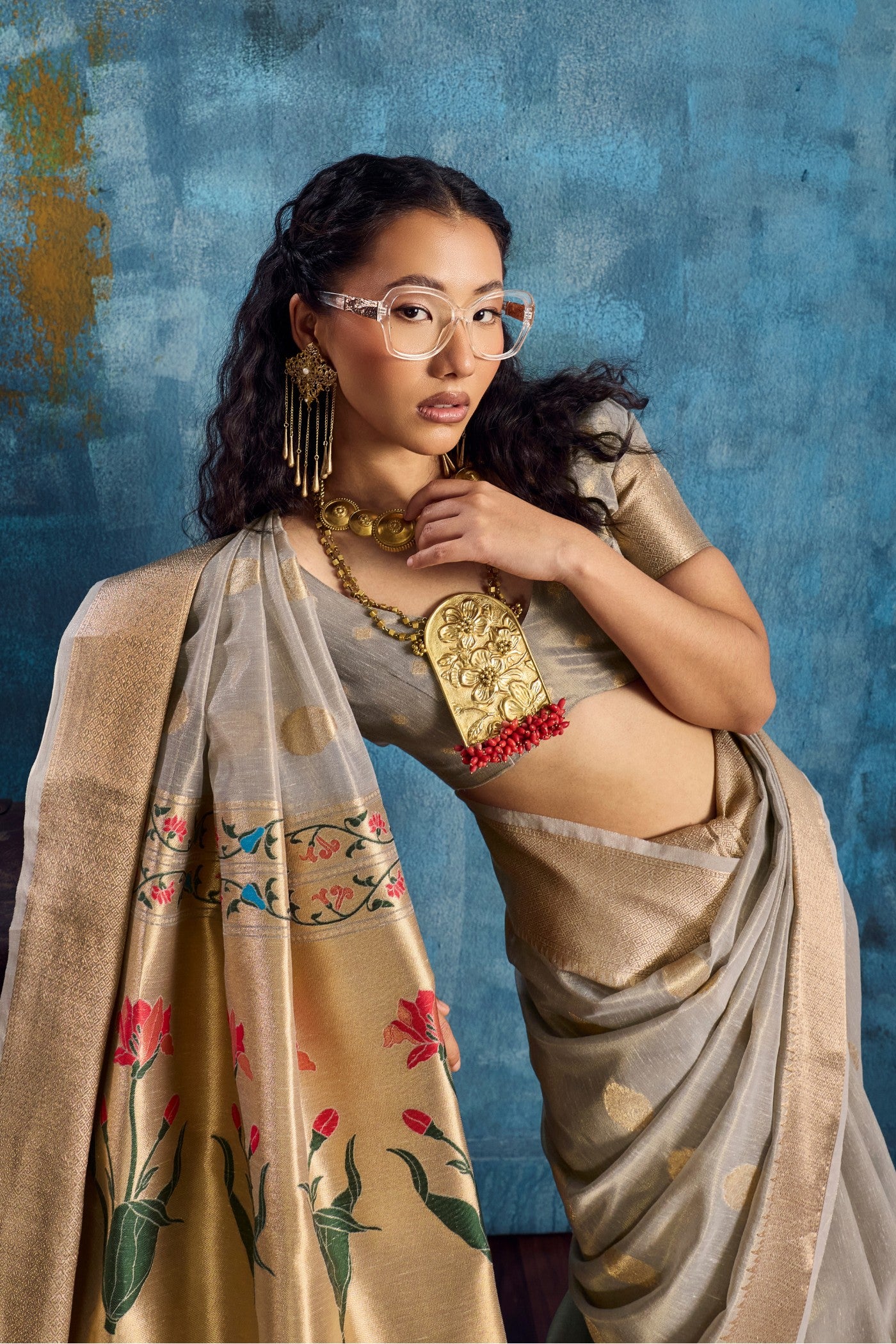
Cadet Grey Zari Woven Tissue Paithani Saree
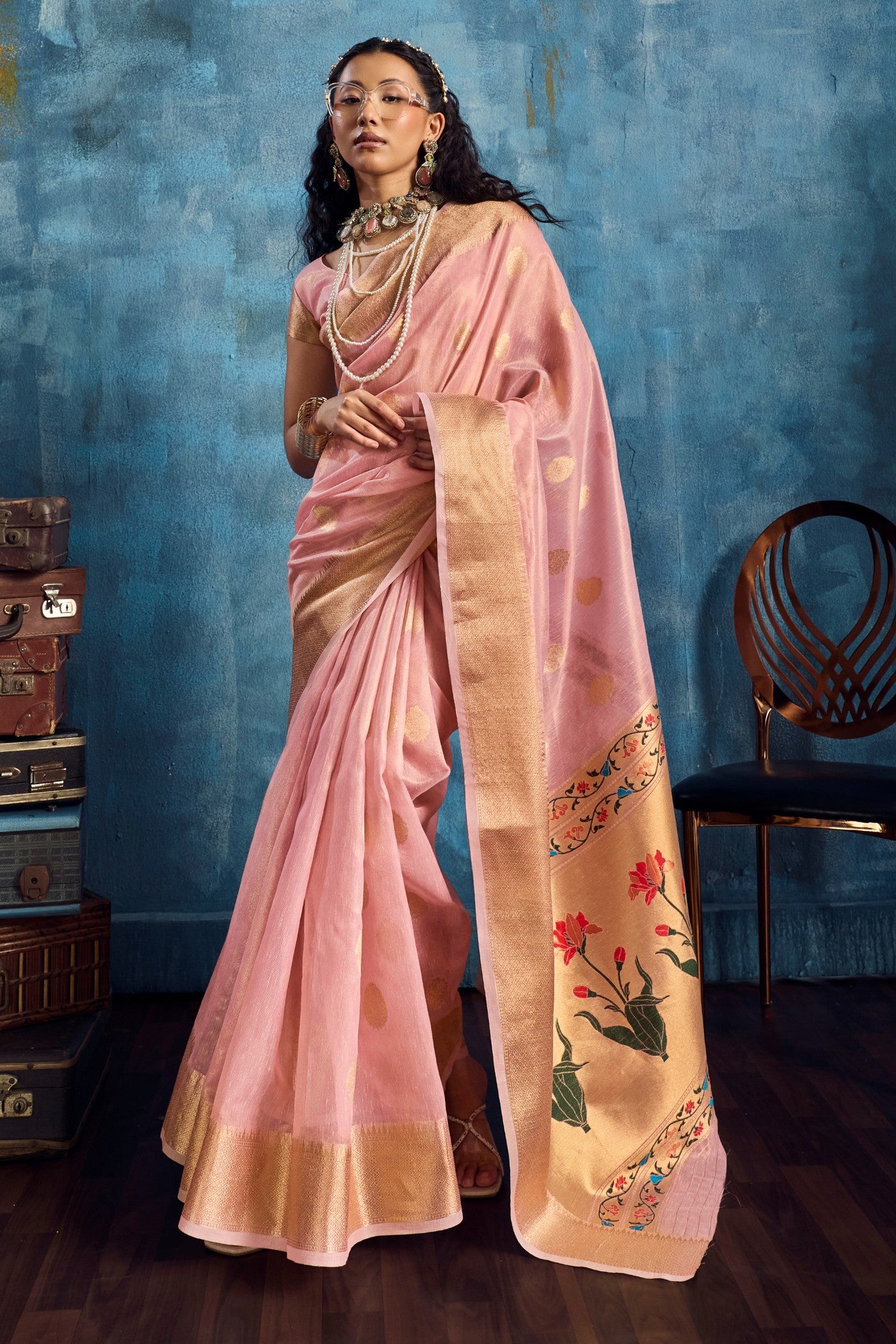
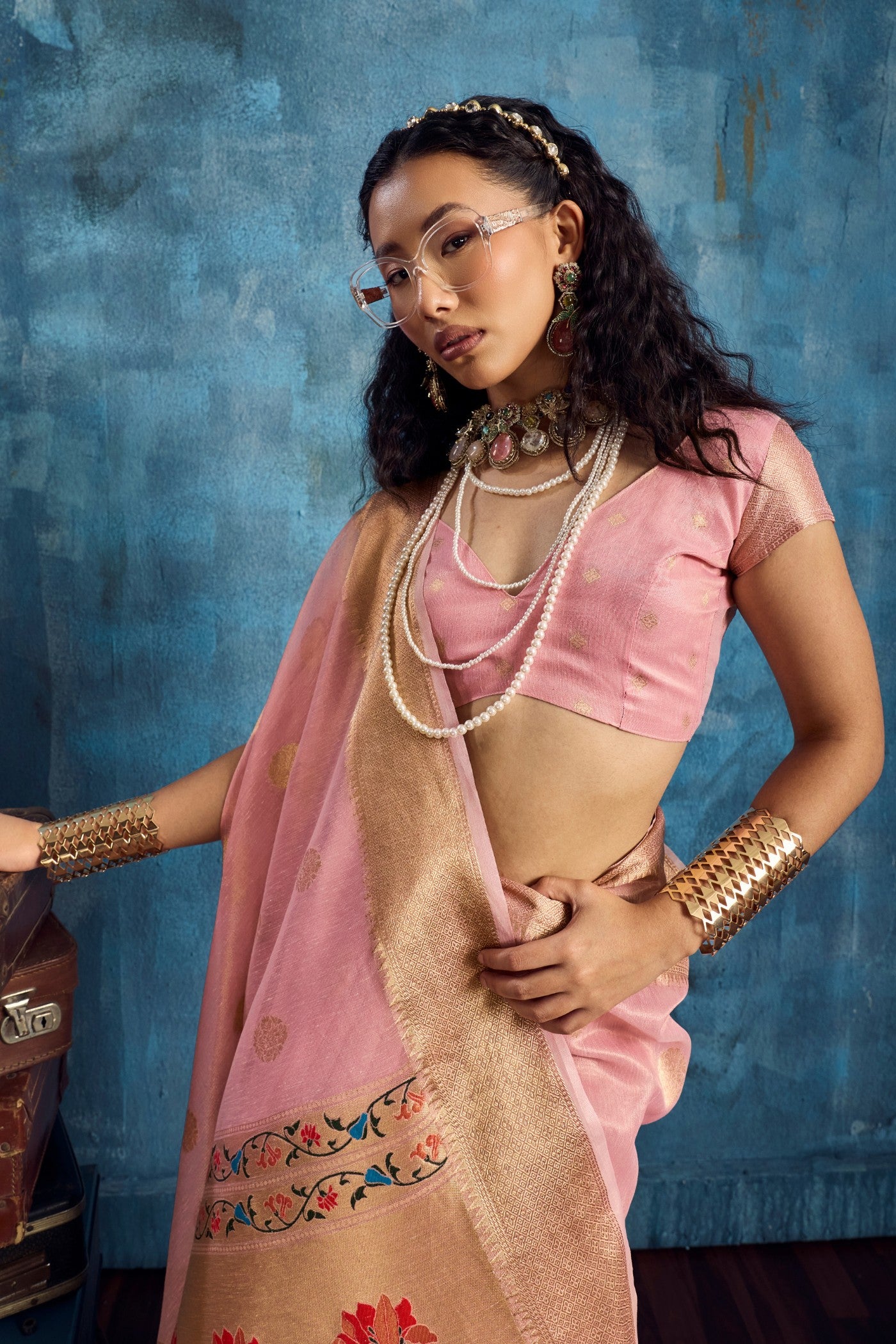
Cameo Pink Zari Woven Tissue Paithani Saree
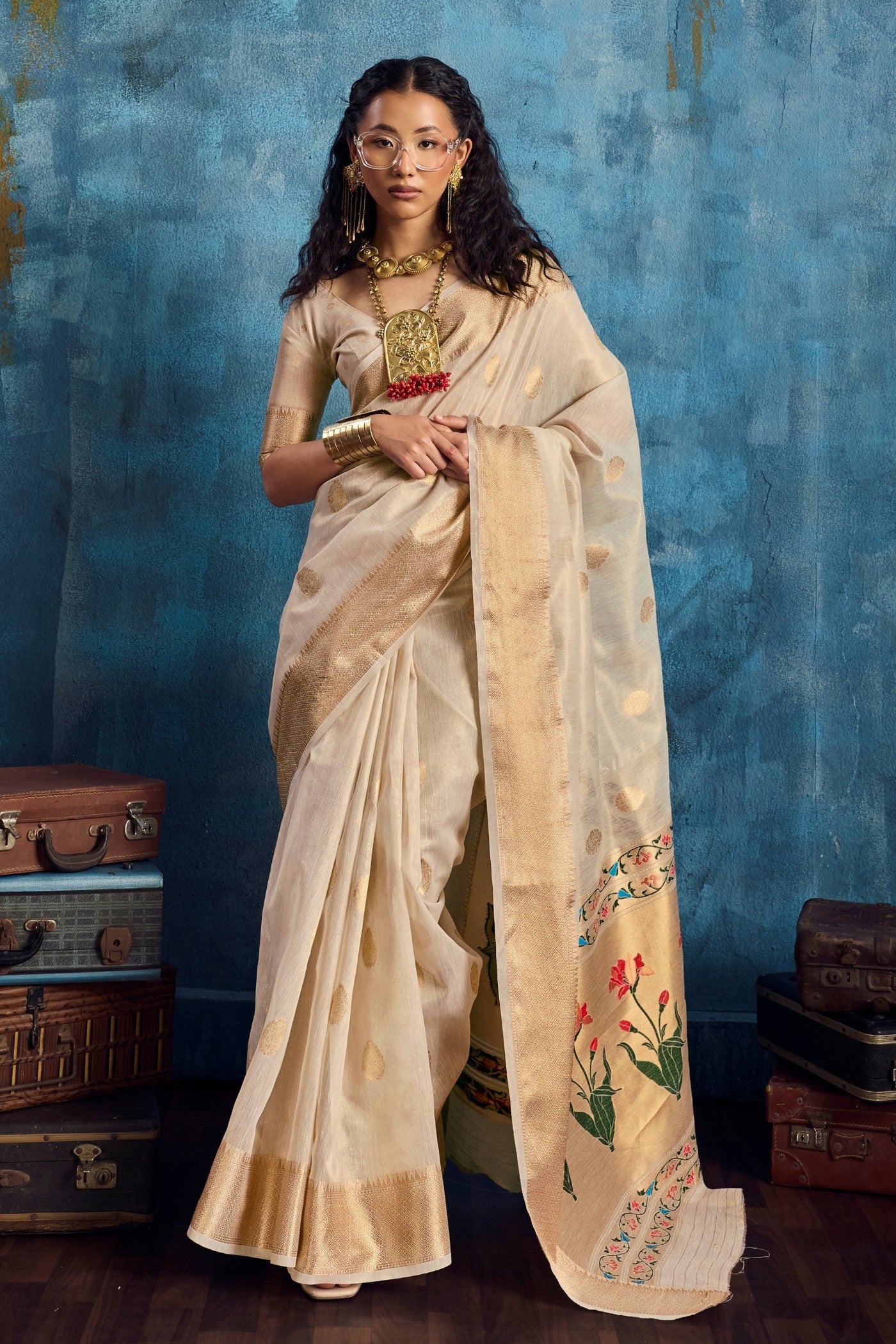
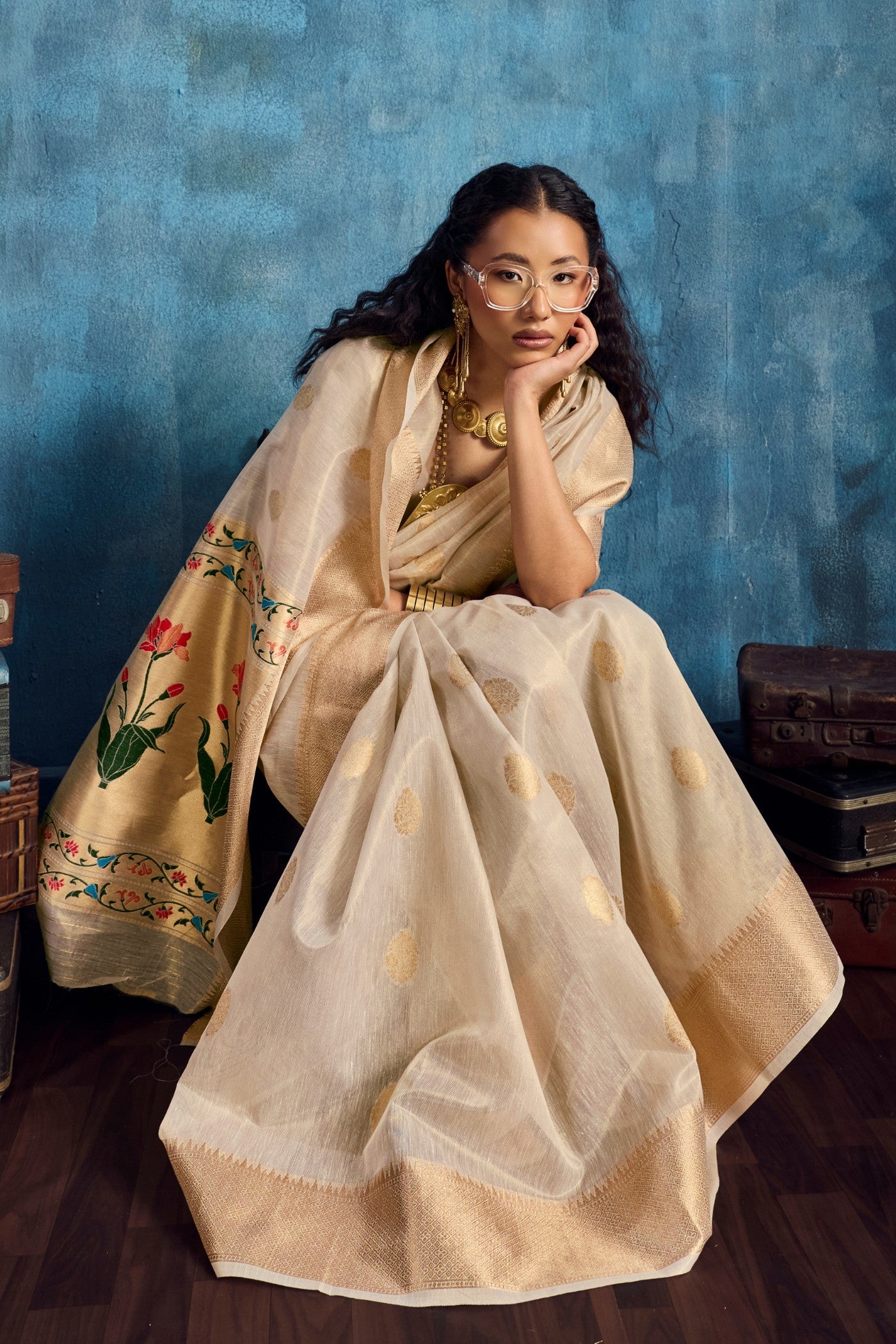
Bone White Zari Woven Tissue Paithani Saree
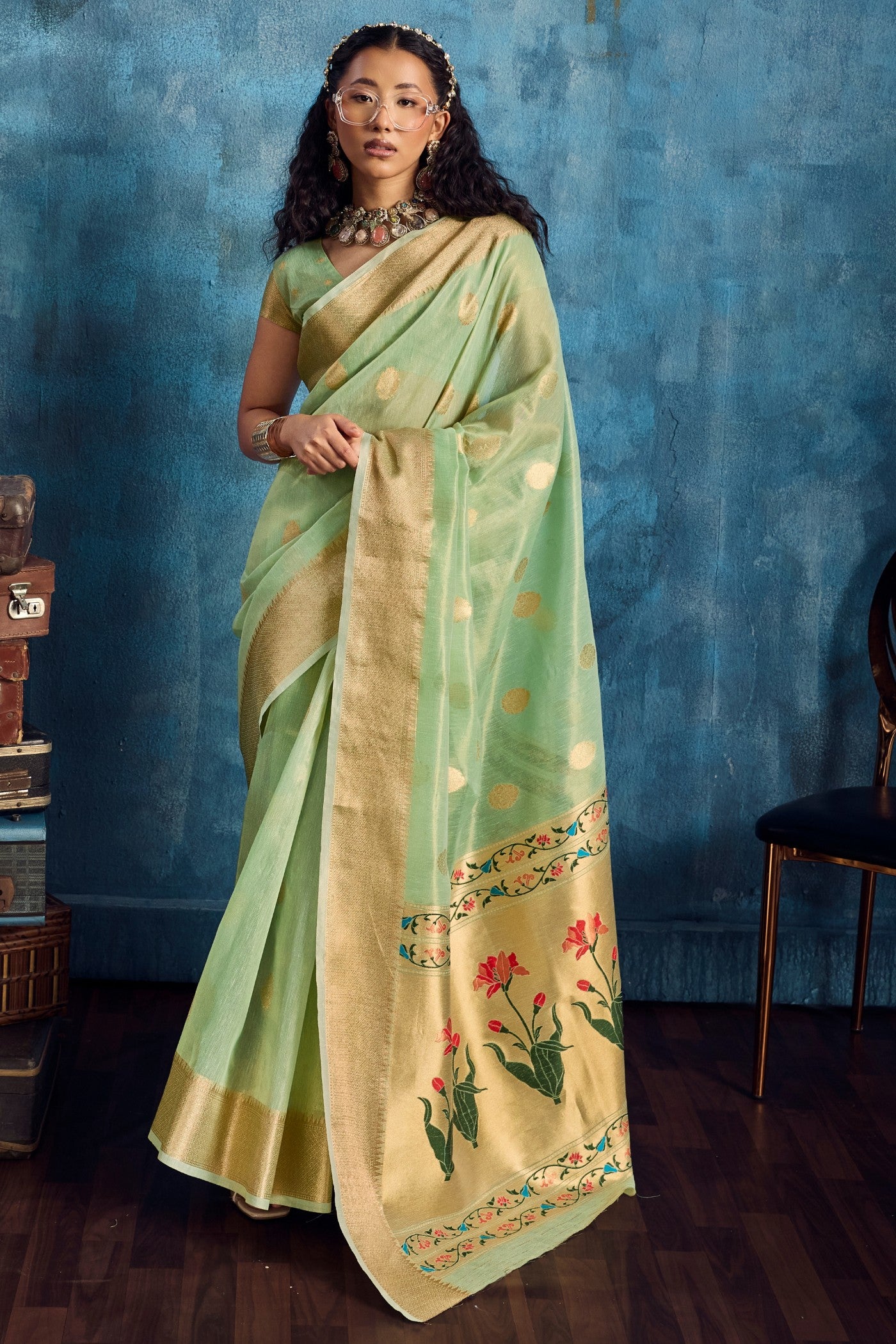
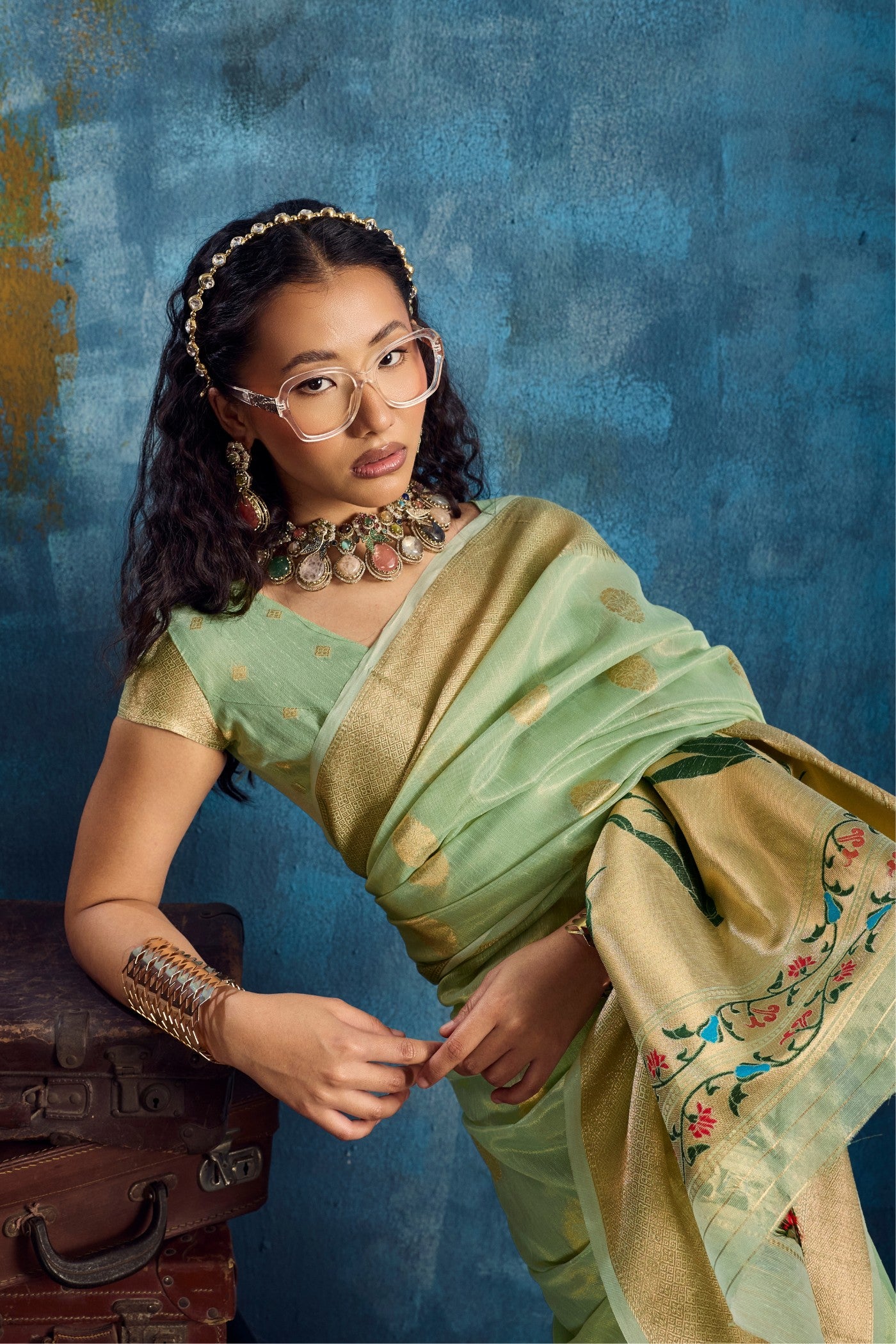
Artichoke Green Zari Woven Tissue Paithani Saree
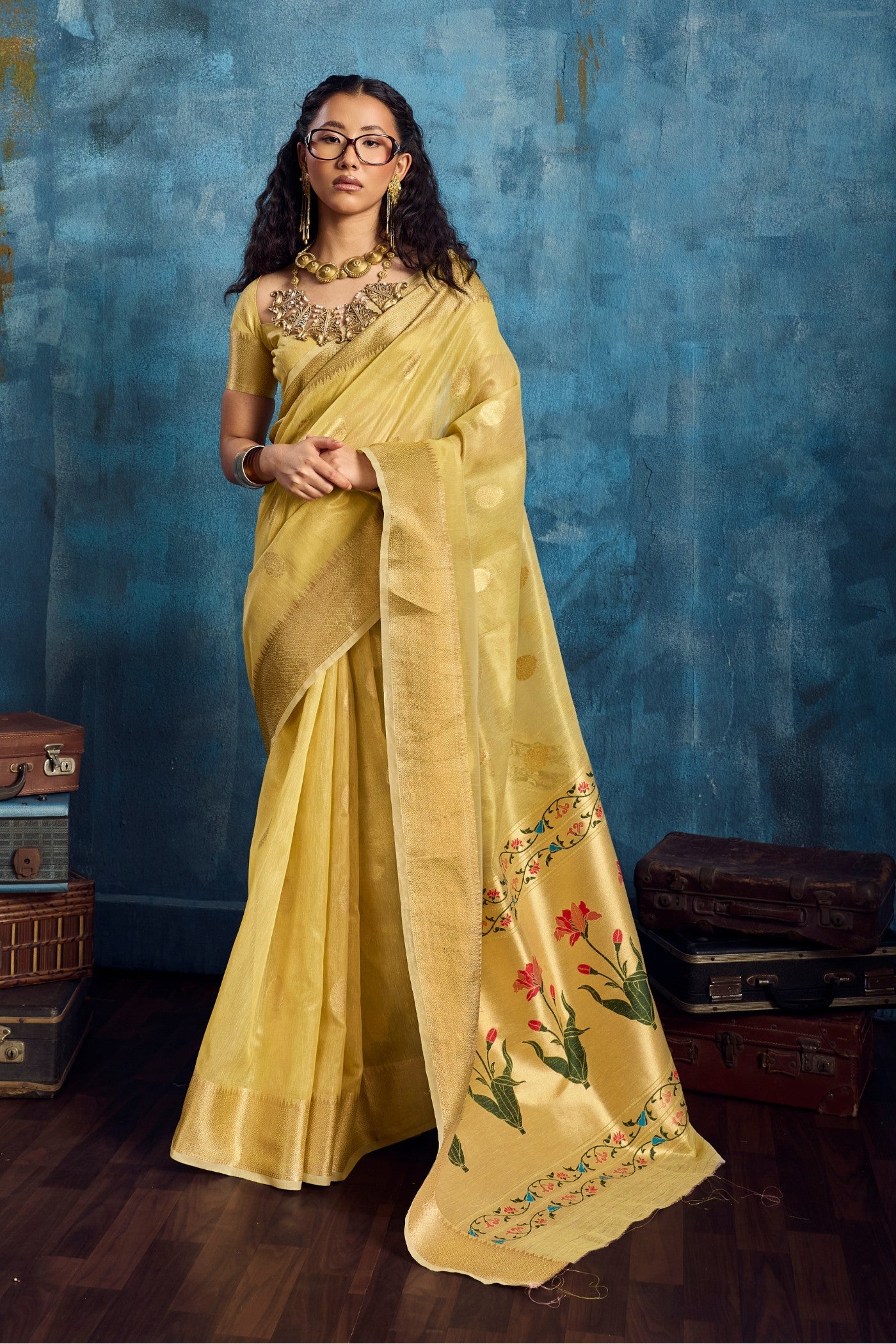
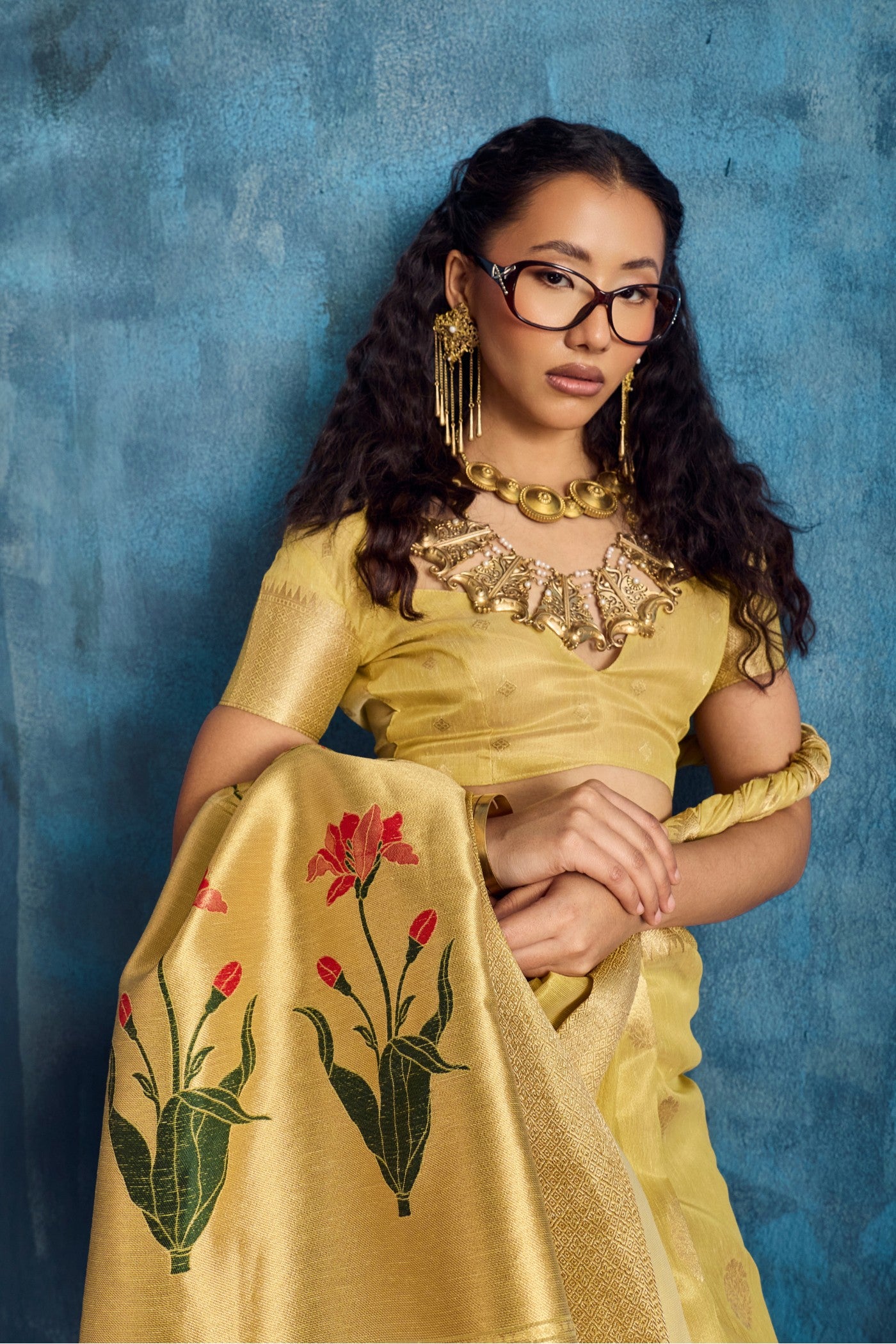
Banana Yellow Zari Woven Tissue Paithani Saree
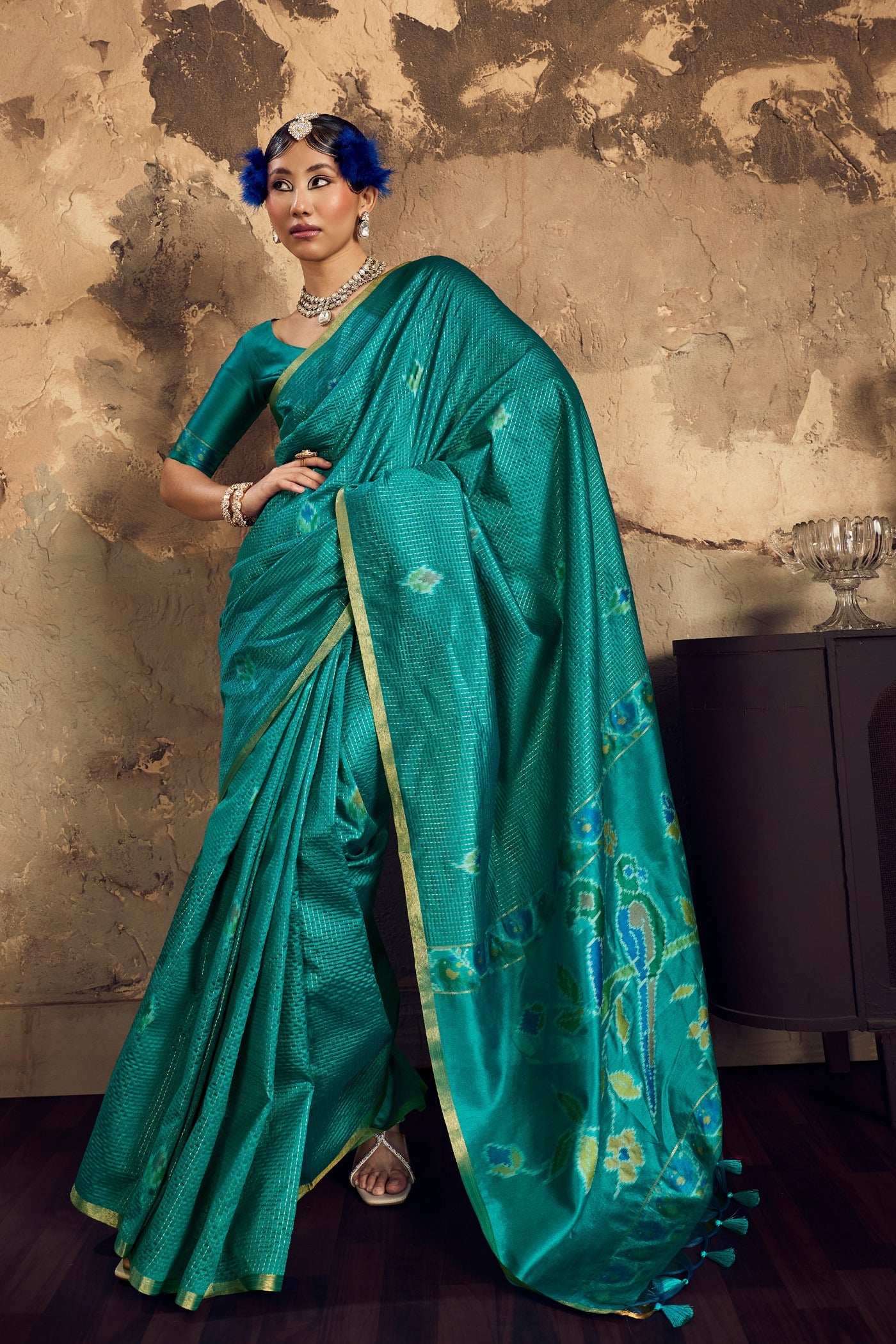

Lawn Green Tussar Paithani Fusion Handloom Saree
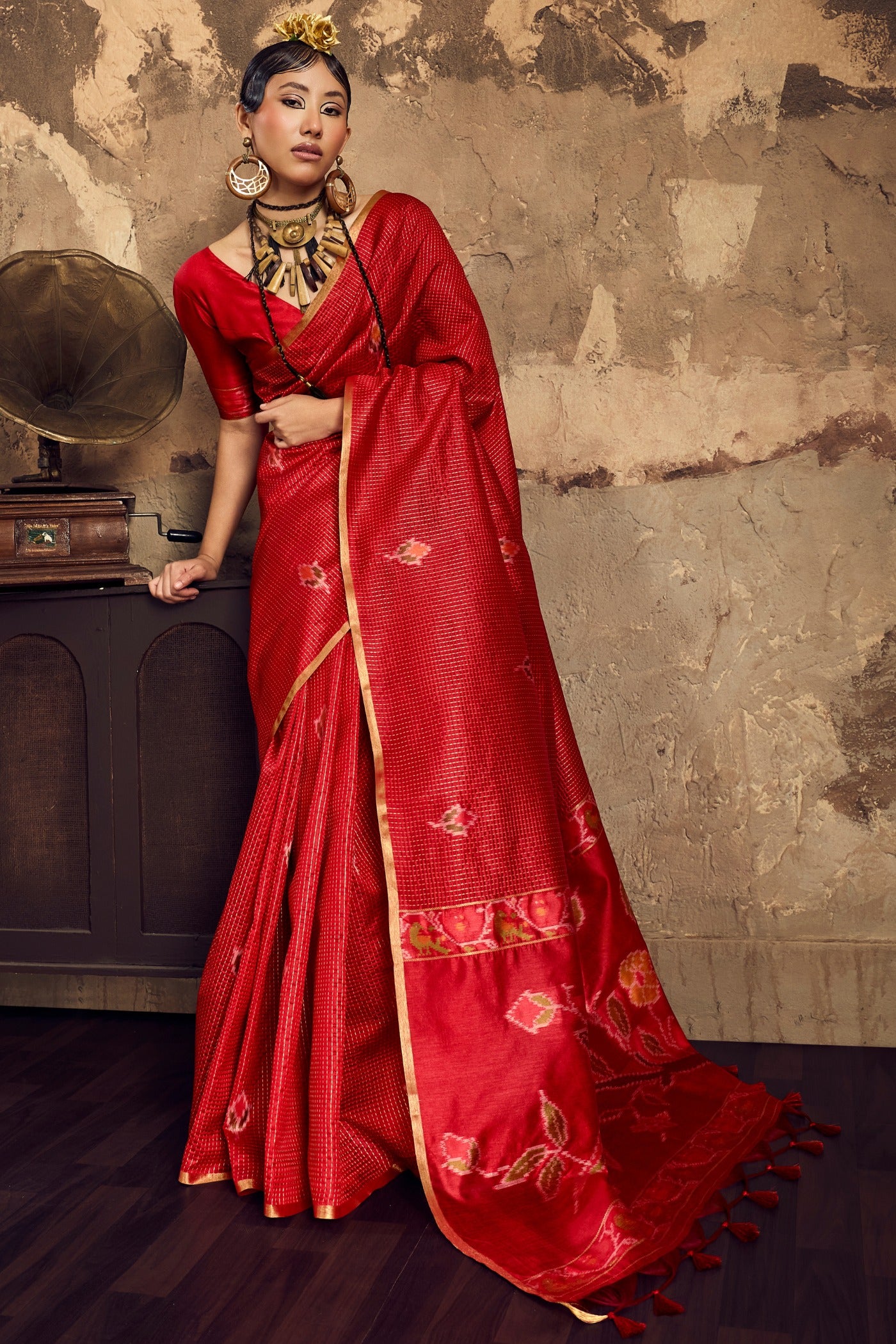
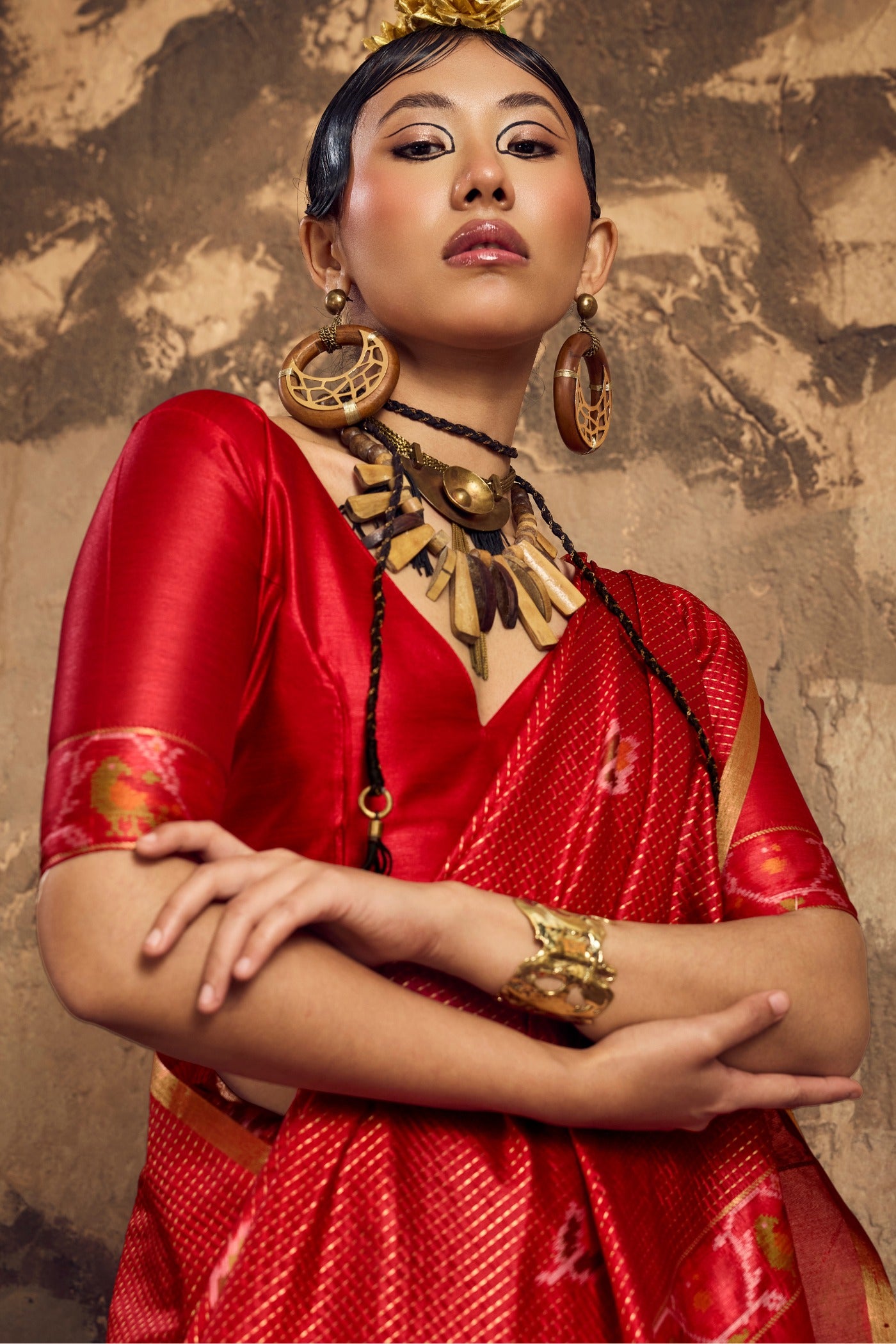
Medium Red Tussar Paithani Fusion Handloom Saree
Frequently Asked Questions — Paithani Sarees (पैठणी साड़ी) — Authentic Paithan Weave
How do I care for and wash a Paithani saree at home?
Paithani sarees require gentle care to preserve their zari work and silk lustre. For washing, dry cleaning is the safest option for valuable Paithani sarees. If washing at home, use cold water with a very small amount of mild silk-safe shampoo or baby shampoo — never regular detergent. Gently swirl the saree in the water without wringing or scrubbing, then rinse thoroughly with cold water. To dry, lay it flat on a clean cotton towel — never hang a wet Paithani as the weight of the water can stretch the fabric and distort the zari. For storage, wrap the Paithani in a soft muslin cloth (not plastic) with a few neem leaves to prevent moth damage. Avoid folding on the same crease repeatedly to prevent zari damage — refold along different lines each season. With proper care, a Paithani saree can last a lifetime and become a treasured heirloom.
What is the significance of the peacock motif in Paithani sarees?
The peacock (mor) is the most iconic and beloved motif in Paithani weaving, and its presence carries deep cultural and spiritual significance. In Maharashtrian tradition, the peacock symbolises beauty, grace, love, and good fortune — making it a natural choice for bridal and festive sarees. The Paithani peacock is typically depicted in profile, with its elaborate tail feathers forming the pallu design. What makes the Paithani peacock unique is the tapestry weaving technique: every feather is individually rendered using a separate thread bobbin, creating extraordinary colour depth and detail that cannot be replicated by any machine. In some heirloom Paithani designs, the peacock feathers contain up to 10 distinct colours woven in a single motif. The dancing-peacock pallu is considered the most prestigious Paithani design and commands a premium price.
How is a Paithani saree different from other silk sarees like Kanjivaram or Banarasi?
While Kanjivaram, Banarasi, and Paithani are all prestigious Indian silk sarees, they differ significantly in origin, technique, and aesthetic. Kanjivaram sarees from Tamil Nadu use the interlocking warp technique to join a separate body and border, and are known for their temple motifs and heavy pure mulberry silk. Banarasi sarees from Varanasi use intricate brocade weaving with Mughal-inspired floral jaal patterns and gold/silver zari. Paithani sarees from Maharashtra are woven using the tapestry technique — the closest Indian equivalent to European tapestry art — where each motif is built colour-by-colour with individual bobbins, allowing the vivid multicolour peacock and vine designs unique to Paithani. Paithani sarees also typically feature a square-checked body pattern (bangdi-mor or asawali) and a heavily ornamented pallu, distinguishing them instantly from both Kanjivaram and Banarasi styles.
How can I tell a genuine handloom Paithani from a powerloom imitation?
The handloom-vs-powerloom test is the single most important check when buying a Paithani. On a genuine handloom Paithani, the borders and pallu are finished neatly with no loose fraying, and because each motif is woven colour-by-colour with separate bobbins using the tapestry technique, the reverse of the motif looks almost as clean as the front. A powerloom imitation, by contrast, leaves a dense web of carried threads on the reverse and the motifs look flat and identical across many pieces. Two more giveaways: a real handloom Paithani is unique — no two are exactly alike — whereas powerloom Paithanis are mass-produced in thousands of identical copies; and handloom pure-silk Paithani feels soft, breathable and luxurious, while powerloom pieces feel coarser and noticeably lighter and cheaper. Production time also tells the story: a powerloom Paithani can be made in under fifteen days, while a genuine handwoven one takes months and sometimes over a year. At MySilkLove, most of the Paithani sarees on the live shelf are zari-woven, semi-handloom and tissue Paithani rather than fully handwoven pieces, and every listing states which tier it belongs to — so you can apply the tests above before you buy. When a fully handwoven Paithani is in stock it is sourced directly from Maharashtra weavers and carries its weaver ID card and Silk Mark; if that is specifically what you want, message us on WhatsApp and we will tell you what is currently available rather than sell you a woven piece as a handloom one.
Can a Paithani saree be draped in the traditional Nauvari (9-yard) style, and how is it different from a regular Paithani?
Yes — the Nauvari drape is considered the most formal and traditional Maharashtrian way to wear a Paithani, and it is the classic bridal look. The key difference is length: a standard Paithani is about 6 yards, while a Nauvari Paithani is a full 9 yards, which is what allows the distinctive Kashtha (dhoti-style) drape where the saree is tucked at the back. Because of this, a 9-yard Nauvari is a separate product category, so always check the listed length before buying if you specifically want the Kashtha style — a regular 6-yard Paithani cannot be draped as a true Nauvari. The 9-yard piece is most popular for weddings, Gudi Padwa, and important Maharashtrian ceremonies, usually in a jewel tone with the mor-bangadi (peacock and coin) pallu. At MySilkLove, Nauvari Paithani lengths are clearly marked on each listing, and our team can help you pick the right length for your occasion over WhatsApp.
Why are genuine Paithani sarees so expensive, and what is a realistic price for an authentic one?
A real handwoven Paithani is costly because it is one of the slowest, most labour-intensive weaves in India: each motif is built colour-by-colour with individual thread bobbins using the tapestry technique, and a single saree can spend from six weeks to many months on the handloom. That craft time is why genuine handwoven Paithani starts around Rs 6,000-8,000 in the wider market and climbs to Rs 50,000 or more for bridal and heirloom pieces, with honestly-labelled semi-handloom (roughly Rs 3,000-6,000) and power-loom tiers (from about Rs 1,500) below it. At MySilkLove, the Paithani collection currently runs from about ₹4,350 to around ₹8,400 in regular list prices — mostly zari-woven and semi-handloom pieces plus lightweight tissue Paithanis, each listing stating its exact tier — and seasonal offers applied at checkout often bring the payable price lower. The red flag is mislabelling: a saree sold as 'pure handwoven Paithani' under Rs 6,000 cannot be what it claims. Check the GI tag (Yeola and Paithan weaving clusters) and Silk Mark before paying handwoven prices — our handwoven pieces come with weaver ID cards, and our team can help you choose over WhatsApp.
What do the traditional colours of a Paithani saree mean?
Colour carries real meaning in a Paithani, rooted in Maharashtrian tradition, so choosing a shade is partly choosing a sentiment. Red stands for love, passion and celebration, which is why red and maroon Paithanis are classic bridal and festive choices, with maroon in particular signalling heritage and richness. Green, including the prized peacock green, symbolises nature's abundance, fertility and prosperity, making it a favourite for new beginnings and auspicious occasions. Purple is perhaps the most signature Paithani colour, associated with royalty, nobility and a touch of spiritual depth, a legacy of the Peshwai era when Paithanis were woven with real gold and silver zari for royalty. Blue suggests wisdom and stability, yellow joy and auspiciousness, and orange warmth and enthusiasm. Many heirloom Paithanis use a colour-changing shot effect, where the warp and weft are different colours so the saree shifts shade in the light. At MySilkLove, the live Paithani shelf is mostly zari-woven, semi-handloom and tissue pieces rather than fully handwoven ones, and every listing states which tier it belongs to, so you can choose a shade knowing exactly what you are buying. When a fully handwoven Paithani is in stock it carries its weaver ID card and Silk Mark. Our team can help you pick a colour to suit your occasion over WhatsApp.
Which blouse should I pair with a Paithani saree?
Because a Paithani is rich in colour and zari, the blouse should complement the saree rather than compete with it. The most classic, fail-safe choice is a contrast blouse that picks up one of the colours from the pallu or the border — for example, a deep green blouse with a purple Paithani, or a mustard-gold blouse with a peacock-blue piece — which makes the saree's multicolour motifs pop. A second timeless option is a plain silk blouse in the saree's border colour with simple gold zari or a thin gold border, ideal when the pallu is already very ornate. For brides and grand occasions, a fully zari-woven or lightly embroidered blouse with elbow or three-quarter sleeves and a high or boat neck gives a regal, traditional Maharashtrian look that pairs well with temple or thushi jewellery. For festive and daytime wear, a contrast cotton-silk blouse with a small back detail keeps things lighter and contemporary. A reliable rule: match the blouse to the border, and let the body and pallu of the Paithani lead. Many Paithanis at MySilkLove include a matching blouse piece, and our team can suggest a colour and neckline for your specific saree over WhatsApp.