

Silk Sarees in Jaipur: Where to Buy Online for Wedding Season (2026)

If you are buying a silk saree in Jaipur, the honest answer is that the city sells its own textiles brilliantly and other people's silk unevenly. Johari Bazaar and Bapu Bazaar are unbeatable for leheriya, bandhej and gota patti — the crafts Rajasthan actually makes. For a woven silk saree with real zari work, most Jaipur buyers end up either paying a marked-up middleman price or ordering online from the weaving belt directly. This guide covers which weaves suit Jaipur's wedding calendar, what they cost, and the one mistake nearly everyone makes.
The Jaipur silk gap: what the bazaars do and don't do
Johari Bazaar has been a textile market for centuries and it is genuinely excellent at what it specialises in. Two things are worth knowing before you shop there for silk. First, most saree shops in Johari Bazaar work on fixed prices — the bargaining culture you'd find in a Delhi or Surat market largely does not apply, so the price you're quoted is close to the price you pay. That is actually good news, because it means comparing a Jaipur shop against an online weave-belt price is a fair, like-for-like comparison rather than a haggling game.
Second, Rajasthan does not weave Banarasi or Kanjivaram. Those come from Varanasi and Kanchipuram respectively, so a Jaipur retailer is a reseller — sometimes a very good one, sometimes a third link in the chain. Once you know that, the decision stops being loyalty to a market and becomes a straightforward question: who is closest to the loom?

Jaipur's wedding calendar changes which weave you should buy
This is the part almost every online saree guide gets wrong for Jaipur, because most of them are written for Mumbai or Chennai humidity.
Jaipur's peak wedding and function season runs October through March. October still touches highs around 34°C, but by December the average high drops to roughly 24°C with lows near 12°C — genuinely chilly for an outdoor evening sangeet in a hotel lawn or a Amer-side venue. September, by contrast, still averages a high of about 34.7°C with monsoon humidity hanging on.
Here's a position I'll defend: Jaipur is the one major Indian wedding city where I would argue against automatically buying the lightest saree in the shop. A silk saree runs roughly 400g to 900g depending on weave and zari density. In a Mumbai August reception, 900g is punishment. At a Jaipur December baraat starting at 8pm in 13°C, that same 900g of woven silk is the only thing between you and a shawl ruining your drape. Buy the season you're actually attending, not the season you're shopping in.
Practical split: for September and October functions, go tissue, chiffon or a lighter soft silk. For December through February, a full-bodied handloom Banarasi earns its weight.
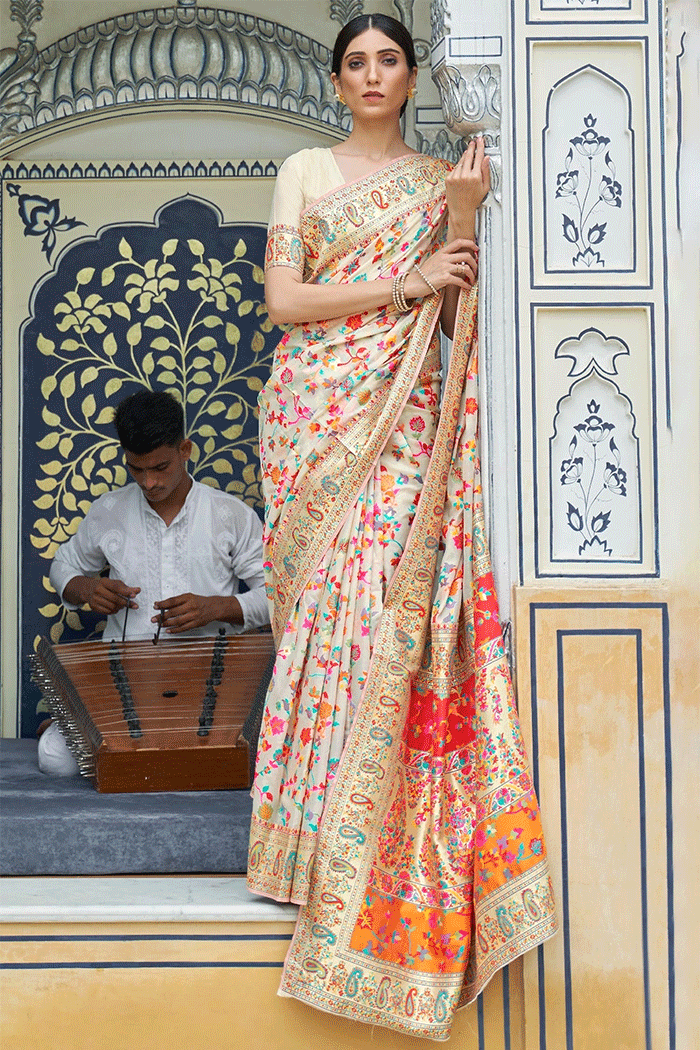
Rangkat: the Banarasi technique that suits Rajasthani colour taste
If you like the way Rajasthan puts two loud colours next to each other — pink against green, purple against gold — there is a Banarasi technique built for exactly that instinct, and it is under-bought.
In Rangkat weaving, the warp threads themselves are cut and re-joined in different colours across the width of the saree, so the two shades meet in a hard vertical line rather than fading into each other. It is not a print and it is not a border. The tell: turn the saree over and look at the reverse at the colour change — on a real Rangkat you can see the join in the warp itself. On a printed imitation the reverse is a flat, single-colour ground. It's a slow, fiddly thing to weave, which is why Rangkat pieces sit above plain single-colour Banarasi in price and why you rarely see them stacked in a bazaar.
For a Jaipur wedding guest who wants contrast without looking like everyone else in the row, this is the buy.
What to wear to which Jaipur function
- Daytime haldi or mehendi (Oct): tissue or chiffon. Light, breathable, photographs well in Jaipur's hard afternoon sun.
- Evening sangeet (Nov-Feb): handloom Banarasi with real zari. The cold works in your favour.
- Temple visit or a Govind Dev Ji darshan: soft silk in a modest palette, easy to drape and pin.
- Reception: a contrast-panel Rangkat or a deep jewel tone with a temple border.

Shop the Edit
Prices below are our regular list prices. Seasonal offers at checkout often bring these lower.
- Royal Purple and Green Handloom Rangkat Banarasi Satin Silk Saree — ₹5,814. The Rangkat colour-join described above, in the most Rajasthani pairing there is.
- Rich Maroon and Black Handloom Rangkat Banarasi Satin Silk Saree — ₹5,814. Reception-weight, and maroon photographs beautifully against Jaipur's pink sandstone.
- Turquoise Pearl Blue Banarasi Handloom Temple Border Silk Saree — ₹4,800. A cool blue that isn't in every wedding row.
- Lemon Chiffon Yellow Handloom Tissue Silk Saree — ₹5,169. The October daytime-function answer.
- Olive Green Chiffon Silk Saree — ₹4,647. Light, fluid, and forgiving in heat.
- Wine Purple Chiffon Partywear Saree — ₹4,794. Easy evening option for the smaller functions.
Browse the full Banarasi sarees range, or the handloom sarees edit if loom-woven is your priority. For lighter day functions, soft silk sarees drape most easily.
Ordering online in Jaipur: the three things to settle first
Jaipur is well served by courier networks, so delivery is rarely the issue. Three other things are:
Fall and pico. A woven silk saree usually needs both before its first wear. Local tailoring in Jaipur is quick and inexpensive — budget a day or two, not an afternoon, during peak wedding season when every tailor in the city is buried.
Blouse stitching. Get it done locally after the saree arrives so you can match the blouse piece in daylight. Note that stitched-blouse orders generally can't be returned, so decide before, not after.
Zari check on arrival. Before you cut anything, do the basic checks in our silk saree buying guide. If you're specifically shopping Banarasi, the complete Banarasi silk saree guide covers weave types, zari grades and what each price tier actually buys you.

Shop by function, craft or budget
If you are buying for one specific function rather than browsing, these edits narrow it fastest. The wedding saree edit gathers the heavier woven pieces that suit a Jaipur November-to-February evening, and every saree at the head of it is in stock right now. For the October daytime functions described above, the lightweight chiffon sarees range covers the same brief as the chiffon drapes in the edit — the Olive Green and the Wine Purple are both genuinely chiffon, while the Lemon Chiffon Yellow is a tissue saree despite what the shade name suggests. If it is Rajasthan's own crafts you want, our bandhani tie-dye sarees cover the bandhej end of what Johari Bazaar does best. And if you are working to a number, three of the six sarees above sit inside the ₹3,000 to ₹5,000 saree edit.
FAQ
Where is the best place to buy sarees in Jaipur?
Johari Bazaar and Bapu Bazaar are the strongest options for Rajasthani crafts — leheriya, bandhej, gota patti and block print. For woven silk like Banarasi or Kanjivaram, Jaipur shops are resellers rather than weavers, so buying online direct from the weaving belt usually gets you closer to the loom for the same money.
Can you bargain for sarees in Johari Bazaar?
Mostly no. Unlike many Indian markets, Johari Bazaar saree shops largely work on fixed prices and don't expect haggling. That makes it easy to price-compare against online sellers honestly — the number you're quoted is the number you'll pay.
Which saree is best for a Jaipur winter wedding?
A full-weight handloom Banarasi. Jaipur's December lows sit around 12°C, so an outdoor evening function is genuinely cold. A heavier woven silk of roughly 700g to 900g holds its drape and keeps you warm without needing a shawl over your pallu.
Ready to shop? Start with the Banarasi sarees collection — filter by colour, and buy for the month your function actually falls in.


Leave a comment
This site is protected by hCaptcha and the hCaptcha Privacy Policy and Terms of Service apply.