

How Much Does a Silk Saree Weigh? 400g to 900g, Decoded (2026)
A six-yard silk saree usually weighs somewhere between 350g and 950g. Sheer organza and printed georgette sit at the bottom (roughly 350–500g), everyday woven silks and Tussars land in the middle (500–700g), and a heavily zari-worked Kanjivaram or Banarasi tops the range at 700–950g. That single number tells you more about how a saree will feel on a long day than almost anything else on the product page — and almost nobody publishes it.

The silk saree weight ladder
Here is the range we actually see when we weigh stock, six yards plus an unstitched blouse piece:
- 350–450g — organza, chiffon, sheer printed silks. Crisp or floaty, almost nothing on the shoulder. Pleats want to spring open.
- 450–550g — satin georgette, soft printed silks, Ajrakh-printed blends. Fluid, clings to the body, pleats stay narrow.
- 550–700g — soft silks, Tussars, lighter woven Banarasis. The comfortable middle. Enough body to hold a pleat, light enough for a full day.
- 700–950g — bridal Kanjivarams, heavy zari Banarasis, Paithani with a full-motif pallu. This is where the grandeur lives, and where your shoulder starts keeping score.
- Around 800g — a nine-yard Nauvari. Three extra yards of fabric, no zari needed. You will feel it after three hours of Dandiya, and you will still be glad you wore it.

Weight is a comfort signal, not a quality score
There is a persistent shop-floor line that heavier always means better silk. That is only half true, and the half that is true is narrow: within a single weave family, a genuine pure-silk Kanjivaram really is heavier than an imitation, because mulberry silk yarn and real zari have mass that polyester does not. A six-yard piece sold as pure Kanjivaram that weighs 400g is telling on itself.
But comparing across families is meaningless. A superb 420g handloom organza is not a worse saree than a 900g zari Banarasi — it is a different tool for a different day. If you want the authenticity checks specifically, we have written those up separately in our Kanjivaram buyer's guide. This piece is about the thing nobody warns you about: how long you can actually stand in it.
What weight does to your drape
Weight changes the mechanics of draping more than most people expect.
Under 500g: pleats refuse to stay. You will need more pins than you think — one at the pleat top, one mid-pleat, one at the pallu shoulder — and a petticoat with a firm waistband so the saree has something to grip. Sheer fabrics also demand a proper lining; skipping it is the single most common reason an organza drape looks cheap in photos.
600–700g: the sweet spot. Pleats fall on their own, the pallu holds a fold without ironing, and one safety pin at the shoulder is genuinely enough.
Over 800g: the drape looks magnificent and the load concentrates in two places — your left shoulder and the waistband. Two fixes that actually work: use a cotton petticoat with a wide drawstring (satin waistbands slide under load), and get your blouse hooked rather than tied, because a knotted blouse string migrates all evening under a heavy pallu.

Buy by hours-on-feet, not by occasion
Our honest opinion, after a lot of festive seasons: pick your weight by how long you will be upright, not by how important the event is.
- Two to three hours, seated, air-conditioned — a reception, a muhurat, a photo-heavy evening. Go heavy. This is what a 900g zari Banarasi is built for.
- Five to six hours, mixed standing — a wedding day as a guest, a festival lunch. Stay at 550–700g. You will still look woven and rich, and you will not be counting minutes.
- Eight hours or a full workday — office, Sawan Somvar, a travel day. Stay under 500g. Organza and satin georgette are not a compromise here; they are the correct answer.
The mistake we see most often is a bride's mother buying an 850g Kanjivaram for a function where she will be on her feet greeting guests for seven hours. The saree is beautiful. By hour four it is furniture.

Shop the Edit
Four sarees, four points on the ladder. Prices below are our regular list prices — seasonal offers at checkout often bring these lower.
- Coin Grey Woven Organza Saree — ₹2,901. Crisp, light, office-appropriate. The full-day end of the ladder; browse more in organza sarees.
- Midnight Blue Ajrakh Printed Satin Georgette Silk Saree — ₹3,011. Fluid satin base with hand-applied Ajrakh block printing; drapes close to the body and packs flat for travel.
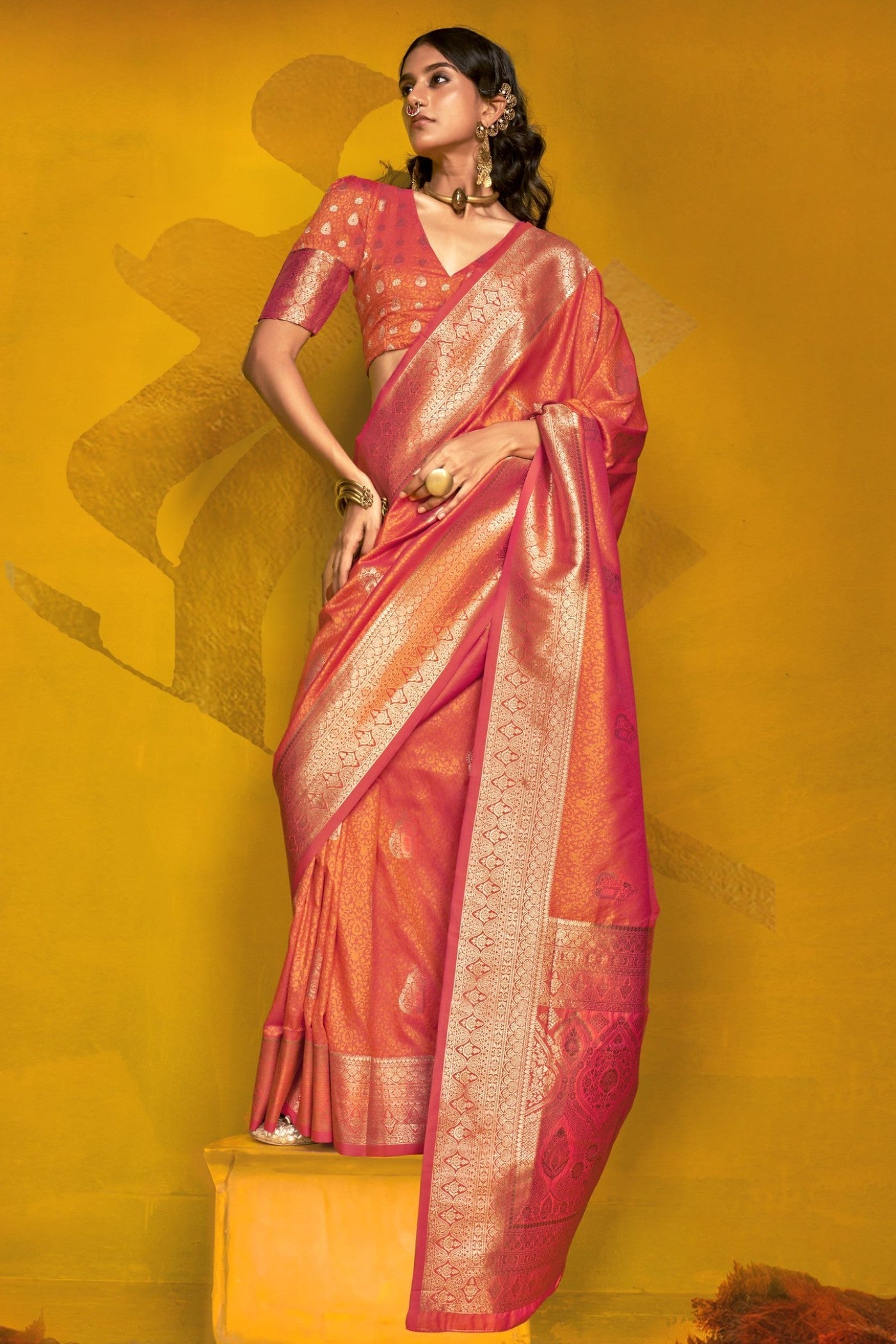
- Cavern Pink Kanjivaram Woven Silk Saree — ₹5,530. A Kanjivaram-style woven silk blend, so it sits in the mid-weight band rather than the bridal one — the reason it wears comfortably through a long function.
- Givry Pink Zari Woven Banarasi Saree — ₹7,155. Dense zari across body, border and pallu. This is the heavy end, and it photographs like it. More at Banarasi sarees.
If you are still deciding between weaves before you worry about grams, start with our silk saree buying guide.
Shop by weight band
- 550–700g, the comfortable middle: browse lightweight soft silk sarees and pure Tussar silk sarees — the two families that hold a pleat without punishing your shoulder.
- 700–950g, the heavy end: the bridal weight lives in Kanjivaram silk sarees, where mulberry yarn and real zari carry the mass this guide describes.
- Around 800g, nine yards: the Nauvari drape sits in our Maharashtrian sarees — weight from fabric length rather than zari.

FAQ
How much does a pure Kanjivaram silk saree weigh?
A genuine six-yard pure Kanjivaram in heavy silk typically weighs 700–950g, and bridal pieces with dense zari can exceed that. A saree sold as pure Kanjivaram that weighs closer to 400g is almost certainly a blend or an art-silk imitation, since real mulberry silk and zari carry real mass.
Which silk saree is lightest to wear all day?
Organza, chiffon and printed satin georgette are the lightest, generally 350–500g for six yards. They breathe better in humidity and put almost no load on your shoulder, which makes them the practical choice for office wear, long travel days and outdoor daytime functions.
Does a heavier saree always mean better silk?
Only within the same weave. A heavier Kanjivaram is usually a purer Kanjivaram, but comparing an organza to a Banarasi by weight tells you nothing about quality. Judge weight against what the weave is supposed to be, then judge the saree against how long you need to wear it.

Know your number before you shop — it makes every other decision easier. Browse the full range in our saree collection and pick the weight that matches your day, not just your occasion.

,%20everyday%20woven%20silks%20and%20Tussars%20land%20in%20the%20middle%20(...)
Leave a comment
This site is protected by hCaptcha and the hCaptcha Privacy Policy and Terms of Service apply.