

Buying Silk Sarees Online in Australia (2026): AUD Prices, the A$1,000 GST Line & Delivery to Sydney, Melbourne & Perth
Almost every silk saree sold from India lands in Australia below the A$1,000 threshold — which means it clears as a low-value import, with 10% GST collected at checkout or on delivery rather than a customs bill at the border. At roughly A$1 = ₹68 (mid-market, late August 2026), A$1,000 is about ₹68,000. MySilkLove's entire live catalogue sits far under that line, so an Australian order is a normal parcel, not a customs event. The two things worth checking before you pay are the exchange rate you are actually being charged and whether the weave is what the listing says it is.
The A$1,000 line — and why your saree will never cross it
Australia runs a two-tier import system split at A$1,000. Below that line, goods are treated as low-value imports: GST of 10% applies, but it is collected by the overseas supplier or marketplace at the point of sale, or by the carrier on delivery — there is no border clearance step, no customs broker, no import declaration for you to file. Above A$1,000, the parcel goes through formal importation: GST, any customs duty, and a processing charge are assessed at the border before release.
The practical takeaway for saree buyers is that the second tier is theoretical. Live silk sarees on MySilkLove run from about ₹2,617 to the high teens in thousands of rupees — roughly A$39 to A$280. Even a heavy bridal piece plus stitching does not approach A$1,000. If a seller tells you an Australian customs bond, broker fee or import declaration is needed for a single saree, that is a sign to walk away.
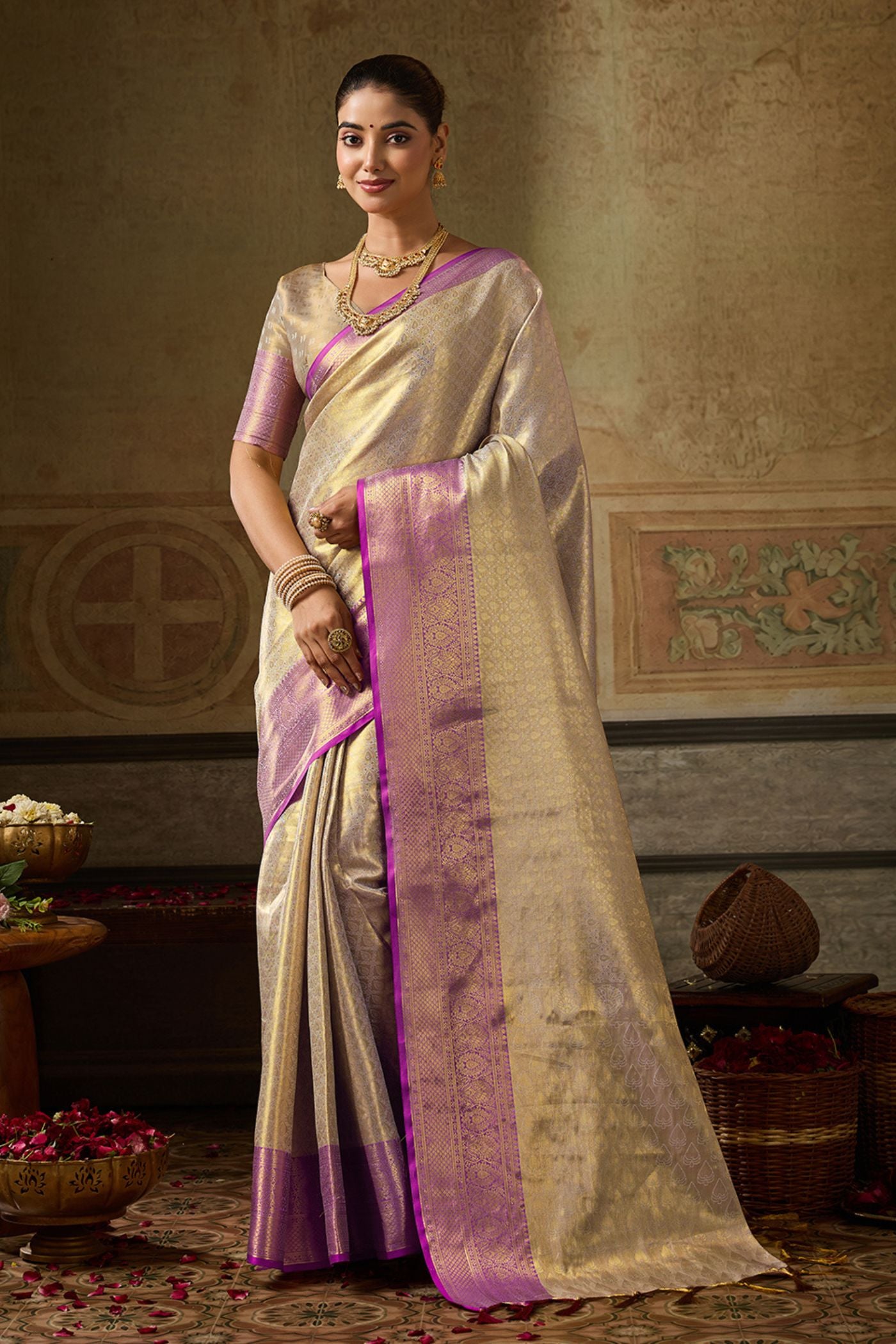
What a silk saree actually costs in AUD
These are live list prices from the MySilkLove catalogue, converted at approximately ₹68 to the Australian dollar (mid-market rate, late August 2026). Your card issuer will apply its own rate and usually a foreign-transaction fee of 2–3%, so budget slightly above the AUD column.
| Tier | List price (INR) | ≈ AUD | What sits in this band |
|---|---|---|---|
| Everyday / daily wear | ₹2,617 – ₹3,500 | A$39 – A$52 | Cotton soft silk and soft silk blends, light drape, easy to pack |
| Entry woven Kanjivaram | ₹3,899 – ₹4,400 | A$57 – A$65 | Zari-woven Kanjivaram with contrast borders — the volume band |
| Mid-weight festive | ₹4,600 – ₹7,000 | A$68 – A$103 | Heavier zari work, wider borders, Banarasi and Kanjivaram |
| Occasion & wedding guest | ₹7,000 – ₹12,000 | A$103 – A$176 | Wedding Edit pieces, tissue and organza silks |
| Statement / bridal | ₹18,000+ | A$275+ | Georgette Patola, designer tissue Dola silk |
On global.mysilklove.com these prices display in Australian dollars rather than rupees, so you see the AUD figure before you commit. The Australia buying page covers delivery and payment specifics for Australian addresses.

Duty: what India–Australia ECTA does, and what it does not
Australia's standard customs duty rate on clothing and textiles is 5%. Under the India–Australia Economic Cooperation and Trade Agreement (ECTA), which came into force in December 2022 and completed its tariff phase-down at the start of 2026, most Indian textile goods now enter Australia at 0% duty.
Here is the honest caveat most guides skip: that 0% rate is claimed with an ECTA certificate of origin, and rules of origin require a defined share of value to originate in India. Commercial shipments carry that paperwork. A single retail parcel usually does not. In practice this rarely bites, because duty is not assessed at all on goods under A$1,000 — the low-value regime collects GST only. But it does mean you should not assume a blanket duty exemption if you are importing several sarees together at a combined value above the threshold.
How to check a Kanjivaram before you pay
The single most useful authenticity test on a Kanjivaram is the korvai border. In a true korvai, the body and the contrast border are woven on separate warps by two weavers working the same loom, then interlocked at the join with a hand-worked pitni. Turn the saree over: a genuine korvai join shows a fine, slightly toothed interlock along the border line, and the border colour is solid on both faces. A printed or attached border shows a straight seam, a glued edge, or a border that is pale on the reverse.
Two more checks worth making. First, weight — a woven Kanjivaram in the ₹4,000–₹5,000 band typically runs 450–650g; a piece claiming heavy zari at 350g is not carrying the metal it says it is. Second, read the fabric field, not the poetry. A listing that says Silk Blend is a blend, regardless of what the title suggests, and a blend is a perfectly good buy at that price — it just is not a pure-silk purchase. MySilkLove labels blends as blends on the product page; check it before you order.
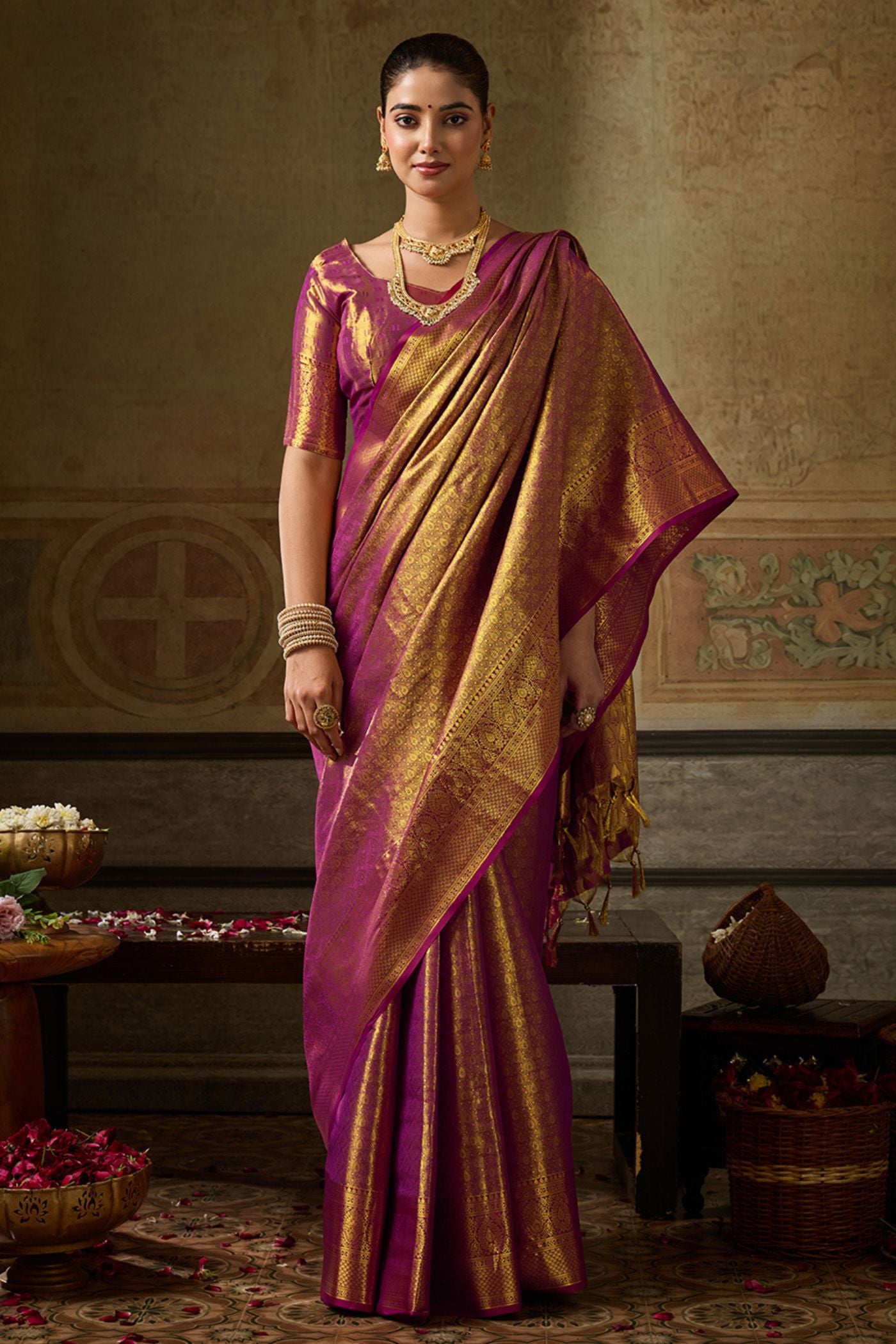
Shipping and delivery to Australian cities
Shipping is not free on every order. It is free above ₹6,000 (about A$88), and that threshold rises to ₹7,000 (about A$103) when blouse stitching moves the order onto the stitched-goods profile. Below those values you pay a shipping charge at checkout. Orders ship duty-unpaid, so the 10% GST is settled either at checkout or by the carrier before delivery.
Delivery to Sydney, Melbourne, Brisbane, Perth and Adelaide typically runs a working week or a little more from dispatch, with regional and WA addresses at the longer end. Two policy points to know before ordering from Australia: international orders are not eligible for exchanges, and the return window is two days from delivery, with reverse shipping and any duty deducted from the refund. Blouse stitching (₹1,599 or ₹1,999 depending on style) makes an order non-returnable. If you are unsure of fit, order the saree unstitched and have the blouse made locally.
Frequently asked questions
Will I be charged GST on a saree from India?
Yes. Australia's 10% GST applies to imported goods at every value — the A$1,000 threshold only changes who collects it and when. Under A$1,000 it is collected at the point of sale or by the carrier; over A$1,000 it is assessed at the border along with duty and a processing charge.
Do I pay customs duty on an Indian saree?
Generally no, on a single retail parcel. Duty is not assessed on low-value imports under A$1,000, and ECTA has removed tariffs on most Indian textiles for shipments that carry a certificate of origin. Duty only becomes a live question if you consolidate several sarees above the threshold without origin documentation.
What is a realistic budget for a wedding-guest saree in Australia?
A$100 to A$180 covers the occasion and wedding-guest band comfortably, including GST. Below A$60 you are in everyday soft silk territory, which drapes beautifully but will not read as formal at an Indian wedding. Above A$275 you are into statement bridal pieces.
Can I return a saree from Australia if it does not suit me?
Returns are accepted within two days of delivery, but exchanges are not offered on international orders, reverse shipping and duty are deducted from the refund, and stitched blouses void the return. Given the freight distance, it is worth checking colour and weave carefully — and asking for additional photographs — before ordering rather than relying on a return.

Where to start
If you are buying for a wedding season, start with the Kanjivaram sarees collection for woven zari pieces and the Wedding Edit for heavier occasion sarees. For something lighter that survives an Australian summer and a long-haul suitcase, the soft silk sarees and pattu sarees collections are the practical picks.
Three more edits worth browsing before you order
- The mid-weight festive band above is half Banarasi — browse the Banarasi saree collection for zari-woven drapes in that range.
- For the tissue silks named in the occasion band, the tissue sarees edit is light enough to pack flat for the flight.
- If the korvai test above is what you are shopping for, our handloom sarees are the loom-woven pieces where that join is worth checking.
Prices and exchange rates quoted are accurate as at late August 2026 and will move. Import rules are summarised for general guidance and are not tax advice; check current Australian Taxation Office and Australian Border Force guidance for your specific order.


Leave a comment
This site is protected by hCaptcha and the hCaptcha Privacy Policy and Terms of Service apply.