

Which Saree Colours Photograph Best? 6 Shades Decoded for Festive Light (2026)

Teal, emerald green, wine, steel grey, deep rose and aubergine purple are the six saree colours that photograph reliably across every kind of festive light — diya flame, warm LED, and a phone's cold flash. The three that fail are, unfortunately, the three people buy most for festivals: flat black, bright cherry red, and pure white. The difference isn't the colour you see in the shop. It's what survives your camera's white balance.
What Festive Lighting Actually Does to a Saree
Festive photographs are taken under the worst lighting conditions of the year, and nobody plans for it.
A diya flame sits around 1,800–2,000K. Warm decorative LEDs run 2,700–3,000K. Both push everything in frame towards amber. Under that light, blues drift grey-green, ivory goes distinctly yellow, and silver zari reads as gold. Then someone pulls out a phone, the flash fires at roughly 5,500K, and the entire colour temperature of the scene flips in a single frame.
Your phone's auto white balance will correct for your skin. It will not correct for your saree. That's the whole problem in one sentence.
The shades that hold up have two things in common: mid-range luminance — not near-black, not near-white — and enough saturation to still read as a colour after the camera has finished neutralising the amber.
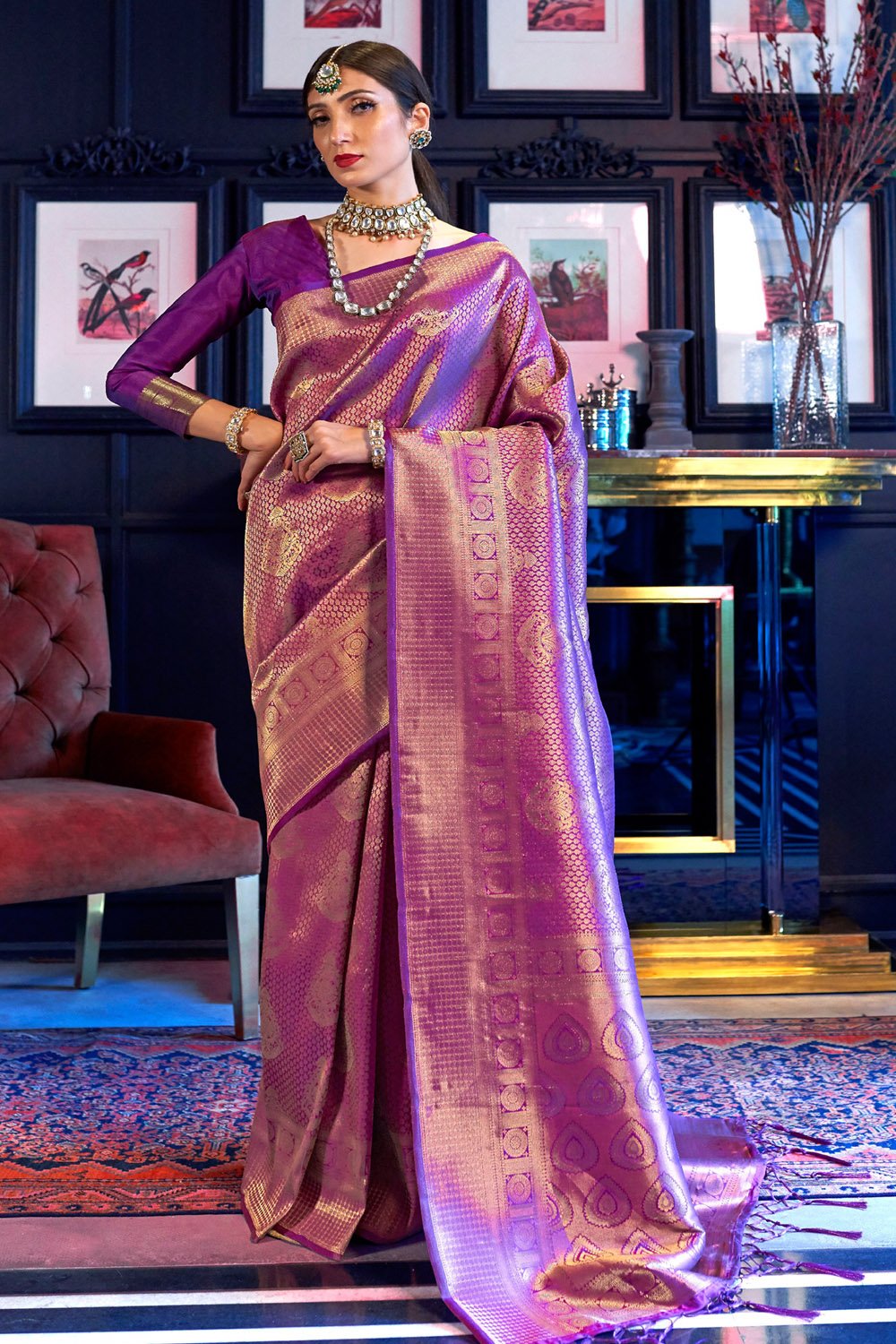
The 6 Shades That Hold Up
1. Teal — the single most reliable festive colour. Teal sits on the fence between blue and green. Warm light nudges it green; cool flash nudges it blue. Either way it stays a saturated colour instead of collapsing into grey. This is why teal Paithani has quietly become the most photographed weave at Maharashtrian weddings.
2. Emerald green. Deep enough to carry visual weight, saturated enough to survive an amber cast. The 2026 festive direction across the market has been emerald over plain green, sapphire over plain blue — and the camera agrees with the stylists for once.
3. Wine and deep berry. There's a technical reason wine has displaced bright red. Phone camera sensors clip the red channel before any other, so a highly saturated cherry red saturates to a flat blob and takes the border detail with it. Wine carries enough blue to stay inside the sensor's range.
4. Steel grey and pewter. The sleeper pick. Grey is neutral, so it can't colour-cast in either direction, and it hands the entire frame over to the zari. If you want the border to be the subject of the photograph, wear grey.
5. Deep rose and fire pink. Warm, but well short of the clipping point, and it works with warm festive light rather than fighting it. Particularly good for indoor puja photography where there's no flash at all.
6. Aubergine and midnight purple. Reads almost black to the naked eye in low light, but unlike true black it retains enough colour information for the camera to recover pleat and drape detail.

Three Colours That Photograph Badly — and We Should Say So
Flat black. A black saree gives the camera nothing to expose for. Pleats, drape and border merge into one silhouette, and phone night mode will try to lift the shadows, which introduces noise across the whole garment. Black is a wonderful saree to wear. It is a poor saree to be photographed in under diyas.
Bright cherry red. The clipping problem above. If red is non-negotiable for the occasion — and at weddings it often is — go a shade or two deeper into brick or wine.
Pure white and ivory. Under 2,000K light, white goes yellow. Under flash, it blows out to paper. It's the only colour that fails in both directions at once.
The Zari Matters More Than the Colour
Here's the part almost no styling guide covers, and it's the one worth remembering.
Traditional zari is a fine silver wire, gilded with gold, wound around a silk core. Because it's a wound thread with a slightly irregular surface, it returns a diffuse warm glow — the camera reads it as light, not as a hot spot. Metallised polyester zari, by contrast, is essentially a flat film. Under a direct flash it throws back a hard, mirror-white specular highlight that clips instantly, and your carefully woven peacock motif becomes a white shape with no detail inside it.
So: if you know you'll be photographed with flash, choose a woven zari saree over a foil-printed one. And a practical trick that costs nothing — stand at roughly a 30–40° angle to the person holding the phone rather than square-on. The highlight then rolls across the pleats instead of firing straight back at the lens. It's the difference between a border that shimmers and a border that's a white streak.
If you're still deciding between weaves before you get to colour, our complete silk saree buying guide covers how to tell woven zari from printed metallic before you order, and the saree occasions guide maps weave to event.

If You Only Remember One Rule
Mid-tone, saturated, and woven — not near-black, not near-white, and metallic work that's woven in rather than printed on. Every shade below passes all three tests.
Shop the Edit
- Teal Green Zari Woven Paithani Saree — ₹4,948. Paithani silk. The teal deepens under evening light while the woven border keeps its definition, which is exactly the behaviour you want.
- Dark Teal Green Zari Woven Banarasi Saree — ₹3,405. Banarasi silk with gold and silver zari brocade, so the metallic reads warm under diyas and cool under flash.
- Emerald Green Banarasi Handloom Raw Silk Saree — ₹4,035. Handloom-woven, with the slightly textured surface that diffuses hard light instead of bouncing it.
- Wine Berry Purple Satin Silk Saree — ₹3,987. Satin silk. Note that satin's high sheen is the one thing that does reward soft light over flash.
- Steel Grey Organza Woven Paithani Saree — ₹4,665. The neutral pick, built to let the zari border do the talking.
- Fire Rose Pink Woven Paithani Saree — ₹5,332. Woven Vithala and Rukhmani motifs; a puja-day saree that photographs beautifully without flash.
These are regular list prices — seasonal offers at checkout often bring them lower. For more of the same palette, browse Paithani sarees, Banarasi sarees and the full green saree edit.

Frequently Asked Questions
Which saree colour is best for night photography?
Teal, followed by emerald green. Both hold saturation when your phone's auto white balance corrects for warm decorative lighting, and both sit in the mid-luminance range where a camera can still separate pleats, border and pallu instead of merging them into one dark mass.
Does a black saree photograph well?
Rarely, under festive lighting. Black gives the sensor almost no tonal separation, so drape and border detail flatten into a single silhouette, and night mode adds visible noise while trying to lift the shadows. If you want dark, aubergine or midnight purple gives you the same drama with recoverable detail.
Should I choose gold or silver zari for photographs?
Gold zari is more forgiving. Under warm 2,000K festive light silver already reads gold, so a gold-zari saree simply looks intentional. Silver zari shines under daylight and cool white LEDs. What matters more is that the zari is woven rather than foil-printed — printed metallic clips under flash.
Ready to Pick Your Festive Shade?
The festive run from Navratri on 11 October through to Diwali is the most photographed stretch of the year. Choose the shade that survives the lighting, not just the one that looks best on a shop shelf. Start with the full silk saree collection and filter by the six shades above.

Shop the Shades by Colour
The green edit is linked above. Here are the other shades from this guide, each with its own collection:
- Aubergine, midnight and wine. The deep tones that keep their colour under diya light live in the purple saree collection — including the woven Kanjivaram wine berries and the printed satin-crepe purples.
- Teal. Teal sits on the fence between blue and green, so it is worth checking both sides: the green edit above, and the blue saree collection for the sapphire-to-teal end of the range.
- Deep rose and fire pink. The warm shades that work with festive light rather than against it are in the pink saree collection.
- Woven zari, not foil print. The rule that matters most under flash. Everything in our handloom saree collection is loom-woven, so any metallic work is part of the cloth rather than printed onto it.


Leave a comment
This site is protected by hCaptcha and the hCaptcha Privacy Policy and Terms of Service apply.