
Article: Soft Silk Sarees in the UAE (2026): Soft Silk vs Pure Kanjivaram, What You'll Pay & How to Buy Online from India
Soft Silk Sarees in the UAE (2026): Soft Silk vs Pure Kanjivaram, What You'll Pay & How to Buy Online from India
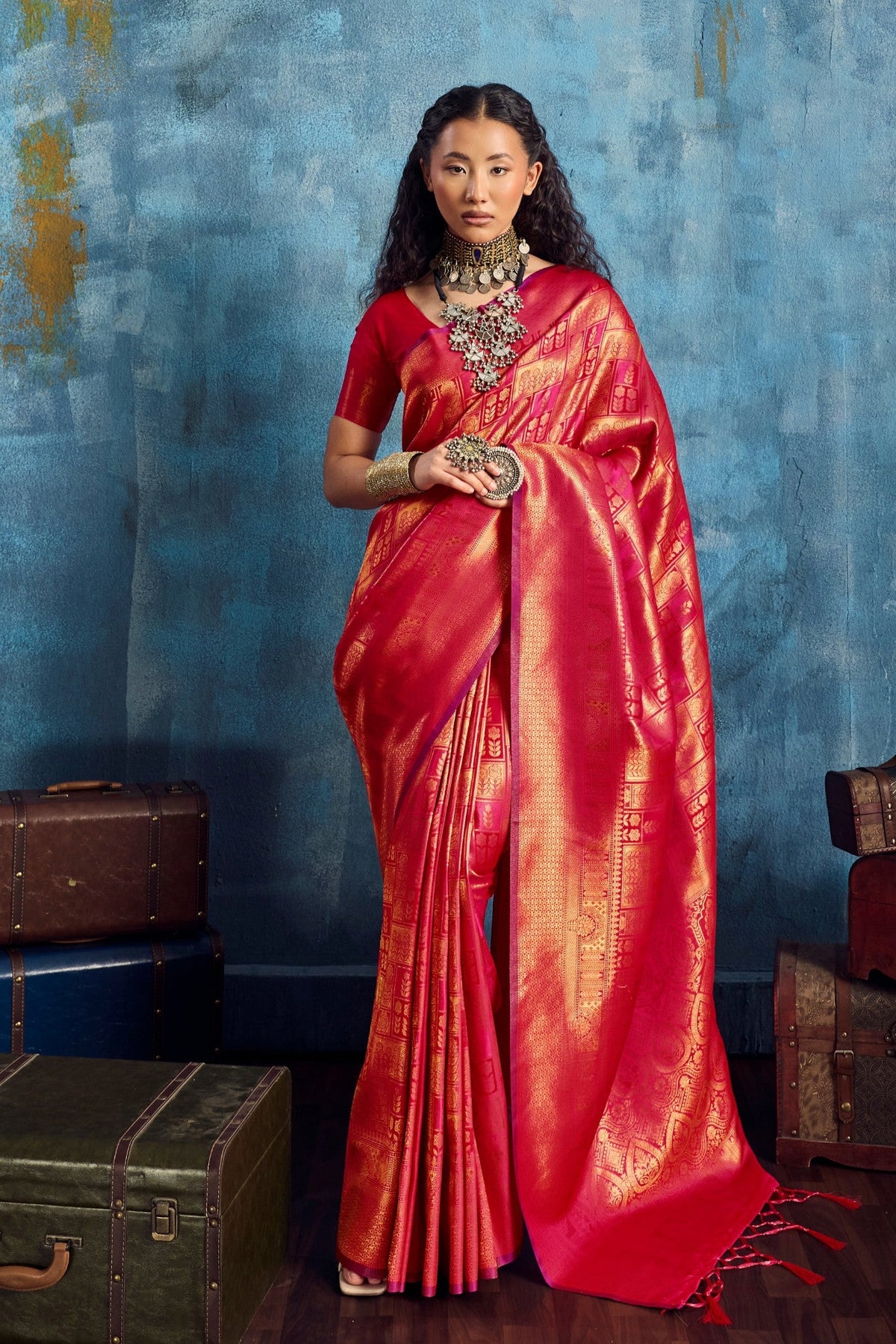
Quick answer: If you want a saree you can actually wear through a UAE evening, a soft silk saree is usually the smarter buy than a heavy bridal Kanjivaram: it is lighter, drapes closer to the body, and is easier to pack and store. The catch is that "soft silk" is a loose market label, not a fabric standard, so before you order from India check the fibre composition, the weave (handloom or powerloom), and the zari type on the product page. On our global store prices show in AED, and shipping to the UAE is free.
What "soft silk" actually means (and what it doesn't)
Unlike Kanjivaram, Banarasi or Mysore silk, "soft silk" is not a GI-tagged craft or a regulated term. In Indian saree retail it is used for three quite different things:
- Lightweight pure silk — mulberry silk woven with finer yarn and a lighter zari load, including the lighter "Kanchi soft silk" styles that borrow Kanjivaram motifs without the full bridal weight.
- Satin and jacquard soft silks — a smooth, fluid face with woven Banarasi-style motifs; these are often handloom or powerloom and the fibre content varies, so read the listing.
- Blends sold as "soft silk" — silk mixed with viscose, modal or polyester. Nothing wrong with these at the right price, but they are not pure silk and should not be priced like it.
Pattu sarees, the term many South Indian families in Dubai and Abu Dhabi search for, traditionally means pure silk — usually Kanjivaram or a similar South Indian weave. A "soft pattu" is the lighter version of that. Search "soft silk saree" in the UAE and you will see all of the above mixed together, which is exactly why the checks below matter.
Soft silk vs pure Kanjivaram vs Banarasi: which suits a UAE wardrobe?
| Type | Weight & feel | Best for in the UAE | What to verify |
|---|---|---|---|
| Soft silk (satin / jacquard) | Light, fluid, quick to drape | Office Diwali or Onam events, community functions, outdoor winter evenings | Fibre composition; handloom vs powerloom |
| Kanchi soft silk / soft pattu | Medium, with lighter zari borders | Pujas, engagement functions, wedding guest looks | Pure silk claim, Silk Mark label, zari type |
| Pure Kanjivaram (bridal) | Heavy, structured, firm drape | The bride or close family at an NRI wedding | Silk Mark, pure vs tested zari, korvai border |
| Banarasi silk | Medium to heavy, depending on weave | Receptions, sangeet, formal dinners | Katan (pure silk) vs blended base; handloom signs on the reverse |
One practical point: much of UAE event life happens in heavily air-conditioned halls with a walk through warm air in between. Soft silk handles both without feeling like armour, which is why many buyers keep one heavy Kanjivaram for the big occasion and two or three soft silks for everything else.
What should a soft silk saree cost?
We will not give you a single "correct" AED figure, because exchange rates move and the price depends almost entirely on fibre, weave and zari. What we can tell you is how prices are structured:
- Satin and jacquard soft silks sit at the accessible end. Our own soft silk saree collection is currently listed at roughly ₹3,000–₹6,000 in India, and the global store converts that to AED at checkout.
- Lightweight pure silk with real zari costs more, because silk yarn and silver-based zari are the two biggest cost drivers.
- Handloom pure Kanjivaram sits in a different bracket again. Our guide to reading an original Kanchipuram silk saree price breaks that down.
The red flag is the mismatch: a saree described as "pure Kanjivaram soft silk with pure zari" at a satin-saree price. Real silk and real zari cannot be sold that cheaply.
Four checks before you order from India
1. Look for the Silk Mark
The Silk Mark is a label run by the Silk Mark Organisation of India under the Central Silk Board. It certifies that the fibre is natural silk. It does not grade quality, design or zari, but it is the simplest objective proof that a "pure silk" claim is true. If a seller calls a saree pure silk, ask whether it carries one.
2. Ask which zari it uses
Traditional "pure" zari is silver thread electroplated with gold. "Tested" zari uses a copper core with a metallic finish, and polyester metallic thread is cheaper again. All three can look similar on a phone screen. A soft silk saree with tested or synthetic zari is not a scam — it just should be priced and described as such.
3. Check the reverse of the border
On a handwoven Kanjivaram, the contrast border is often joined to the body using the korvai technique, where separate weft threads are interlocked by hand at the join. Look at product photos of the reverse: a firm, interlocked join where body and border meet is a good sign. Printed or surface-applied borders show no such join.
4. Read the fabric line, not the title
Titles are written for search; the fabric or composition line is where honest sellers state "pure silk", "silk blend", "modal silk" or "satin". If the description is vague, message the seller before paying.
Ordering to Dubai, Abu Dhabi or Sharjah
MySilkLove ships worldwide free of charge, and international orders go through our global store, where prices display in AED so you know what you are paying before checkout. UAE customs rules can apply to parcels from India depending on declared value — we have explained the duty, VAT and thresholds in our guide to ordering sarees from India to the UAE. For UAE-specific delivery details and our edit for Gulf buyers, see silk sarees online in the UAE.
If you are shopping for a wedding rather than everyday occasions, start with the Wedding Edit, then browse Kanjivaram sarees for the main ceremony and Banarasi sarees for the reception.
Caring for soft silk in a Gulf climate
Store silk folded in a cotton or muslin cloth rather than plastic, refold it along new lines every few months so the creases don't weaken, and keep it away from direct sunlight, which fades silk dyes quickly. Dry clean the first few washes, and let the saree air out after a long evening before putting it away — perfume and sweat left on silk are what shorten its life most.
Shop the Look: Soft Silk and Light Sarees for UAE Occasions
For the satin and jacquard end of soft silk, browse our satin silk sarees with a fluid drape. For office Diwali, Onam and community evenings, explore party wear sarees for festive functions. If the weave matters most, shop authentic handloom sarees, or see the full range of pure silk sarees online.
FAQ
Is a soft silk saree pure silk?
Sometimes. "Soft silk" is a market description, not a fibre standard. Some soft silks are pure mulberry silk; many are satin, jacquard or blended fabrics. Check the composition line and, for pure silk claims, the Silk Mark.
What is the difference between pattu and soft silk?
Pattu traditionally means pure silk, usually a South Indian weave like Kanjivaram. Soft silk is a broader term for lighter, more fluid sarees that may or may not be pure silk. A "soft pattu" is a lighter pure silk.
Will I see the price in AED?
Yes. Our global store displays prices in local currency, including AED, and shipping to the UAE is free.
Is soft silk good enough for a wedding?
For guests and pre-wedding functions, absolutely. For the bride or the main ceremony, most families still choose a heavier pure Kanjivaram or Banarasi, which you'll find in our Wedding Edit.

Leave a comment
This site is protected by hCaptcha and the hCaptcha Privacy Policy and Terms of Service apply.