

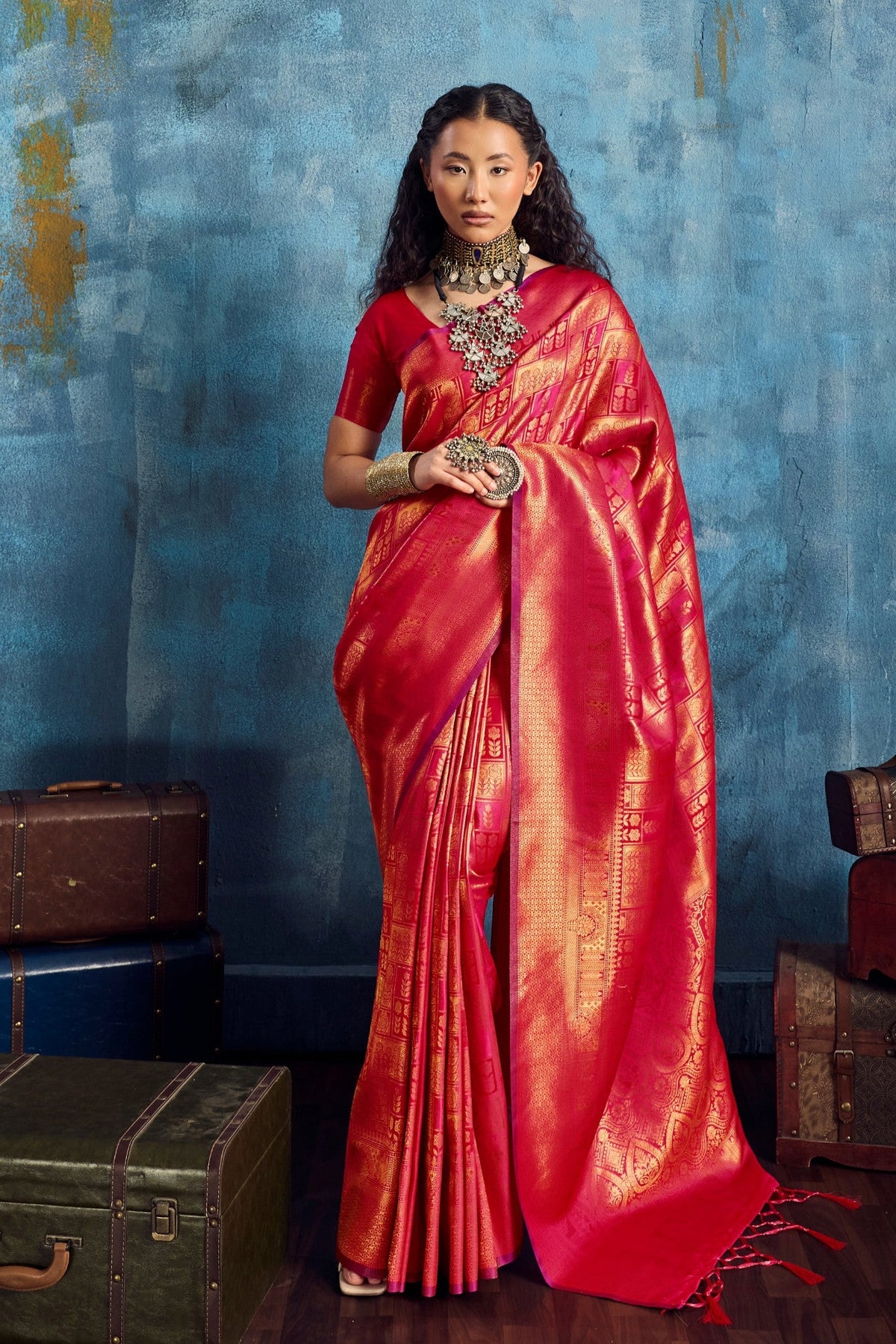
Coorgi Saree Drape (Kodava Style) for Puthari & Winter Weddings: Step by Step (2026)
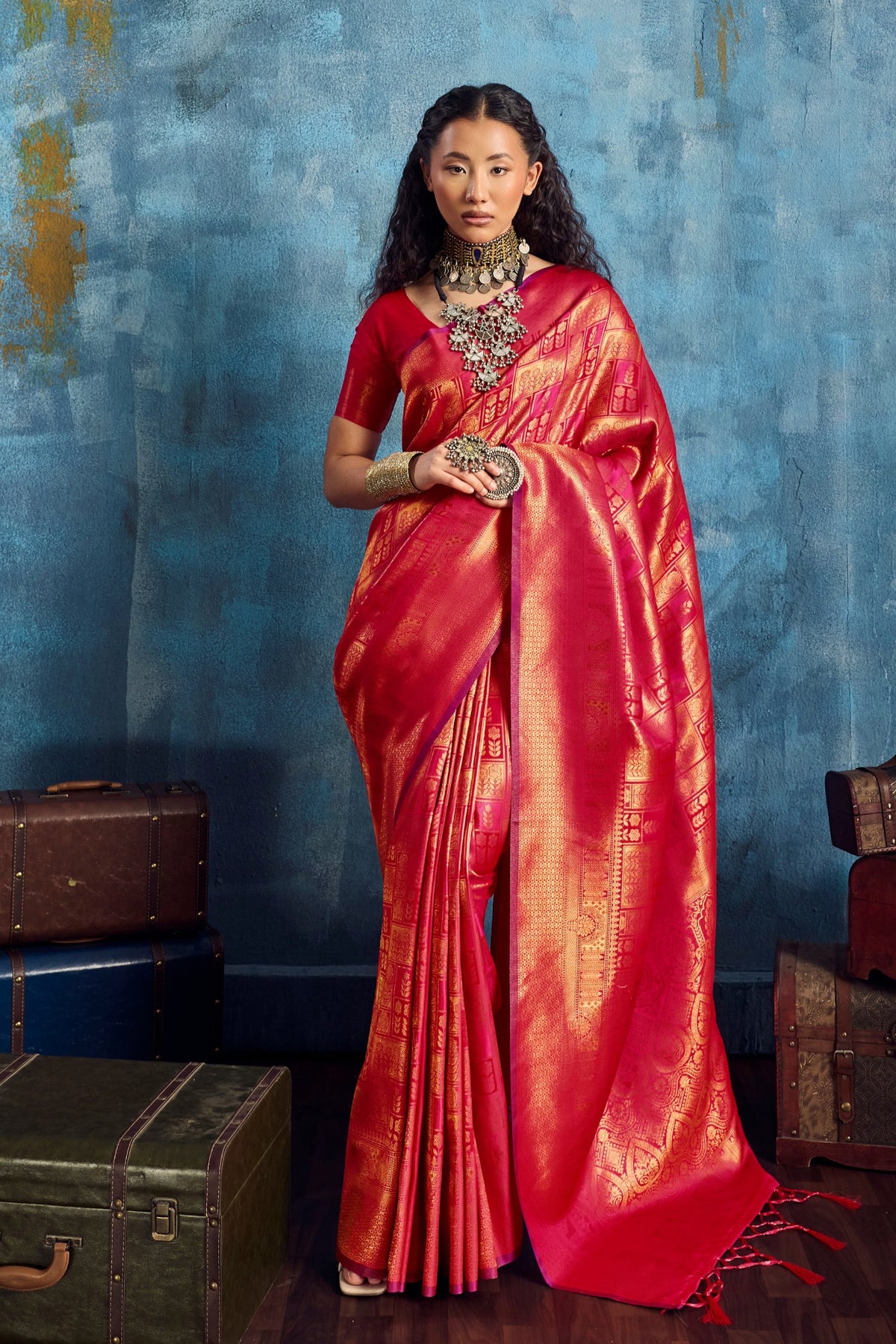
The Coorgi (Kodava) saree drape puts the pleats at the back of your waist instead of the front, then brings the pallu from behind, under your left arm and over your right shoulder, where it's pinned or knotted. It takes about 12–15 minutes once you've done it twice, works with any 5.5–6 metre saree, and is the drape Kodava women wear for Puthari, weddings and every big family function in Kodagu.
It's also one of India's most practical drapes: a flat front, nothing trailing over your left arm, and both hands free. Here's how to do it, and which sarees actually behave in it.
Why the Pleats Go at the Back: The Story and the Logic
Kodagu's favourite explanation is a legend. When Kaveri turned herself into a river to serve the people, her husband, the sage Agastya, tried to hold her back, and in the rush her pleats were pushed behind her. Kodava women have worn them that way ever since.
The practical reason is just as convincing. Kodagu is coffee-estate and paddy-field country in the Western Ghats, and back pleats keep your legs free on slopes and in muddy fields. That's exactly what Puthari asks of you: on harvest night, families walk into the paddy to cut the first sheaves by lamplight.
In 2026, Kodagu's government holiday list marks Huthri (Puthari) on Thursday, 26 November. The paddy-cutting muhurat follows the Rohini nakshatra and is announced by the Padi Igguthappa temple, so check the exact evening timing with your family. And if you're attending a Kodava wedding this winter, the same drape applies. The bride traditionally wears red with gold, plus a matching head scarf (the vastra).
What You Need Before You Start
- A 5.5–6 metre saree. You don't need a 9-yard; the Kodava drape is a 6-yard style.
- A fitted cotton petticoat with a wide drawstring. All the pleat weight sits at the small of your back, so a thin drawstring will roll down.
- A blouse. Traditionally it's full- or elbow-sleeved, and many Kodava blouses have a high or band collar. Coorg winters are cool, so this isn't just style.
- 5–6 safety pins, plus your footwear on. The hem should just graze the floor with your heels on.
How to Drape a Coorgi Saree: Step by Step
- Tuck the plain end at your left hip. Start with the inner (non-pallu) end and tuck it into the petticoat at the left side of your waist, with the bottom border level with the floor.
- Wrap once around your body. Take the saree across the front, around the back and back to the front, tucking as you go so the first layer sits snug and flat.
- Bring the fabric round to the back and make the pleats. Gather 6–7 even pleats, each about 4–5 inches deep (the same width as front pleats in a Nivi drape).
- Tuck the pleats at the centre back of your waist. Pin the pleats to the petticoat at two points, at the waistband and about 6 inches below, so they don't fan open when you walk.
- Take the remaining length under your left arm. The pallu now travels from the back, under your left armpit, and across the front of your chest diagonally.
- Bring the pallu over your right shoulder. Let the border show along the top edge. The pallu falls down your back on the right side.
- Secure it at the right shoulder. Traditionally the pallu corner is knotted or tucked firmly here; today most women pin it to the blouse shoulder from the inside. Some pleat a small section of the pallu before pinning for a neater line.
- Check the back in a mirror. The pleats should hang straight down the centre, not slanted towards one hip. If they slant, your first wrap (step 2) was too loose.
For a refresher on getting even pleats, our 5-finger pleat rule works exactly the same at the back. For the standard front-pleat method, see our complete saree draping guide.
3 Common Mistakes (and How to Fix Them)
- Pallu over the left shoulder. This is a habit carried over from the Nivi drape. In Kodava style the pallu always finishes on the right shoulder, because that's the defining feature.
- Too many pleats. More than 7 makes a lump at your back that's uncomfortable against a chair.
- Pinning pleats only at the waist. Back pleats get sat on, and a single pin lets them spread into a fan. Use two pins down the pleat stack.
Which Sarees Work Best for the Kodava Drape (Our Honest Take)
Here's what most draping guides skip. You will sit on your pleats. At a wedding lunch or a three-hour Puthari gathering, that's a lot of pressure on the most visible part of the drape. So the right fabric is one that springs back.
That's why we think a soft silk beats a stiff, heavy-zari Kanjivaram for a first Kodava drape. A traditional Kanjivaram with a dense zari body is gorgeous, but it typically weighs 800 g to over 1 kg, and that weight all hangs off the back of your waist. The stiff pleats also hold every crease you sit into. A soft silk or lighter weave (around 600–700 g) recovers its pleats and lets the pallu sit flat. Avoid tissue and organza for this drape: they crease permanently where you sit.
What does matter is the pallu and border. Your pallu crosses your whole chest diagonally, so it's the most visible part of the drape. Choose a saree with a bold woven border and a rich pallu. Reds, maroons and gold are classic for weddings; deep greens and blues are lovely for Puthari evenings.
Kodava women traditionally finish the look with the pathak, a gold coin pendant, along with jhumkas and bangles, and a low bun at the nape.
Shop the Edit
- Ruby Red Kanjivaram Handloom Saree — classic Kodava wedding red with a heavy gold pallu that shows beautifully across the chest.
- Chestnut Red Multicolor Woven Kanjivaram Saree — a deeper red if bright scarlet isn't your shade.
- Ocean Blue Banarasi Soft Silk Saree — soft, crease-forgiving silk for an evening Puthari gathering.
- Galliano Yellow Woven Banarasi Soft Silk Saree — harvest gold for a festive family day.
Browse more silks with bold borders in our Kanjivaram saree collection or our lighter soft silk sarees. Prices shown on-site are regular list prices; seasonal offers at checkout often bring these lower.
Love regional drapes? Try the Madisar, the Nauvari or the Gujarati seedha pallu next.
Shop the Look: Sarees for a Kodava-Style Drape
Reds and golds are the classic Kodava wedding palette, and deep greens suit Puthari evenings. Explore our red silk sarees for weddings and festivals, our golden sarees with rich zari pallus, or browse green silk sarees for festive evenings.
Coorgi Saree Drape: FAQs
How is the Coorgi saree drape different from the normal drape?
In the usual Nivi drape the pleats are tucked at the front and the pallu goes over the left shoulder. In the Coorgi (Kodava) drape the pleats are tucked at the back of the waist, and the pallu comes from behind, under the left arm and across the chest, and is secured on the right shoulder. The front stays completely flat.
Can I drape any saree in Coorgi style?
Yes. Any 5.5–6 metre saree works, so you don't need a special Coorg saree. Soft silks, lighter Kanjivarams, Mysore silk and cottons are easiest because they pleat crisply and recover after sitting. Choose one with a strong border and pallu, since the pallu is displayed across your chest. Avoid tissue and organza, which crease where you sit.
What do Kodava women wear for Puthari?
For Puthari, Kodava women wear the traditional back-pleated Kodava saree drape, usually in silk, with a long-sleeved or high-necked blouse suited to Coorg's cool evenings. Gold jewellery such as the pathak pendant completes the look. Many families also add a head scarf (vastra) for rituals. Customs vary by family, so ask your hosts.
Ready to try the Kodava drape? Find a saree with a pallu worth showing off in our Kanjivaram saree collection before Puthari and wedding season peak.
Leave a comment
This site is protected by hCaptcha and the hCaptcha Privacy Policy and Terms of Service apply.