
Article: Jamdani Saree History: How Dhaka's 'Woven Air' Survived the Mughals & the British (2026)

Jamdani Saree History: How Dhaka's 'Woven Air' Survived the Mughals & the British (2026)
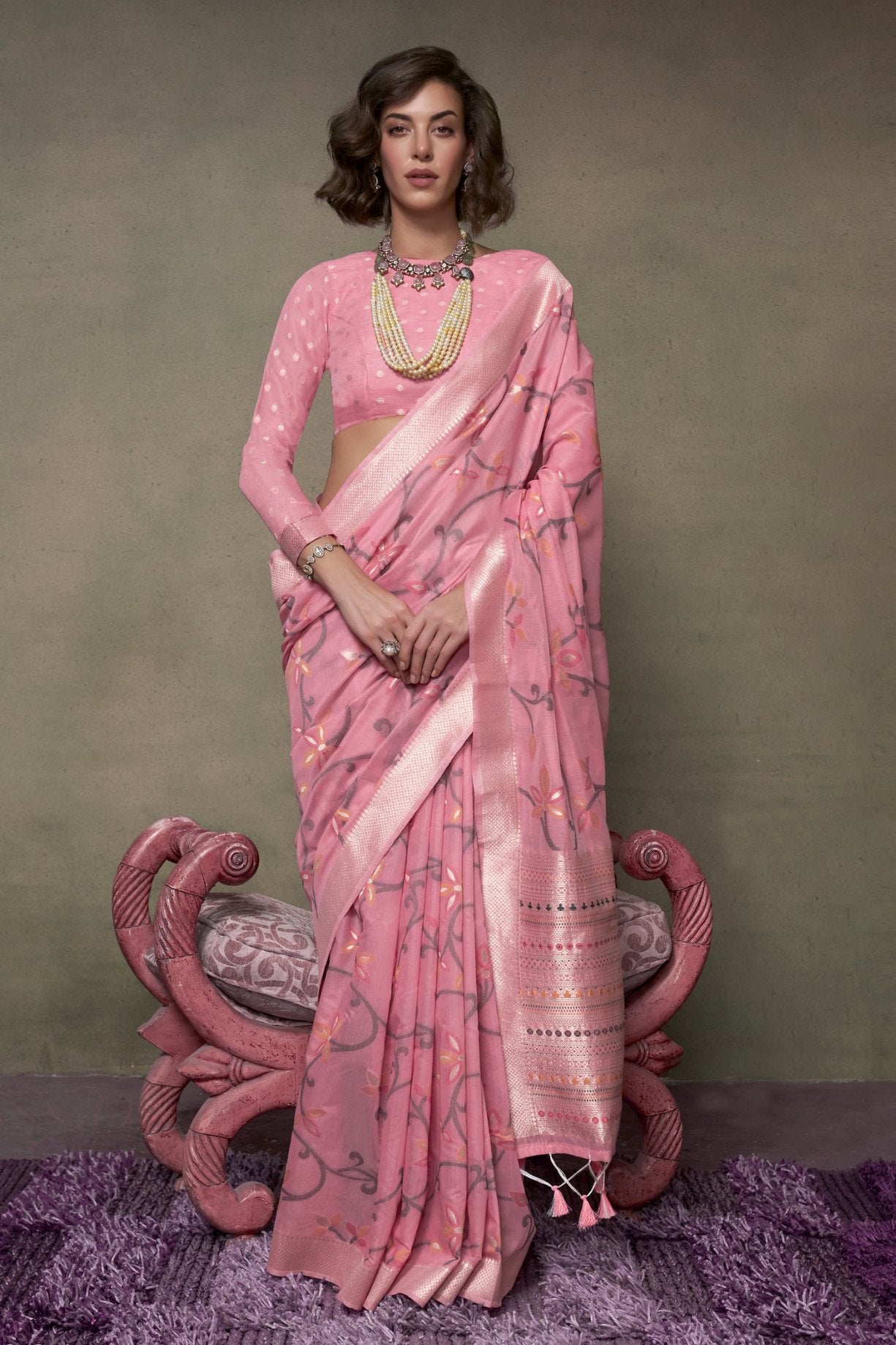
Jamdani is a figured-muslin weave from Dhaka, where each motif is added by hand using extra weft threads, with no jacquard or punch cards involved. It was patronised by the Mughal court, nearly wiped out under British rule, and recognised by UNESCO as Intangible Cultural Heritage in 2013. Here is the story of how a sheer, almost weightless cloth became one of the subcontinent's most respected textiles.
1. From "Dhakai" to "Jamdani": How the Name Changed
Before it was Jamdani, the cloth was simply called Dhakai (or Daccai), after Dhaka, the city that produced the finest muslins in the world. Under the Mughals, the court language was Persian, and the word Jamdani gradually took over. Historians generally place the shift around the reign of Akbar or Jahangir, when imperial warrants kept Dhaka's weaving workshops busy supplying the court.
2. The Technique: Why It Cannot Be Rushed
A Jamdani weaver works from a design drawn on graph paper placed under the warp. A plain, fine weft forms the sheer ground. Then, thread by thread, thicker supplementary weft is inserted only where a motif is needed, often with a slim bamboo stick, so each flower or geometric figure is built up by hand. That is why a heavily patterned piece can take a weaver weeks, and why two Jamdani sarees are never identical.
A practical check when you handle one: turn the saree over. On a hand-inserted Jamdani the motif threads sit neatly on the reverse and are trimmed by hand, whereas on a machine-printed lookalike the pattern is flat and the back looks nothing like a woven motif.
3. Decline Under the British, and Why UNESCO Mattered
From the mid-19th century, cheap imported mill yarn and cloth undercut Bengal's weavers, and the loss of Mughal patrons removed the market for the finest work. The craft shrank dramatically. Recognition came back in stages: UNESCO listed the traditional art of Jamdani weaving in 2013, and in 2016 Jamdani sari received a Geographical Indication, the first GI for a Bangladeshi product.
4. Jamdani Today: Dhaka Roots, Bengal Soul
Bengal on both sides of the border keeps the tradition alive in its own idiom. Floral and geometric patterns on a pale ground remain the classic look, and it is a favourite for Durga Puja mornings and winter weddings because the cloth breathes. Our own Jamdani range is a handloom, cotton-based line with woven floral motifs. It is an accessible, everyday-wearable cousin of the legendary muslin, not a reproduction of antique Dhaka muslin, and we would rather say that plainly.
5. How to Style a Jamdani
Keep the blouse simple: a contrast raw-silk or plain cotton blouse lets the motifs do the talking. Pair pastel Jamdani with gold or oxidised silver jewellery, and drape with fewer, crisper pleats so the sheer fall is visible. For a longer read on draping, see our saree draping guide.
My Honest Opinion: Skip the Heavy Starch
Many shops stiffen Jamdani with heavy starch so it looks crisp on the hanger. I think that hides what makes it special. A soft, lightly starched Jamdani falls in liquid pleats and shows off the motif relief. Ask for a light finish, or wash once before wearing.
Shop the Edit
- Old Rose Pink Handloom Jamdani Saree (regular list price Rs. 5,484; seasonal offers at checkout often bring it lower)
- Champagne Cream Handloom Jamdani Saree, a soft neutral that works with gold or oxidised jewellery
- Pista Green Handloom Jamdani Saree, a fresh colour for daytime festive wear
- Browse all Jamdani sarees or the wider handloom saree collection
New to the weaves of India? Our silk saree buying guide explains how to tell one tradition from another.
Explore Similar Sarees
If the airy, pale-ground look of a Jamdani appeals, you may also like to shop breathable cotton sarees for everyday wear, or browse our white sarees for the classic pale canvas that lets woven motifs shine.
FAQ
What does Jamdani mean?
The Persian-derived name Jamdani came into use under the Mughals, replacing the earlier name Dhakai, which simply meant "from Dhaka". It now refers to a specific technique: motifs woven by hand with supplementary weft into a fine, sheer ground cloth.
Is Jamdani pure silk?
Not necessarily. Classic Dhakai Jamdani is cotton muslin, and many modern versions blend cotton with silk or other yarns. Always read the fabric line on the listing, because the name Jamdani describes the weave technique, not the fibre.
Why is Jamdani so expensive?
Because every motif is inserted by hand, thread by thread, and finer ground yarn and denser patterns take far longer on the loom. Prices rise with weaving time, so a lightly patterned piece costs much less than a fully figured one.
Ready to wear the weave? Explore our Jamdani sarees.
Leave a comment
This site is protected by hCaptcha and the hCaptcha Privacy Policy and Terms of Service apply.