

Art Silk, Soft Silk or Handloom? 9 Saree Labels Decoded (2026)

Short answer: "art silk" means artificial silk — viscose, rayon or polyester, not silkworm silk. "Soft silk" is a finish, not a fibre. "Silk blend" is honest labelling. And "handloom" is a claim about the loom, not the yarn. Four different words, four different things, and most saree listings online use them interchangeably.
We sell sarees, so we read these labels for a living — and the sloppiness is not always dishonest. A lot of it is copy inherited from a supplier catalogue that nobody re-checked. But you are the one paying, so here are the nine words that actually decide what lands in your parcel.
1. "Pure Silk" / "100% Silk"
This should mean the warp and the weft are both mulberry silkworm filament. It often doesn't. "Pure silk" is not a regulated phrase on Indian e-commerce the way a fibre-content label is on a garment tag, so it gets used as a mood rather than a measurement.
The only version worth trusting is one paired with a fibre-content line — "100% mulberry silk", or a Silk Mark tag with a hologram number. If a listing says "pure silk" and nowhere on the page tells you the fibre content, treat the word as decorative.
2. "Silk Blend"
Here is our actual position, and it is not the popular one: a saree labelled Silk Blend is a better purchase than an identically priced saree labelled "pure silk" with no fibre line. The blend label tells you the seller looked at the fabric and told you the truth. A blend drapes beautifully, creases less than pure silk, and survives a Mumbai monsoon far better. It just isn't handloom silk, and it should never be priced as if it were.

3. "Art Silk"
Art silk is short for artificial silk — usually viscose rayon, sometimes polyester. It is a legitimate, widely-sold fabric with real advantages: it takes dye brilliantly, it is light, and most art silk sarees can be gently hand-washed at home instead of dry-cleaned every time.
What it is not is silk. If a page says "art silk" in one line and "pure silk saree" in the title, the "art silk" line is the one telling the truth — descriptive copy gets rewritten for search, fabric fields usually don't.
4. "Soft Silk"
Soft silk is a finish, not a fibre. It describes silk that has been degummed and processed to fall softly instead of standing away from the body like a stiff Kanjivaram. A soft silk saree can be pure silk, a blend, or art silk — the word tells you how it will drape, not what it is made of.
That is genuinely useful information, just not the information most people think they are getting. If you want a saree you can wear through a nine-hour wedding without your shoulder aching, soft silk is the right search term. Our soft silk sarees sit largely in the ₹5,000–₹7,000 band at regular list price; seasonal offers at checkout often bring these lower.

5. "Handloom" vs "Powerloom"
Handloom is a claim about the loom, not the yarn — you can weave art silk on a handloom and pure silk on a powerloom. Both happen constantly.
The cheapest lie-detector here is weight. A six-yard powerloom soft silk Banarasi typically lands around 450–550g. A pure Katan handloom Banarasi of the same length runs 700–900g, because handloom weaving packs more weft picks per inch and uses heavier denier yarn. If a listing claims handloom Katan and quotes 500g, one of those two numbers is wrong. We wrote out the full range in our guide to how much a silk saree actually weighs.
6. "Zari"
Zari is metallic thread, and there are three grades in circulation: real zari (silver wire, gold-plated, silk core — rare and expensive), tested zari (a certified copper-and-silver alloy, the standard in good Kanjivarams), and imitation zari (metallised polyester film, which is what nearly everything under ₹15,000 uses).
Imitation zari is not a scandal. It is lighter, it doesn't blacken as fast in humidity, and it is why a beautifully woven festive saree can cost ₹6,000 instead of ₹60,000. The scandal is only when it is sold as tested zari.
7. "Katan", "Kora", "Tussar" — Yarn Names, Not Grades
These are yarn or fibre types, not quality tiers. Katan is twisted-filament mulberry silk. Kora is undegummed silk, which is why organza feels crisp. Tussar is a different silkworm species entirely, with a natural gold cast and a slubby texture. None of them is automatically "better" — a Katan Banarasi and a Tussar are for different weather and different occasions.

8. "Digital Printed" vs "Woven"
Woven means the motif is built into the fabric on the loom; flip the saree and you will see the reverse of the pattern with floats and a rougher back. Digital printed means the motif is applied to the surface — the reverse is blank or ghosted.
Printed sarees are dismissed too easily. A Pista Green Banarasi digital printed soft silk saree at ₹5,907 gives you a scale and colour-blend of print that no loom at that price could produce. Buy it for what it is, and don't let anyone bill it as woven.
9. The "Semi-" Prefix
"Semi-Paithani", "Semi-Banarasi", "Semi-Kanjivaram" — the prefix almost always signals a powerloom interpretation of the region's motif vocabulary, usually in a blend or art silk. It is the most honest word in the whole list, and shoppers skim right past it.
The One Line to Check Before You Pay
Find the fibre content. Not the title, not the SEO description — the fabric or material field. If it isn't on the page, message the seller and ask, in exactly these words: "What is the fibre content of the body and the pallu?" A seller who knows their stock answers in one line. A seller who doesn't will send you a paragraph about heritage. That reply is your answer.
Shop the Edit
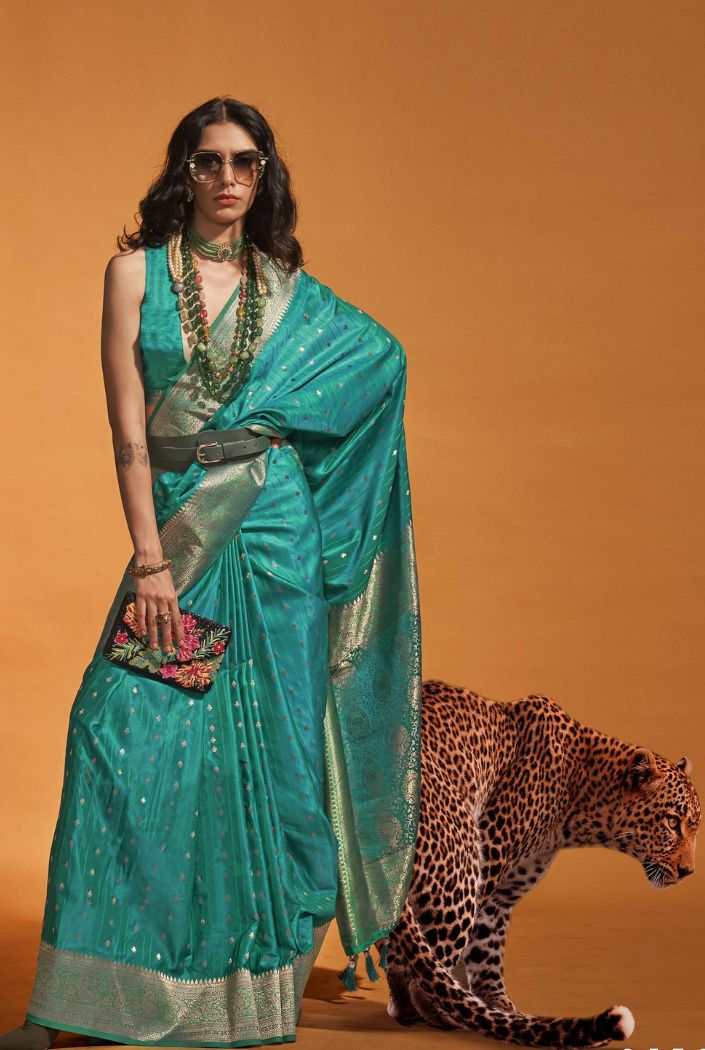
- Marshland Black and Red Zari Woven Paithani Saree — ₹6,396. Woven, not printed — check the reverse of the pallu motifs.
- Ocean Blue Banarasi Soft Silk Saree — ₹6,750. A textbook "soft silk" drape: fluid, light on the shoulder.
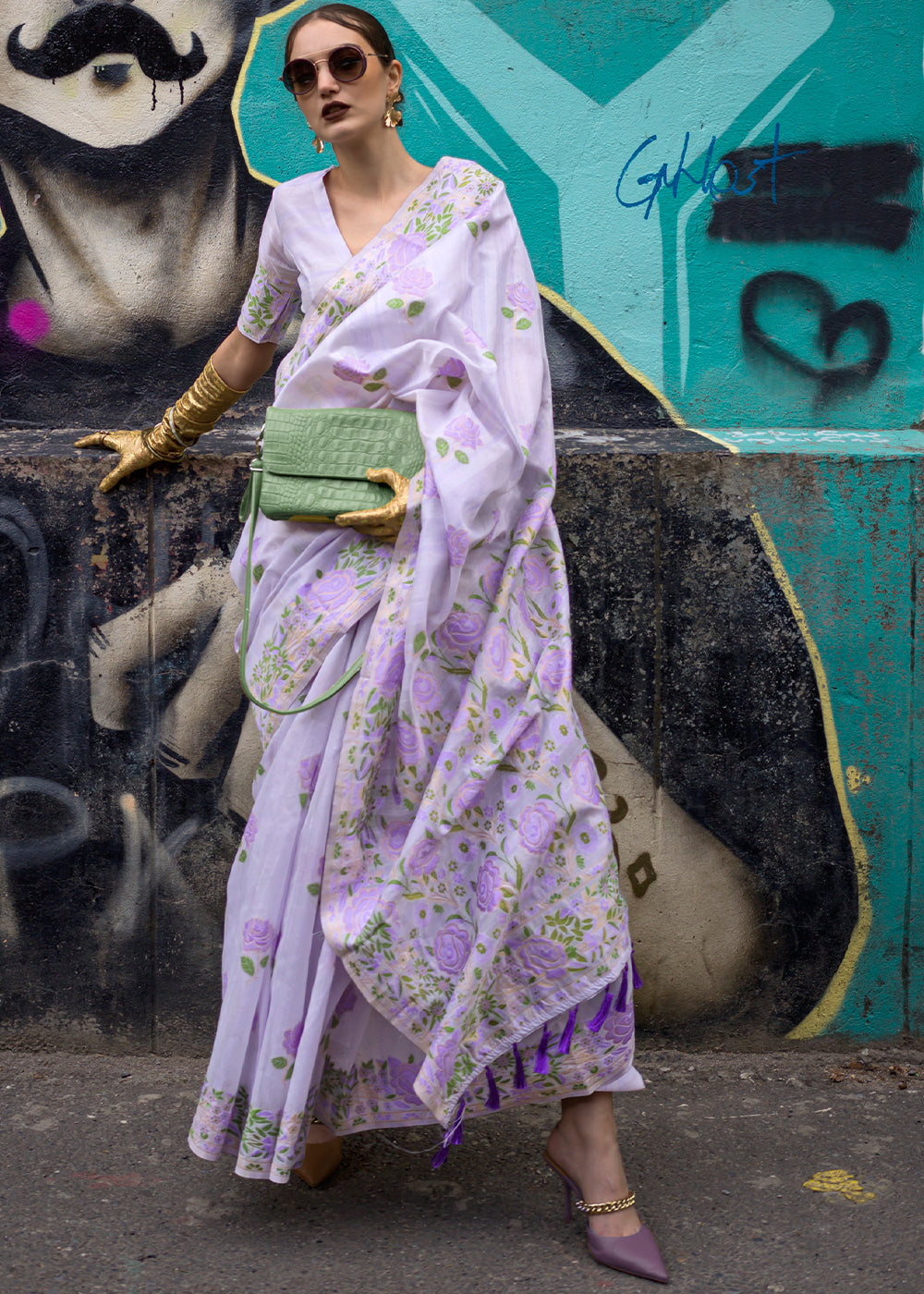
- Perfume Lavender Floral Handloom Banarasi Saree — ₹7,656. Handloom, and priced like it.
- Emerald Green Woven Paithani Silk Saree — ₹5,985.
- Pista Green Banarasi Digital Printed Soft Silk Saree — ₹5,907.
All prices above are regular list prices; seasonal offers at checkout often bring these lower. Browse the full Paithani sarees and Banarasi sarees edits, and for the long version of everything here, our complete silk saree buying guide walks through the authentication tests in order.
Shop each label on its own shelf
Three of the words decoded above have a collection behind them, so you can see what the label actually looks like in stock:
- Label 5, handloom. Browse our handloom sarees and apply the weight test above before you accept the word on any listing, ours included.
- Label 8, digital printed. The full printed sarees edit is where to look if you have decided print is what you want — bought as print, not mis-sold as woven.
- Label 6, tested zari. The grade shows up most clearly on a Kanjivaram, so compare borders across our Kanjivaram sarees and read each fabric field as you go.
FAQ
Is art silk the same as silk blend?
No. Art silk contains no silkworm silk at all — it is viscose, rayon or polyester woven to imitate silk. A silk blend contains real silk mixed with another fibre, commonly cotton, viscose or polyester. Blends generally cost more than art silk and drape closer to pure silk.
Is a soft silk saree pure silk?
Not necessarily. "Soft silk" describes the finish and drape — silk that has been degummed and processed to fall softly rather than hold a stiff shape. The fibre underneath can be pure silk, a silk blend or art silk, so always check the fabric field rather than assuming from the name.
How can I tell woven from printed on a product page?
Look for a photograph of the saree's reverse side. On a woven saree the motif appears in reverse with visible thread floats across the back. On a digitally printed saree the reverse is plain or faintly ghosted. If no reverse shot exists, ask the seller for one before ordering.
Ready to buy with the labels decoded? Start with our full saree collection — every fabric field, every time.


Leave a comment
This site is protected by hCaptcha and the hCaptcha Privacy Policy and Terms of Service apply.