

Wedding Guest Saree Colours 2026: What to Avoid & 7 Shades That Always Work

As a wedding guest in India, skip three colours: bridal red head-to-toe, stark white, and pure black. Everything else is fair game — and seven shades in particular (emerald, royal blue, deep teal, wine, dusty rose, champagne and mustard) work across communities, photograph well under warm venue lighting, and never risk being mistaken for the bride. Below: the rules, the regional exceptions most guides skip, and what each shade actually costs.
The three colours to avoid — and why
Head-to-toe bridal red. Wearing red isn't offensive, but it is awkward. In a 400-guest hall, a red saree with heavy gold zari reads as "bride" in every wide shot and every reel. If you love red, go sideways into it: wine, burgundy, rust, coral and burnt orange all carry red's warmth without the confusion.
Stark white. Across most of North and West India, white is associated with mourning. It's the one colour that can genuinely upset an elder in the family.
Pure black. Considered inauspicious at ceremonies in many communities. A black-bordered saree is fine; a full black drape at the muhurtham is not. Save it for the sangeet or a cocktail reception, where it's completely acceptable.

The regional exceptions nobody warns you about
The "no white" rule flips in Kerala. A cream kasavu with a gold border is auspicious and celebratory there — wearing it to a Malayali wedding is correct, not rude.
At Bengali weddings, red-and-white is not a fashion choice: it's what married women wear while performing rituals. Turning up in red-and-white as an outside guest can put you in the middle of a ceremony you weren't meant to be in.
And in most South Indian weddings, a bright yellow or mustard silk is one of the most auspicious things a guest can wear — the opposite of the caution North Indian guests apply to yellow at a haldi.
The universal rule that survives all of this: if you know the bride's outfit colour, don't wear that shade. One WhatsApp message to a cousin solves it.

The lighting problem — the reason colour choice actually matters
Here is the thing nobody tells you. Indian wedding venues run on warm light — 2700K–3000K LEDs, gold drapes, marigold everywhere, and a videographer's fill light on top. Warm light pushes everything warm. A coral or peach saree that looked perfect in your bedroom goes orange and washed-out in the photos. Anything close to gold turns into the background.
Cool-toned and deeply saturated colours are the ones that hold. Emerald, teal, royal blue, wine and plum all stay themselves under warm light and separate cleanly from a gold-and-marigold backdrop. That is the real reason jewel tones dominate every Indian wedding guest list — not tradition, physics.
The 7 shades that always work
- Emerald green — the single safest wedding guest colour in India. Auspicious in most communities, flattering on warm and cool undertones alike, and it holds its colour under any lighting.
- Royal blue — the most underused. Reads formal and modern, nobody else will be in it, and it photographs sharply against gold decor.
- Deep teal — for anyone who thinks emerald is too expected. Sits between blue and green, so it flatters almost everyone.
- Wine / plum — the red-adjacent shade. All of red's richness, zero risk of bridal confusion. Best for evening receptions.
- Dusty rose — the daytime answer. Soft, non-competitive, ideal for a mehendi or a morning muhurtham.
- Champagne / cream-gold — my personal pick for the most underrated wedding guest colour in India. It reads bridal in the West, so people avoid it; in an Indian mandap next to red and gold, it's quietly the most elegant thing in the room. Just make sure the border is a real contrast so it doesn't dissolve into the decor.
- Mustard / ochre — auspicious in the South, brilliant on deeper skin tones, and unbeatable for a daytime haldi or sangeet.

Match the weight to the function, not just the colour
A zari-heavy Banarasi or Kanjivaram runs 700–900g. That is a genuinely heavy drape — fine for a two-hour reception where you're standing and being photographed, punishing at a four-hour sangeet where you intend to dance. For mehendi, haldi and sangeet, choose a lighter body: a soft silk, tussar, jamdani or dola silk at roughly 450–600g will carry the same colour with none of the shoulder ache. Save the heavyweight zari for the muhurtham or the reception.
If you're building a full wedding-season wardrobe rather than picking one saree, our saree occasions guide maps weave-to-event across the whole calendar.
Shop the Edit
- Emerald Green Banarasi Woven Handloom Silk Saree — ₹6,492. The safest colour, in the weave that reads most "wedding".
- Surfie Blue Banarasi Handloom Silk Saree — ₹5,484. Teal-blue with floral handloom work; the underused shade.
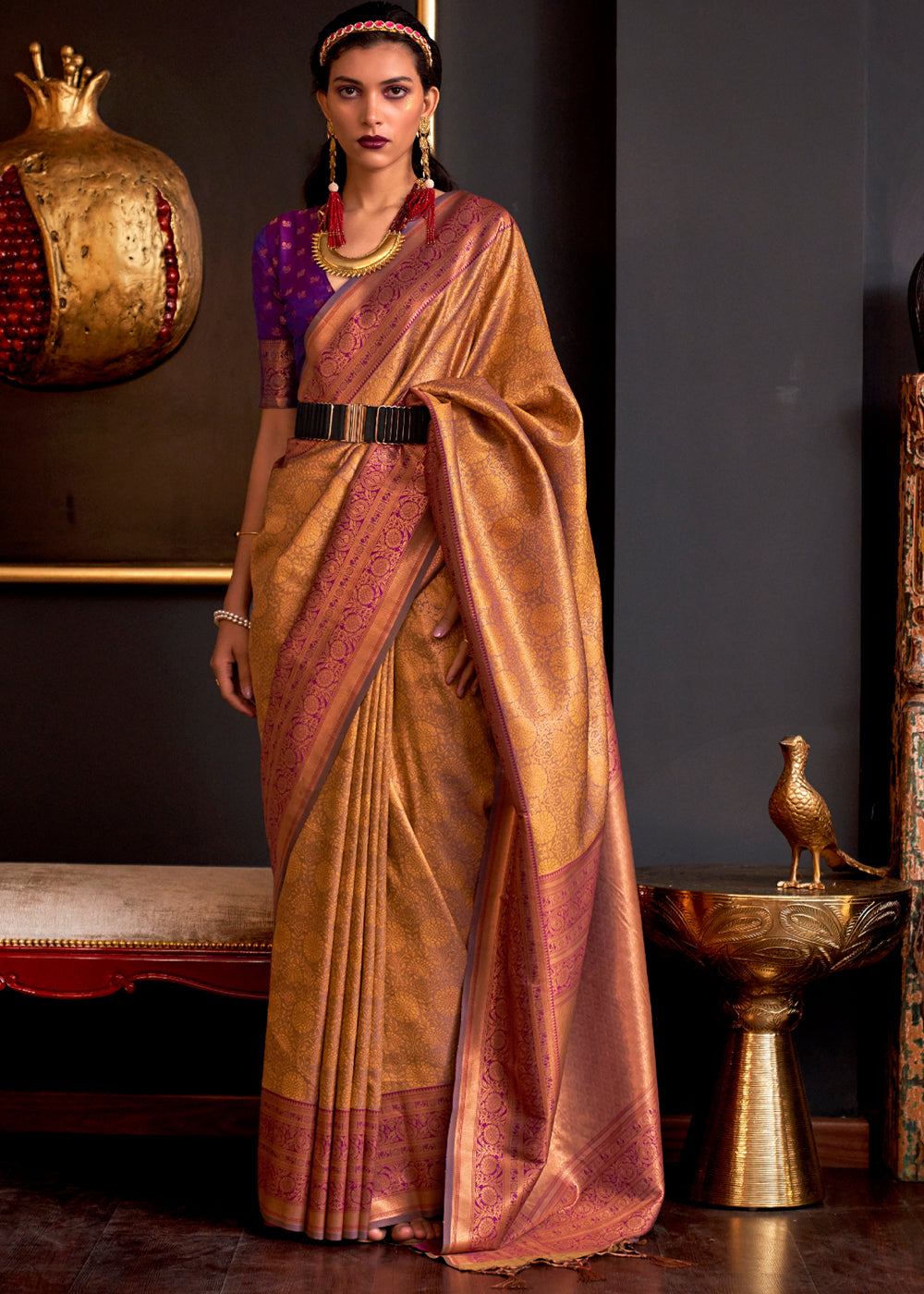
- Wine Purple Woven Banarasi Saree — ₹7,245. Red's richness without the bridal risk. Reception-grade.
- Chestnut Rose Pink Embroidered Tussar Silk Saree — ₹4,950. Dusty rose on wild silk, light enough for a daytime function.
- Champagne Cream Handloom Jamdani Saree — ₹5,484. The underrated one, with a handwoven float-weave surface.
- Giants Club Yellow Chaap Handloom Kanjivaram Silk Saree — ₹6,318. Deep mustard with a contrast zari border, made for a South Indian muhurtham.
For the deep teal option, browse blue sarees, and for more of the safest shade, green sarees. These are regular list prices — seasonal offers at checkout often bring them lower.
Buying online for a wedding you can't afford to get wrong? Our silk saree buying guide covers the authenticity checks worth running before you order.
Shop the rest of the seven shades
Emerald green and the blue-teal family are linked above. For the four remaining shades: browse champagne and antique gold sarees for the most underrated wedding guest colour of the lot, wine and maroon sarees for red's richness without the bridal confusion, dusty rose and soft pink sarees for a mehendi or a morning muhurtham, and mustard and marigold yellow sarees for a South Indian muhurtham or a daytime haldi. All in stock, with free shipping and COD.
FAQ
Can a guest wear red to an Indian wedding?
Yes, but avoid head-to-toe bridal red with heavy gold zari — you'll be confused with the bride in photographs. Red accents, or red-adjacent shades like wine, burgundy, rust and coral, are completely acceptable and carry the same festive warmth without competing.
What colour saree is best for a wedding reception at night?
Deeply saturated jewel tones — wine, plum, emerald, royal blue — perform best under warm evening lighting, which flattens pastels and pushes peach and coral towards orange. A heavier zari weave is also more comfortable at a reception than at a sangeet, since you'll be standing rather than dancing.
Is yellow appropriate for a wedding guest in India?
Very much so in South India, where bright yellow and mustard silks are considered auspicious for a muhurtham. In North India, yellow is more strongly associated with the haldi ceremony, so it's ideal for daytime functions and slightly less common at an evening reception.
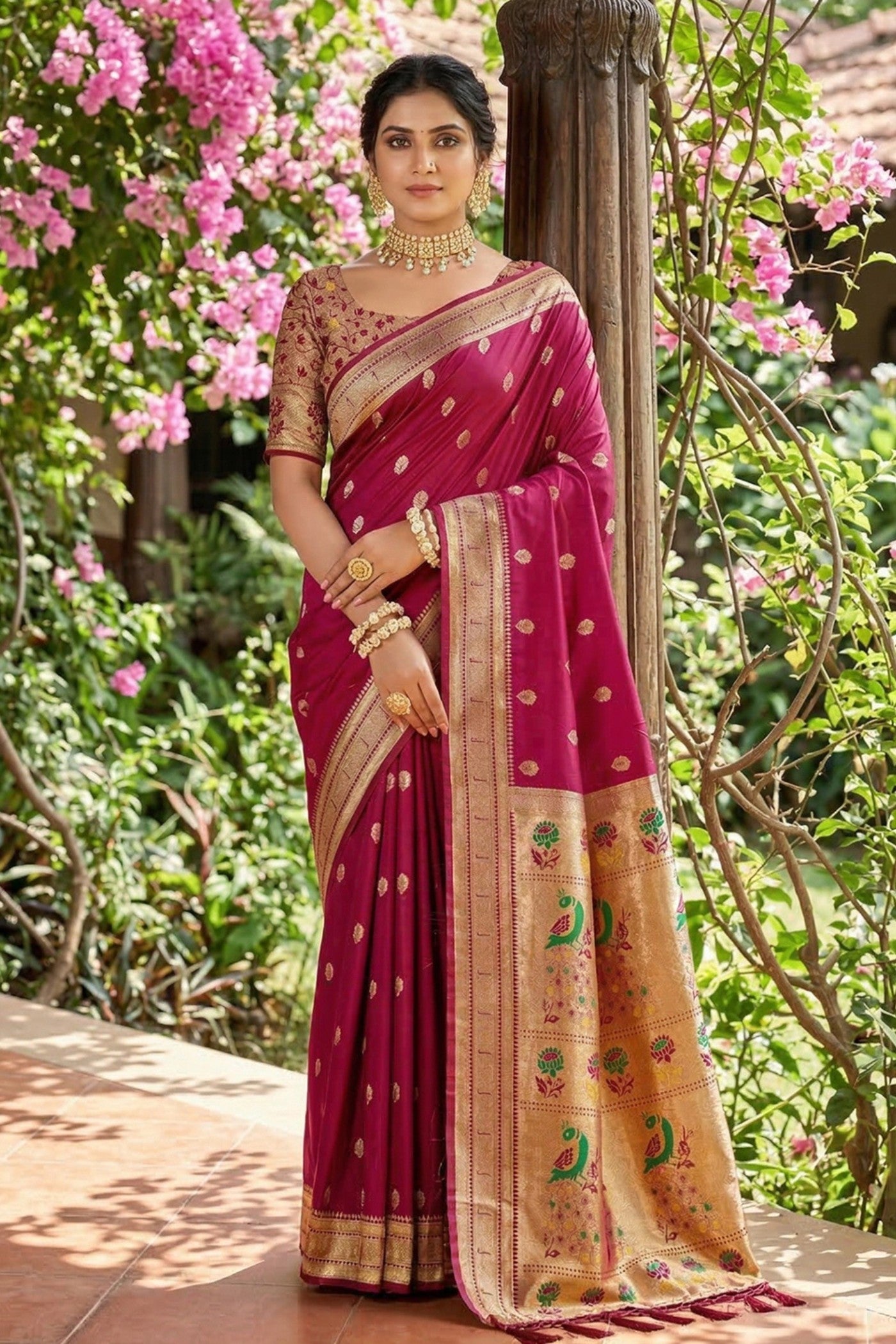 Working out what to wear across a full wedding week? Start with the complete saree collection and pick one colour per function — it's far easier than picking one saree and hoping it stretches.


Leave a comment
This site is protected by hCaptcha and the hCaptcha Privacy Policy and Terms of Service apply.