

Tussar Silk Saree Guide 2026: Real vs Art Silk, Prices & How to Spot the Real Weave

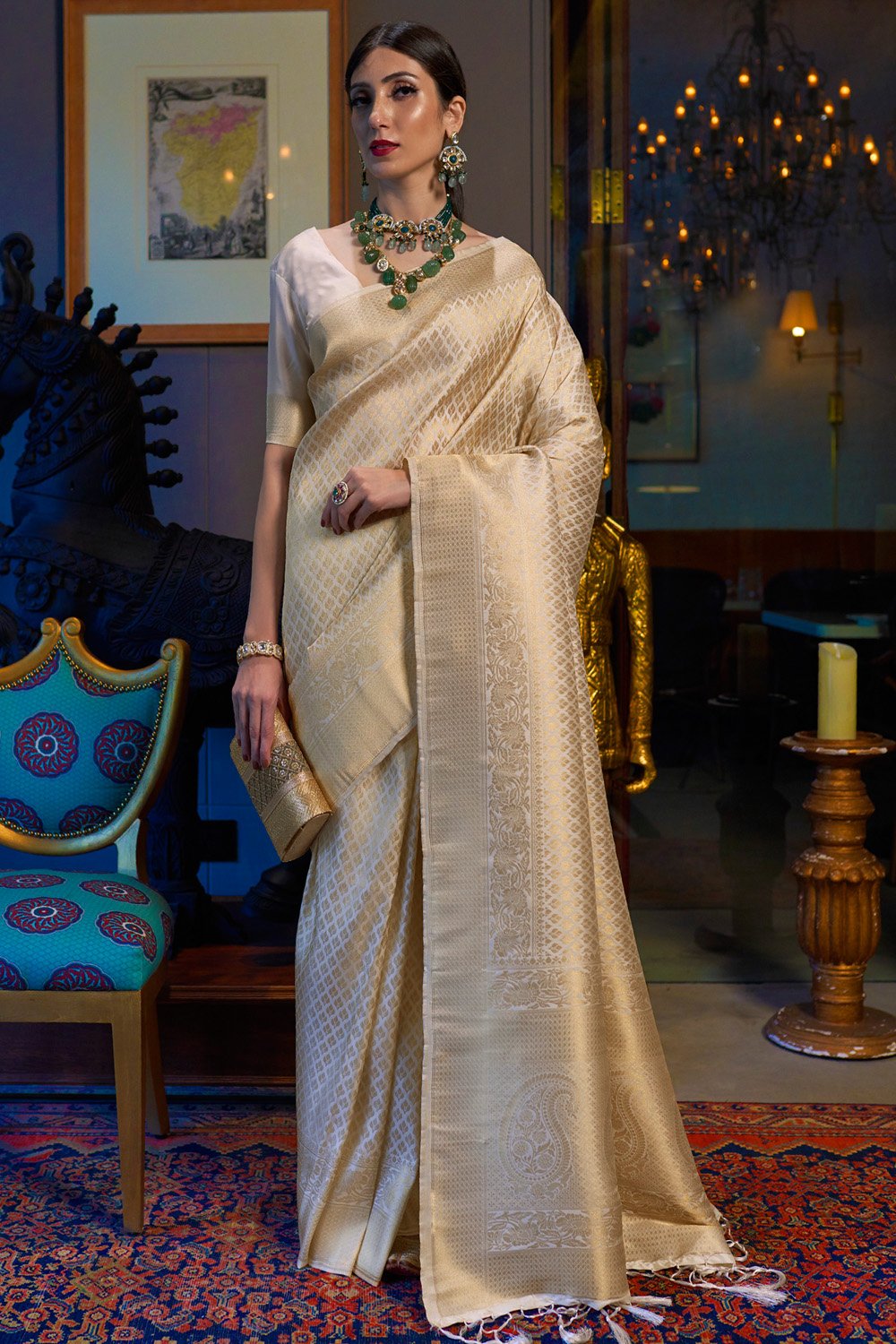
Real Tussar silk is a wild silk — spun from cocoons of forest silkworms, not farmed mulberry worms — which is exactly why it has that dry, grainy hand and a matte, honey-gold glow instead of the glassy shine of art silk. If a “Tussar” saree feels slippery-smooth and mirror-shiny, it’s almost certainly polyester or viscose. Genuine Tussar is lightweight, slightly uneven to the touch, and breathes beautifully — the single best silk you can wear through an Indian summer.
This is your no-fluff 2026 guide: what Tussar actually is, four fast ways to spot the real weave, honest price bands, and how to style it.
What Tussar Silk Actually Is
Tussar (also spelled Tussah or Kosa) comes from the wild silkworm Antheraea mylitta, which feeds on Arjun and Asan (Terminalia) trees rather than the mulberry leaves that feed cultivated Bombyx mori worms. Because the cocoons are gathered from the forest, the filament is shorter, coarser and naturally coloured — giving Tussar its signature beige-gold base and irregular, characterful texture.
Most of India’s Tussar comes from Jharkhand (the country’s largest producer, centred on the Kuchai cluster), Bhagalpur in Bihar — the “Silk City” famous for Tussar and Ghicha weaving — and Chhattisgarh, where the finer Kosa variety is woven. These handloom clusters are the real heartland of the weave.

Real Tussar vs Art Silk: 4 Ways to Tell
1. Look at the sheen. Real Tussar has a soft, matte, gold-tinged lustre. Art silk (polyester/viscose) is uniformly shiny and often looks “wet” under light. If it sparkles, be suspicious.
2. Feel the texture. Run your palm across the surface — genuine Tussar has tiny slubs and a faint grain, never a perfectly smooth, plasticky glide. Those little irregularities are the fingerprint of a natural filament.
3. Weigh it in your hands. A real Tussar saree is remarkably light — roughly 450–600g — whereas a Kanjivaram can run 700g to well over a kilo. That lightness is why Tussar wears so easily through a long day.
4. The burn test (on a spare thread). Pull a stray yarn from the fall and light it. Real silk curls away from the flame, smells like burnt hair, and leaves a crushable ash. Polyester melts into a hard bead and smells like plastic. This is the same principle we cover in our 5 at-home tests to spot fake silk.

Tussar Saree Price Guide 2026
Here’s an honest read of the market, kept separate from what you’ll pay for accessible everyday pieces:
- ₹2,000–₹4,000: Machine-made or blended “Tussar-look” sarees, and lightly worked printed pieces. Great value for daily and office wear.
- ₹4,000–₹8,000: Genuine handloom Tussar with woven borders, block prints or embroidery — the sweet spot for most buyers.
- ₹8,000–₹15,000+: Fine Bhagalpuri and Chhattisgarh Kosa handloom, Tussar-Ghicha with zari, and pieces with hand-painted Madhubani or Kalamkari work.
At MySilkLove, our Tussar-texture edit — woven Ikkat and embroidered styles — is priced as accessible everyday wear, with regular list prices from about ₹3,899, and seasonal offers at checkout often bring these lower. These are approachable pieces for real life, not collector handloom heirlooms — and we’re upfront about that difference.

Ghicha, Katia & Kosa: Decoding the Tussar Family
You’ll see these words on labels — here’s what they mean. Ghicha is yarn hand-reeled from the outer filaments of the cocoon, giving a slubby, cotton-like texture with a silk glow (Bhagalpur is its home). Katia is spun from broken or pierced cocoons — even more textured and rustic. Kosa is the premium Tussar of Chhattisgarh, prized for a warmer, softer finish. None of these are “lesser” silk; they’re just different personalities of the same wild fibre.
Why Tussar Is the Smartest Silk for Indian Summers
Here’s a position I’ll defend: Tussar is the most underrated silk in the wardrobe. It’s porous and breathable in a way Kanjivaram simply isn’t, its matte gold reads as understated and expensive in daylight (where shiny art silk looks cheap), and at 450–600g you can wear it from a morning puja through a lunch and into an evening event without your shoulder screaming. For daytime weddings, office festives, gallery openings and travel, Tussar beats heavier silks on comfort every single time. It also takes deep jewel and earthy dyes gorgeously because of its gold-beige base.

How to Style & Care for a Tussar Saree
Tussar’s crisp body holds pleats and a sculpted pallu beautifully, so lean into structure — a neat box-pleated pallu or a belted drape both work. Pair earthy Tussars with oxidised silver or terracotta jewellery, and brighter dyed ones with a contrast blouse. For care: dry-clean only, store rolled or loosely folded with a muslin wrap (never plastic), and keep it out of direct sun, which can fade the natural tone. A quick steam — never a hot flat iron directly on the slubs — refreshes the drape before an event.
Shop the Edit
A few Tussar-texture favourites from our Tussar saree collection to start with:
- Chestnut Rose Pink Embroidered Tussar Silk Saree — dusty rose with delicate embroidery, an easy daytime-event pick.
- Well Red Woven Tussar Ikkat Silk Saree — earthy Tussar texture meets rhythmic Ikkat patterning.
- Verdigris Green Woven Tussar Ikkat Silk Saree — a cool, versatile green for office festives.
- Pearl White Embroidered Tussar Silk Saree — a soft neutral that pairs with almost any blouse.
- Rajah Orange Embroidered Tussar Silk Saree — a warm terracotta that flatters every skin tone.
For the bigger picture on what silk really costs across weaves, our Silk Saree Price Index breaks down India’s ₹5,000 silk budget with real data.

Tussar Silk Saree FAQs
Is Tussar silk real silk?
Yes. Tussar is genuine silk — it’s simply wild silk, spun from forest silkworms that feed on Arjun and Asan trees rather than farmed mulberry worms. That wild origin gives it a coarser, more textured hand and a natural gold tone, but chemically it is true silk protein, not a synthetic imitation.
How can I tell real Tussar from a fake?
Check three things fast: sheen (real Tussar is matte-gold, not glassy), texture (genuine Tussar has faint slubs, never a plastic-smooth glide), and weight (it’s light, around 450–600g). For certainty, a burn test on a stray thread settles it — real silk smells like burnt hair and leaves crushable ash, while polyester melts into a hard bead.
Is Tussar silk good for summer?
Excellent, in fact. Tussar is porous and breathable, and far lighter than Kanjivaram or heavy Banarasi silks, so it stays comfortable in heat. Its matte finish also reads as understated and elegant in daylight, making it ideal for daytime weddings, office festives and travel.

Ready to find yours? Explore the full Tussar silk saree collection at MySilkLove and pick the wild-silk gold that fits your day.
Explore these sarees
Find your wild-silk gold: browse the full Tussar silk saree collection, explore embroidered Tussar and designer embroidery sarees, or shop woven Tussar Ikat sarees.


Leave a comment
This site is protected by hCaptcha and the hCaptcha Privacy Policy and Terms of Service apply.