
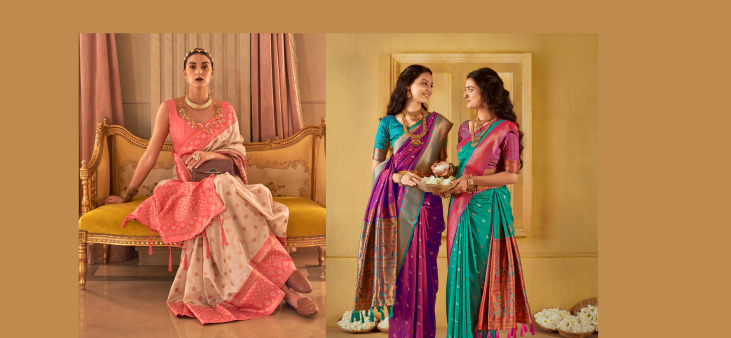
Fake Silk Saree? 5 At-Home Tests to Spot It Before You Pay (2026)
You can spot a fake silk saree in under two minutes — before you pay a single rupee. The three tests that catch 90% of fakes are the zari thumbnail scratch, the burn test on a loose thread, and the weight check in your hands. If a "pure silk" saree fails any one of them, walk away. Here's exactly how each test works, what a real saree should do, and the price red flags that should make you suspicious before you even touch the fabric.
I've handled enough sarees to tell you the single most reliable tell: pure mulberry silk feels warm against your palm within seconds, while polyester and art silk stay cool and slightly slippery. That warmth comes from silk's natural protein fibre, and no powerloom blend fakes it convincingly. Start there — then run the tests below to confirm.

Test 1: The Zari Thumbnail Scratch (Your First Line of Defence)
Real zari is built from a red or orange silk thread, twisted with fine silver wire, then electroplated in gold. Fake zari is just metallic polyester film — and it gives itself away fast.
Press your thumbnail firmly into a small section of the zari border and drag it. Genuine zari stays intact and reveals a coloured silk core if a strand frays. Fake zari flakes, crumbles, or shows a dull white or black plastic core underneath. Another quick check: real zari has a warm, slightly muted gold lustre. If the gold looks unnaturally bright — almost neon under shop lighting — it's plastic.
This is the test I'd run first on any saree claiming "pure gold zari," because it's where dishonest sellers cut costs the hardest.
Test 2: The Burn Test (The One That Never Lies)
If the seller lets you, pull a single loose thread from the inner hem or fall — never the visible body — and hold a flame to it.
- Pure silk smells like burning hair or feathers (it's protein, like our own keratin), curls away from the flame, and leaves a brittle, crushable black ash.
- Polyester or art silk smells like burning plastic, melts into a hard shiny bead, and the residue won't crush to powder.
The smell is the giveaway most people miss. That distinct singed-hair odour is chemically impossible to fake with synthetic fibre. If you only run one test, run this one.

Test 3: The Weight Check (Trust Your Hands)
Here's a practical detail you only learn from handling real sarees: a genuine six-yard katan Banarasi with blouse piece weighs roughly 600–900 grams. A powerloom polyester imitation of the "same" design often comes in 200–300g lighter, because synthetic yarn is less dense than real silk filament.
You won't have a scale in the shop — but you don't need one. Bunch the saree in both hands. Real silk has a substantial, liquid drape that pools heavily. Fakes feel airy and "float." A Kanjivaram especially should feel like it has body; if it feels like a dupatta, be suspicious.

Test 4: The Silk Mark Tag (Government-Backed Proof)
The Silk Mark is a hologram tag issued by the Silk Mark Organisation of India (under the Central Silk Board). It certifies the saree is 100% natural silk — not a blend, not art silk. A genuine tag has a unique number you can verify.
It's not foolproof on its own (tags can be reused dishonestly), but combined with the physical tests above, it's strong evidence. No Silk Mark and a slippery, light, neon-zari saree? That's three strikes.
Test 5: The Price Reality Check (Before You Even Touch It)
Some fakes are obvious before the fabric test — the price tells you. If an Instagram page or marketplace lists a "pure Kanchipuram silk" saree for ₹2,000–₹5,000, it is almost certainly art silk. The raw silk yarn and zari alone cost more than that for a genuine handloom piece.
Honest pricing has a floor. At MySilkLove, our woven Kanjivaram pieces like the Puce Purple Woven Kanjivaram Saree sit in a realistic mid-range band, and richer weaves like the Rhino Blue Kashmiri Jamawar Banarasi price higher because the Jamawar technique is far more labour-intensive. When the price matches the craft, that's a good sign. When it's "too good to be true," it is.
For a deeper breakdown of what drives silk saree pricing tier by tier, see our silk saree buying guide.

My Honest Take: Online Buying Is Actually Safer Now
Counterintuitive opinion — buying silk online can be safer than a crowded shop, if the seller is reputable. Why? A trustworthy online store with clear return policies, real product photography, and transparent fabric labelling has more to lose from a fake than an anonymous market stall does. The catch is doing your homework on the seller's sourcing and returns before you buy, instead of relying on a two-minute touch test under pressure.
Frequently Asked Questions
What is the easiest way to check if a silk saree is real?
The burn test is the most reliable: pull a loose thread from the inner hem and burn it. Pure silk smells like burning hair, curls away, and leaves crushable black ash. Polyester smells like plastic and melts into a hard bead. The smell alone is impossible to fake.
How much should a genuine pure silk saree cost?
A real handloom silk saree rarely costs under ₹5,000, because raw silk yarn and zari are expensive. Mid-range pure silk pieces sit around ₹5,000–₹15,000, while intricate Kanjivaram and Banarasi weaves climb to ₹25,000 and well beyond depending on zari and weave complexity.

Does the Silk Mark guarantee a saree is pure silk?
The Silk Mark, issued by the Central Silk Board, certifies 100% natural silk and carries a verifiable unique number. It's strong evidence but not absolute — pair it with the burn, zari, and weight tests for confidence, since tags can occasionally be misused.
Shop With Confidence
Every MySilkLove saree is sourced for genuine fabric and honest pricing — run the tests yourself when it arrives. Shop authentic Kanjivaram silk sarees at MySilkLove →
Browse the Weaves Pictured in This Guide
If a weave in this guide caught your eye, here is where to browse more of it:
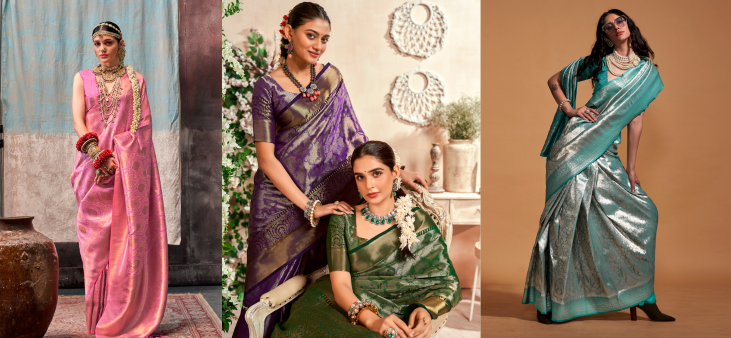
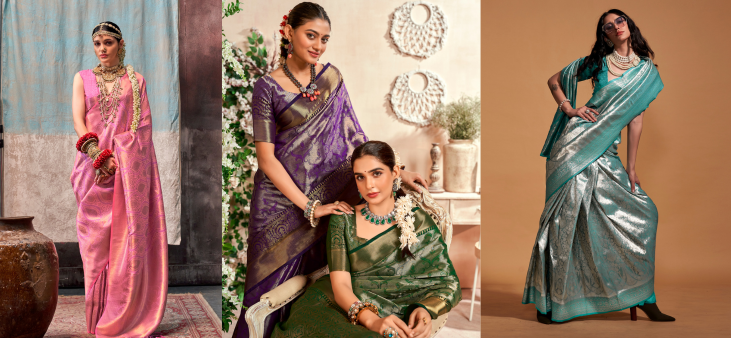
- Kashmiri Jamawar: Test 5's example of a more labour-intensive weave is the Rhino Blue Kashmiri Jamawar Banarasi. It sits on our Kashmiri Jamawar sarees shelf alongside similar pieces.
- Banarasi: the Rust Orange Woven Banarasi near the FAQ is one weave in the family. See more in our Banarasi sarees.

Leave a comment
This site is protected by hCaptcha and the hCaptcha Privacy Policy and Terms of Service apply.