
How to Iron a Silk Saree Without Damaging the Zari: The Muslin-Barrier Method (2026)

Iron a silk saree on the reverse side, on the lowest "silk" setting (roughly 110–150°C), with a doubled cotton or muslin cloth between the soleplate and any zari. Direct heat on zari — real or synthetic — is the single fastest way to dull a border that took a weaver weeks to finish. If the pallu or border is heavily hand-worked, or you're not sure the zari is genuine, skip the iron altogether and steam it instead.
Why Zari Tarnishes Under a Hot Iron
Zari is a fine metallic thread wound around a silk or cotton core. Pure zari is silver wire electroplated with gold — expensive, and increasingly rare in everyday sarees. Most of what you'll actually own is "tested" or imitation zari: a metallized polyester film wrapped around thread. Both react badly to direct heat above roughly 150°C. Genuine zari oxidizes and dulls; synthetic zari can flatten, shine unnaturally, or in bad cases actually melt. Either way, one rushed ironing session on the cotton setting can undo years of careful storage.
Humidity makes it worse. If you're touching up a saree on a muggy day, moisture trapped under the metallic strip by a hot soleplate is exactly how tarnish spots start — which is why we tell customers to let a saree air out for a few minutes before ironing, not straight out of a sealed almirah.
The Muslin-Barrier Method, Step by Step
- Turn it inside out. Work on the reverse side wherever the drape allows, especially across the border and pallu.
- Set the iron low. Use the "silk" or two-dot setting — about 110–150°C, well under what's safe for cotton or linen.
- Lay down a barrier cloth. A plain, well-washed muslin or thin cotton cloth goes over the fabric before the iron ever touches it. Double it specifically over zari sections.
- Glide, don't press. Move the iron in one direction along the grain instead of scrubbing back and forth — scrubbing is what flattens a raised zari weave into a shiny smear.
- Keep steam away from zari. If you need moisture, mist the barrier cloth lightly rather than the saree itself. Steam trapped against warm metal thread is a common, avoidable cause of tarnish.
Reverse-Side Ironing: Why the Pallu and Border Get Special Treatment
The pallu and border carry the bulk of a saree's zari and handwork, and they're also what everyone actually sees in a drape. Iron the plain body first to get your rhythm and heat right, then move to the border and pallu last, in short, light passes, checking the barrier cloth hasn't shifted. A hand-worked kadiyal or jamdani-style border has texture — motifs sit slightly raised off the base fabric — and that texture is exactly what a heavy-handed iron flattens permanently.
When to Put the Iron Down and Steam Instead
For anything heavily embellished — hand-worked borders, sequin or zardozi work, vintage pieces, or a bridal saree you only wear once — we'd rather a customer use a handheld garment steamer held 3–4 inches from the fabric, never resting on it. It's slower, and it won't get creases as crisp as an iron will. But there's zero direct contact, which means zero risk of scorching a border or dulling zari you can't replace. We'd rather a saree come out of storage slightly soft-creased than have someone flatten forty years of hand-worked zari in a rushed five minutes before a wedding.
Common Ironing Mistakes That Damage Silk Sarees
- Ironing zari with no barrier cloth. This is the single most common way we see borders dull within a year of purchase.
- Using the cotton or linen setting on silk. It's simply too hot for either the fibre or the zari.
- Pressing hard over embroidery or sequins. Weight, not heat, is often what crushes raised work.
- Steaming from too close. Direct steam contact can leave water spotting on silk, especially darker shades.
- Skipping the barrier "just for a quick touch-up." Tarnish rarely happens on the first bad iron — it's the accumulation of quick touch-ups without a barrier that does it.
Shop the Edit
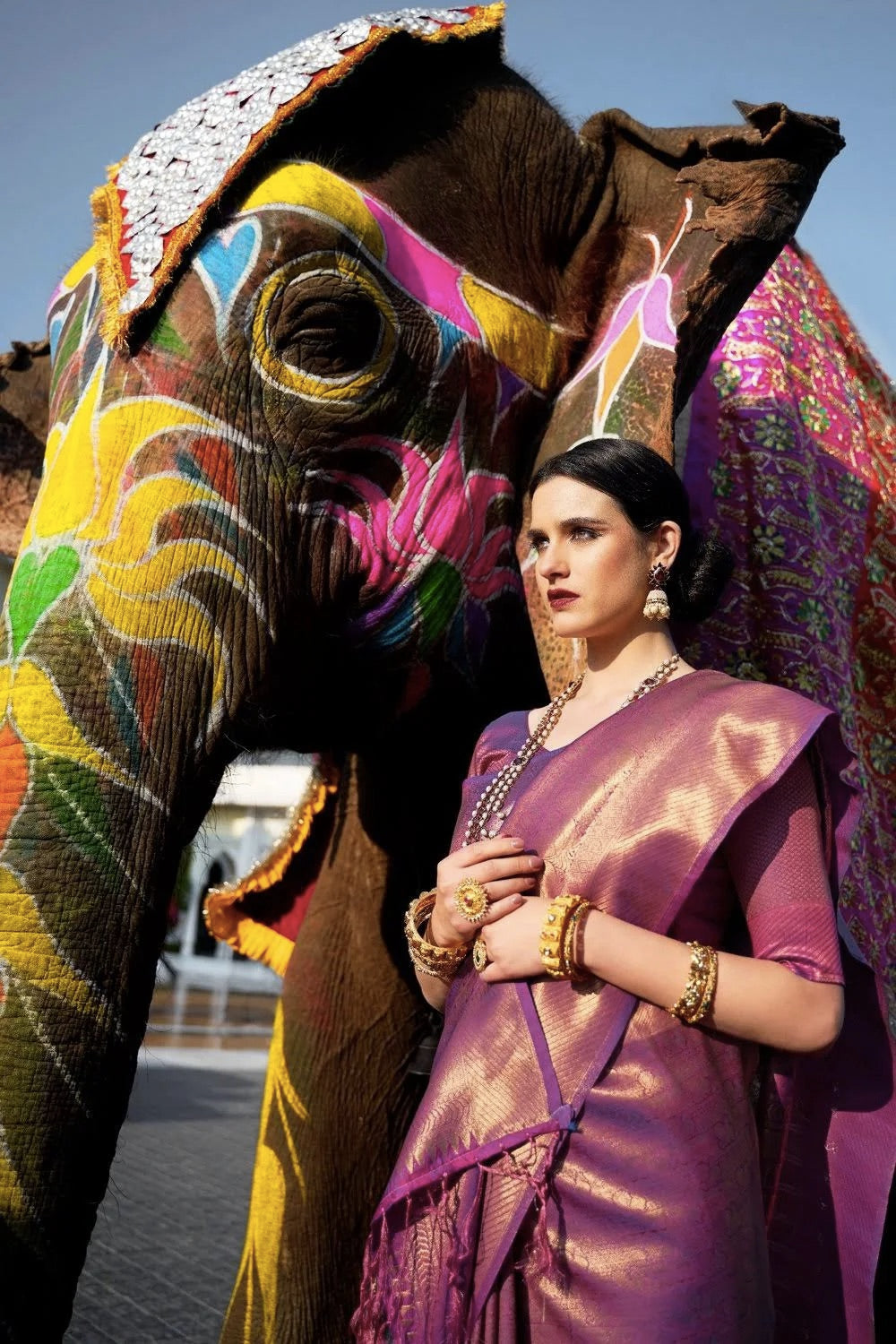
If you're building — or protecting — a zari-heavy wardrobe, it helps to know which pieces reward the extra five minutes of care. The Puce Purple Woven Kanjivaram Saree carries a wide gold zari border that's worth a muslin barrier every single time you press it. The Pancho Cream Jamawar Banarasi Saree and the Midnight Black Kashmiri Jamawar Banarasi Saree both carry the dense, all-over jamawar zari we'd steam rather than iron directly. For more zari-forward weaves, browse the full Banarasi Sarees and Kanjivaram Sarees collections.
Not sure whether a border is real zari to begin with? Our Real vs Fake Banarasi Saree guide walks through the burn test and weight checks we use ourselves before a saree ever gets near an iron.
Frequently Asked Questions
Can you iron a pure silk saree at all?
Yes — pure silk tolerates a low, "silk"-setting iron (roughly 110–150°C) as long as you work on the reverse side with a cotton or muslin barrier cloth. What silk can't tolerate is direct high heat, prolonged pressing in one spot, or steam applied right against a zari border, all of which cause scorching or tarnish.
What temperature is safe for ironing zari?
Keep the iron on its lowest setting, under roughly 150°C, and never let the soleplate touch zari directly — always through a doubled cloth barrier. Pure zari (real silver-gold wire) and synthetic zari both react to heat, but synthetic metallic film can actually melt and dull faster than genuine wire does.
Is steaming safer than ironing for a silk saree?
For heavily worked borders and pallus, yes. A handheld garment steamer held 3–4 inches away releases creases without any direct contact, so there's no scorch or flattening risk. Plain, lightly worked silk bodies iron fine on low heat — save steaming for the zari-dense sections.
Ready to add a zari-rich silk saree to your wardrobe — one worth the extra five minutes of care? Shop the full Silk Sarees collection.
Shop the Zari-Rich Edit
If the muslin-barrier method above is going to earn its keep, it needs a border worth protecting. These are the shelves where the zari is the whole point:
- The dense, all-over jamawar work in both the pieces named above comes from one shelf — browse our Kashmiri Jamawar silk sarees, the weave we would steam rather than iron directly.
- For the tightly woven Banarasi base that carries a raised zari motif without flattening under a careless press, see our Banarasi Katan silk sarees.
- Hand-woven borders are the ones that take a weaver weeks and an iron five careless minutes to ruin — explore our handloom sarees. That shelf is inventory-gated, so every piece on it has stock on hand.
- Drawn to the purple Kanjivaram at the top of this guide? It leads our purple sarees edit.

,%20with%20a%20doubled%20cotton%20or%20muslin%20cloth%20between%20the%20soleplate%20and%20any%20zari.%20Direct%20heat%20on%20zari%20%E2%80%94%20real%20or%20sy...)
Leave a comment
This site is protected by hCaptcha and the hCaptcha Privacy Policy and Terms of Service apply.