
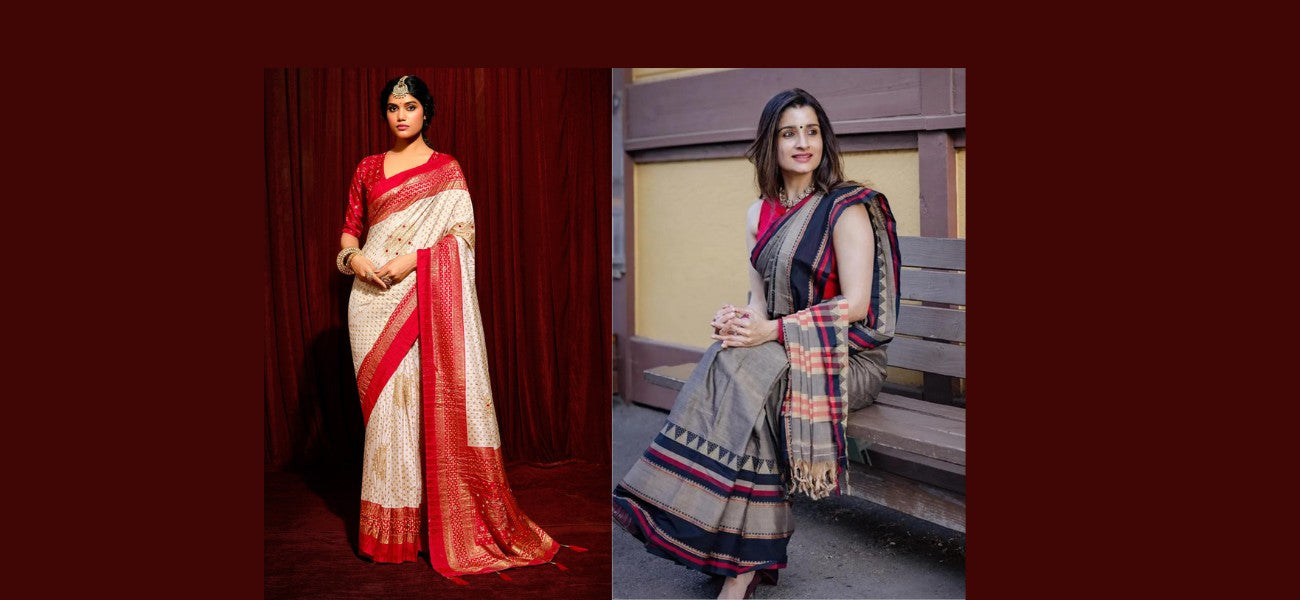
Bengali Saree Drape (Atpoure): The No-Pleat Style with the Key on the Pallu
The Bengali atpoure drape has no front pleats — that is the whole point. Instead of the fan of pleats you tuck at the navel in a Nivi, you wrap the fabric in broad box-folds, throw a long pleated pallu over the left shoulder, bring it back across the body, and pin it at the right shoulder with a brooch or a literal bunch of keys knotted into the corner. The word atpoure means "eightfold," and once you understand the logic — wrap, fold wide, double the pallu — you can drape it in under ten minutes. Here is exactly how.
I have draped this style on a 5.5-metre Tussar and on a heavier 6-metre Banarasi, and the single thing that decides whether it looks like a Tagore-era portrait or a bedsheet emergency is pallu length. The Bengali pallu is deliberately longer than a Nivi pallu — you need enough fabric to travel over the left shoulder, across the back, and forward again to the right. Skimp on that and the second drape won't reach. Keep reading for the fix.

What makes the atpoure drape different
Three things set it apart from the everyday Nivi style. First, no front pleats — the front falls in soft, wide box folds tucked to the left of the navel rather than a sharp pleated fan. Second, a double-shouldered pallu — it goes over the left shoulder, wraps the back, and returns to the right. Third, the key knot — traditionally a Bengali bride or grihalakshmi ties the household keys (chabi) into the pallu corner, a quiet symbol of running the home. Today most people swap the keys for a decorative brooch, but the knot stays.
The classic colourway is lal paar shada saree — white or cream body with a deep red border — but the drape works on any silk with enough body to hold a fold. A crisp Banarasi or a textured Tussar both behave beautifully.

Step by step: the atpoure drape in 6 moves
- 1. Set the base. Tuck the plain end at your right hip and wrap the saree once around the waist, right to left, like any Nivi base. Tuck the full first round into the petticoat all the way around.
- 2. Skip the pleats — fold instead. Take the open running edge, fold it back to the right waist and tuck, then bring it across the front to the left and tuck again. Repeat once. These two or three broad box-folds replace the navel pleats and give the front its signature loose drape.
- 3. Build the pallu. With the remaining length, make wide pleats across the full width of the fabric, keeping the decorative border as the leading pleat. Bengali pleats are broader than Nivi pleats — five to seven of them, not ten.
- 4. First shoulder. Throw the pleated pallu over your left shoulder so it falls down the back. Let it hang long.
- 5. Second pass — the wrap. Take the bottom border edge of that pallu, bring it across your back to the right side, then forward under the right arm and up over the right shoulder. This double pass is what makes the drape unmistakably Bengali.
- 6. The key knot. At the right-shoulder corner, tie a small knot and slip in your keys or pin a brooch. Done.
The mistake everyone makes (and the 2-minute fix)
The number-one failure is running out of pallu on step 5. If your saree is a standard 5.5 metres, the second pass over the right shoulder ends up tight and stubby. The fix: in step 2, use only two box-folds instead of three, and tuck them shallower. You sacrifice a little volume at the front and gain 20–25 cm of pallu — exactly what the right-shoulder wrap needs. On a generous 6.3-metre Tussar you won't have this problem at all, which is why first-timers should learn on a longer, slightly stiffer silk before attempting it on a soft chiffon.
For a forgiving first attempt, a Well Red Woven Tussar Ikkat Silk Saree has exactly the dry, grippy texture that holds box-folds without slipping — Tussar is one of the traditional atpoure fabrics for precisely this reason. When you want the full festive lal paar drama, a Crimson Red Woven Banarasi Silk Saree gives you the rich border and weight that photograph so well during Durga Puja.

Body-type tips for the atpoure drape
Because there are no tight front pleats, this drape is genuinely kind to most body types. If you're petite, keep the box-folds narrow so the front doesn't swallow your frame. If you carry weight at the midsection, the loose front folds skim rather than cling — lean into it. Taller women can let the back pallu hang longer for a dramatic line; shorter women should pin the left-shoulder pallu higher so it doesn't pool.
One honest opinion: the atpoure drape looks best standing and walking, not seated for hours. The double-pass pallu shifts when you sit, so if you're attending a long pujo where you'll be sitting cross-legged through the anjali, pin the right-shoulder corner securely — don't rely on the knot alone.
Want the foundational pleating and tucking technique first? Start with our complete how-to-drape-a-saree guide, then come back for the Bengali variation.

Frequently asked questions
Why does the Bengali saree have keys on the pallu?
The knotted keys (chabir guchchho) symbolise the woman of the house holding charge of the household — a tradition tied to married Bengali women. Today it's mostly decorative, replaced by a brooch, but the knot at the right-shoulder corner remains a defining detail of the atpoure drape.
Which fabric is best for a Bengali drape?
Tussar silk, Dhakai jamdani, Baluchari, garad silk and crisp cotton-silk all work best because they hold the broad box-folds without slipping. Avoid very soft, slippery chiffons for your first attempt — they collapse before the double-shoulder pass is finished.
How long should the saree be for an atpoure drape?
Aim for 6 to 6.3 metres. The atpoure pallu is longer than a Nivi pallu because it travels over both shoulders. A standard 5.5-metre saree can work if you keep the front box-folds shallow to free up extra pallu length for the right-shoulder wrap.
Ready to drape your own atpoure look? Shop Banarasi silk sarees at MySilkLove →
More Fabrics for the Bengali Drape
The atpoure drape needs a fabric with enough body to hold its broad box-folds. Beyond the Banarasi above, these are the shelves to start with:
- Explore Tussar silk sarees — the dry, grippy texture that holds box-folds without slipping, ideal for a forgiving first attempt.
- Browse our Jamdani sarees, the Bengal weave this guide's FAQ names among the best fabrics for the drape.
- Shop cotton sarees for a crisp, everyday atpoure like the Shantipuri Bengal cotton pictured at the top of this guide.
- See the wider silk sarees range for other body-rich silks that hold a fold.
We don't have a dedicated Baluchari or garad shelf yet, so for those two weaves the silk range above is the closest place to look.

Leave a comment
This site is protected by hCaptcha and the hCaptcha Privacy Policy and Terms of Service apply.