
Article: Banarasi Saree Weaves Decoded: Kadhua vs Cutwork, Katan vs Kora, Tanchoi & Jangla — Which to Buy for a Wedding (2026)
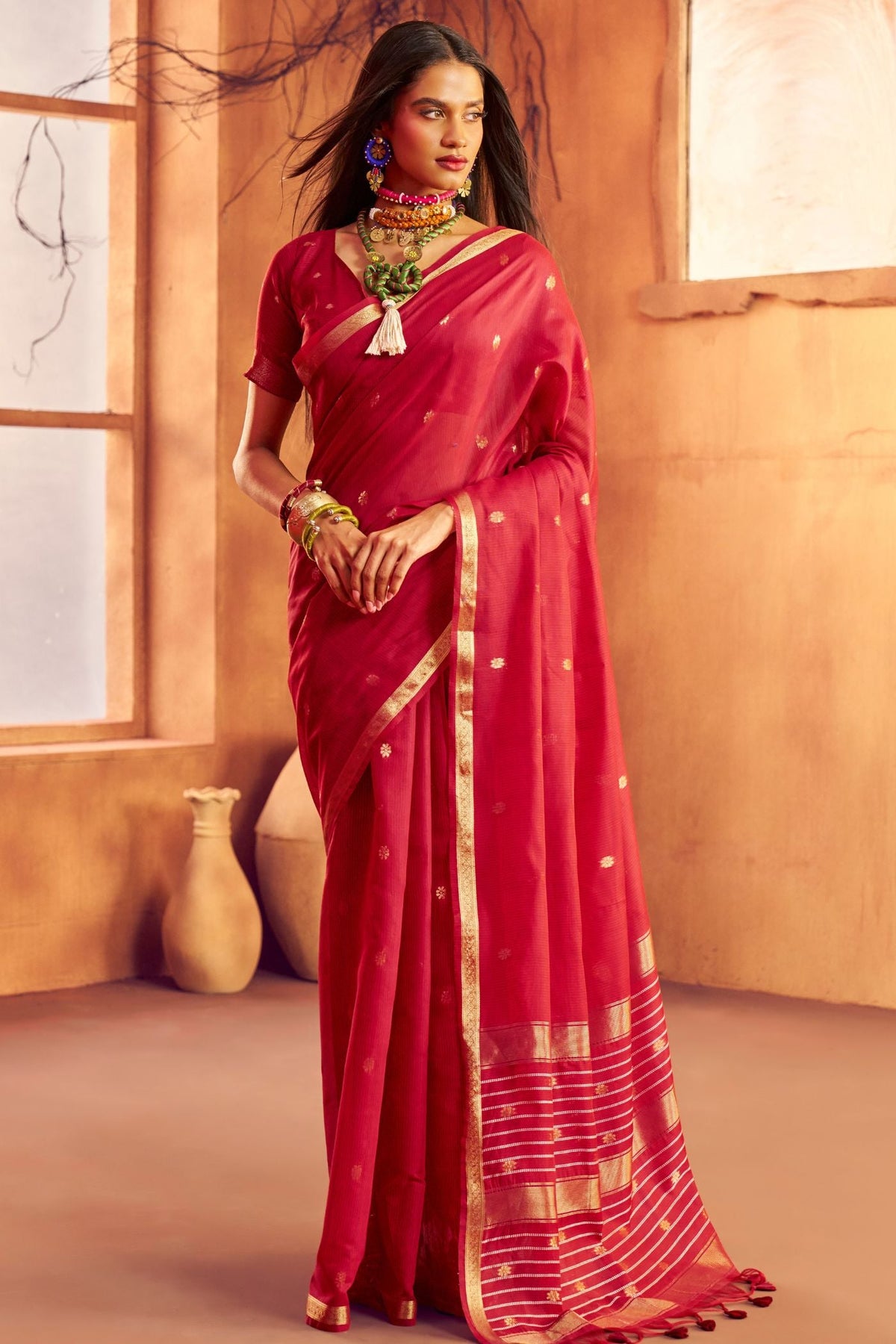
Banarasi Saree Weaves Decoded: Kadhua vs Cutwork, Katan vs Kora, Tanchoi & Jangla — Which to Buy for a Wedding (2026)
Short answer: for a wedding, pick a kadhua (hand-lifted, motif-by-motif) Banarasi on a katan silk base if you want an heirloom, a fekwa (cutwork) Banarasi if you want the same look at a lighter price and weight, a tanchoi if you prefer colour over gold, and a jangla if you want maximum zari for a bride or reception. The weave name tells you more about how a Banarasi will look, feel and last than the colour or the shop does. Here is how to read each one before you buy.
Why the weave name matters more than the word "Banarasi"
"Banarasi" describes a family of brocade techniques from Varanasi and its weaver clusters, protected since 2009 under the Geographical Indication "Banaras Brocades and Sarees". Inside that family, two choices decide almost everything: how the pattern is woven (kadhua vs fekwa) and what the base fabric is (katan, kora, georgette, tissue or a blend). Two sarees in the same red with the same gold border can sit worlds apart in weight, drape and price because of those two choices.
Kadhua vs fekwa (cutwork): the single most important difference
Both techniques add an extra weft thread (zari or coloured silk) to create motifs. The difference is what happens between the motifs.
- Kadhua: the weaver lifts the extra weft by hand for each motif, so the thread lives only where the motif is. Every butta is woven individually. It is slow, often taking several weeks for one saree, and it gives the cleanest, most durable pattern.
- Fekwa (cutwork): the extra weft runs across the full width of the saree, selvedge to selvedge, and the loose "floats" between motifs are trimmed off the back after weaving. It is faster and lighter, and it is why cutwork Banarasis cost less.
The expert test (do this on any Banarasi): turn the pallu over. On a kadhua saree the back shows each motif as a closed, self-contained shape with the thread turning back at its edge. On a fekwa saree you will see short, clipped thread ends around every motif. Neither is "fake" — but they should not be sold at the same price, and the back of the pallu never lies.
Katan, kora, georgette, tissue: the base fabric
- Katan: pure silk where filament yarns are twisted together for both warp and weft. Dense, smooth, with a deep sheen — the classic bridal and heirloom base. Heavier on the shoulder, but it holds pleats beautifully.
- Kora (organza): silk woven while still stiff (un-degummed), so it is sheer, crisp and airy. Lovely for day functions and a lighter, modern brocade look.
- Georgette: a crinkled, fluid base that drapes softly; Banarasi georgettes are easier to carry through long receptions.
- Tissue: zari is woven into the weft itself, so the whole fabric shimmers. A favourite for sangeet and reception looks.
- Soft silk and blends: lighter, more forgiving and far easier on budget. A blend is still a woven Banarasi design — just not a pure-silk katan — and an honest seller will say which one you are getting.
Tanchoi, jangla, butidar and jamdani: the pattern families
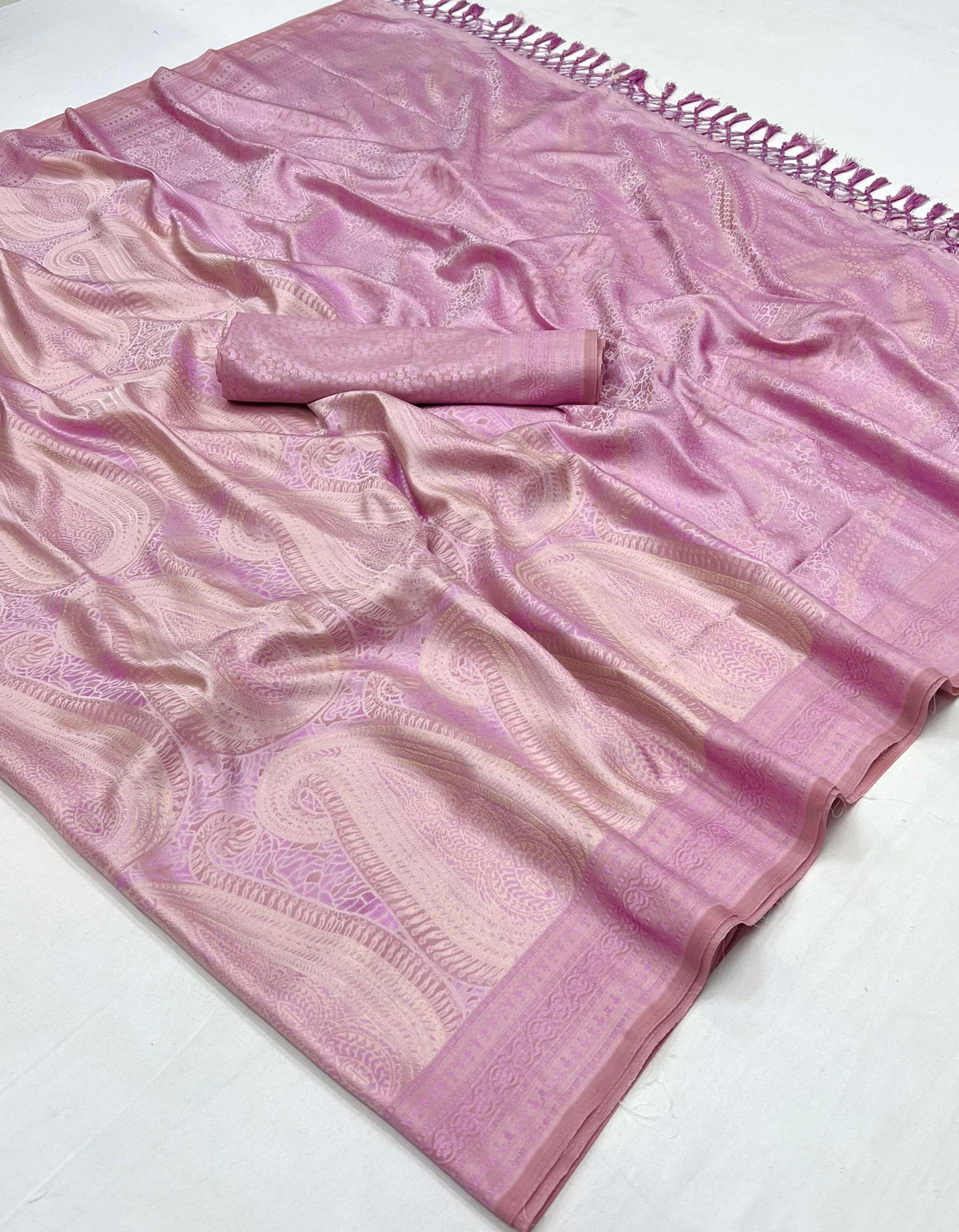
- Tanchoi: a satin-weave base with patterns woven in several colours of silk weft, often with little or no zari. Rich, painterly, quietly luxurious — ideal if gold is not your thing.
- Jangla: a dense, all-over pattern of vines and creepers ("jungle"), usually in heavy zari. Maximum grandeur, maximum weight; a classic choice for a bride.
- Butidar: small, evenly scattered buttis on a plain ground. Versatile and easy to re-wear after the wedding.
- Banarasi jamdani: fine motifs woven in cotton or silk on a sheer ground, using the same extra-weft logic as kadhua. Light and elegant for day events.
Which Banarasi for which wedding role?
The bride
Kadhua or jangla on katan, in red, maroon or deep gold. It photographs well, holds its pleats through long ceremonies and becomes the saree you pass on. Browse the red Banarasi edit and the golden Banarasi edit.
Mother of the bride or groom
Tanchoi or a butidar katan in jewel tones — elegant without competing with the bride. Ivory and cream Banarasis are also popular for daytime pheras; see the ivory Banarasi edit.
Sangeet, reception and guests
Tissue, kora or georgette Banarasis — lighter, easier to dance in and cooler under lights. Pair one with a statement blouse and you have two looks from one saree.
What you will actually pay on MySilkLove
We currently have nearly 880 Banarasi pieces live, and regular list prices start at about ₹2,800 for soft-silk and woven Banarasi designs. Banarasi cotton sarees start a little above ₹3,000, many of our newest Banarasi handloom silk pieces are listed at about ₹4,160, and jacquard soft-silk Banarasis at about ₹4,740. These are regular list prices; seasonal offers applied automatically at checkout often bring them lower. Each product page names its exact fabric, so you always know whether you are buying pure silk, soft silk or a blend. Shop the full Banarasi saree collection, or start with Banarasi sarees under ₹3,000 and Banarasi sarees under ₹5,000.
For a deeper look at price tiers, read our Banarasi saree price guide, and before any big purchase run the checks in real vs fake Banarasi saree. Planning several sarees for the season? The bridal trousseau saree checklist helps you split the budget.
Quick buying checklist
- Flip the pallu: clean, closed motifs (kadhua) or clipped floats (fekwa)?
- Ask for the base: katan, kora, georgette, tissue, soft silk or blend?
- Check the weight against the occasion — heavy jangla for the ceremony, lighter tissue or georgette for dancing.
- Look at the selvedge: small irregularities are normal on a handloom and are a good sign.
- Compare like with like — never judge a kadhua katan and a cutwork blend on price alone.
Shop the Weaves: Banarasi Sarees by Fabric and Finish
If the shimmer of zari on a sheer base caught your eye, browse our tissue silk sarees with a metallic glow. For a lighter, easier drape, explore georgette sarees for long wedding days. If kadhua-style craftsmanship matters most, shop authentic handloom sarees, or see our curated wedding edit of bridal and guest sarees.
FAQ
Is kadhua always better than cutwork?
Kadhua is more labour-intensive and more durable, so it is the heirloom choice. Cutwork is not inferior for occasional wear; it is lighter and more affordable. The key is that the price should match the technique.
How can I tell a katan silk Banarasi from a blend?
Katan feels dense and smooth with a deep, even sheen, and it falls heavily. Blends are lighter and springier. The product label should state the fabric; if it does not, ask before you buy.
Which Banarasi is easiest to wear for a long wedding day?
A georgette, kora or soft-silk Banarasi. They weigh much less than a jangla katan and stay comfortable through long ceremonies.
Does a Banarasi need special care?
Dry clean only, store folded in a muslin cloth away from damp, and refold along new lines every few months so the zari does not crack along the creases.

Leave a comment
This site is protected by hCaptcha and the hCaptcha Privacy Policy and Terms of Service apply.