
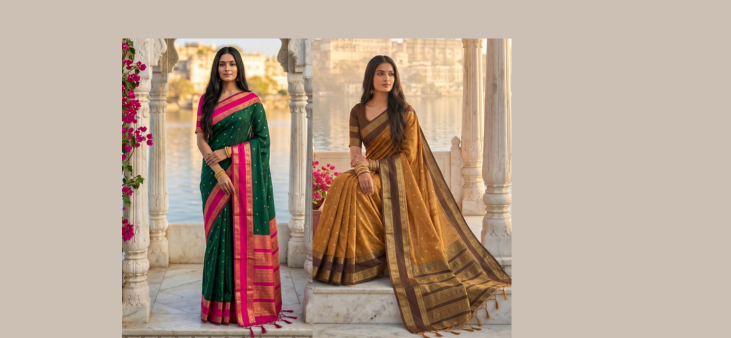
Banarasi Saree Price Guide 2026: What You Actually Pay at Each Tier (And How to Spot a Fake)
A genuine handwoven Banarasi silk saree in India costs roughly ₹6,000–₹8,000 at the entry level, ₹12,000–₹30,000 for a good festive or wedding-guest piece, and ₹25,000 to ₹1,50,000+ for a pure Katan silk bridal saree with real gold zari. Anything sold as "Banarasi" below about ₹2,500 is almost always power-loom or a Banarasi-style synthetic — a legitimate product, but not the handwoven Varanasi craft. This guide breaks down what each price tier actually buys, so you pay for the saree and not the story around it.

Why Banarasi Prices Vary So Much
Three things move the price of a Banarasi saree, and none of them is the brand name on the tag. First, weave method: a true handloom Banarasi is woven on a pit loom and can take 15 days to 6 months for a single piece, while a power-loom version is produced in a day or two. Second, the zari: real silver-wrapped-in-gold zari (tested as "tested zari") costs many times more than the copper-core or polyester "meena" zari used in budget pieces. Third, the base silk — pure Katan mulberry silk versus a silk-blend, georgette, or organza Banarasi. A heavy bridal Katan with dense kadhua (hand-woven, cut-thread) motifs sits at the top of the range for a reason.

Banarasi Saree Price Tiers in 2026
Under ₹3,000 — Power-loom and Banarasi-style
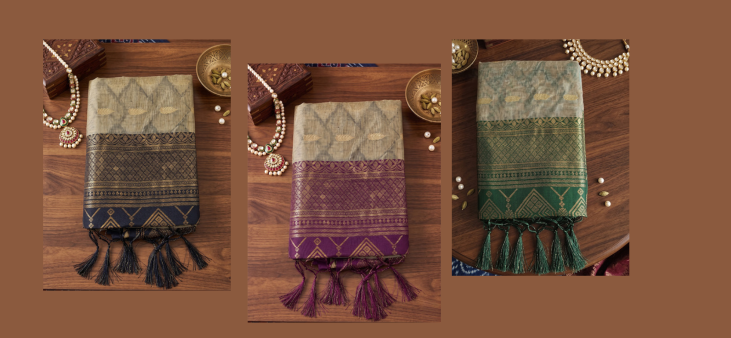
At this tier you are buying a power-loom Banarasi or a Banarasi-inspired saree in art silk, georgette, or organza. The motifs are screen-set or machine-woven rather than hand-woven, and the zari is polyester or copper-core. These are genuinely good for festive wear, gifting, and first-time buyers who want the Banarasi look without the heirloom commitment — just know it is not the handloom craft. Expect light weight and a uniform, slightly plastic sheen to the zari.
₹3,000–₹8,000 — Semi-handloom and entry handloom
This is the value sweet spot. You get semi-handloom pieces (hand-finished borders, partial hand weaving) and the first genuine handloom Banarasis in silk-blend or lighter Katan. Georgette Banarasi and Khaddi Georgette sit here — breathable, drapey, and very popular for receptions and day functions. Real handloom motifs start to appear, but the zari is usually "half-fine" rather than fully tested.
₹8,000–₹25,000 — Genuine handloom Katan silk
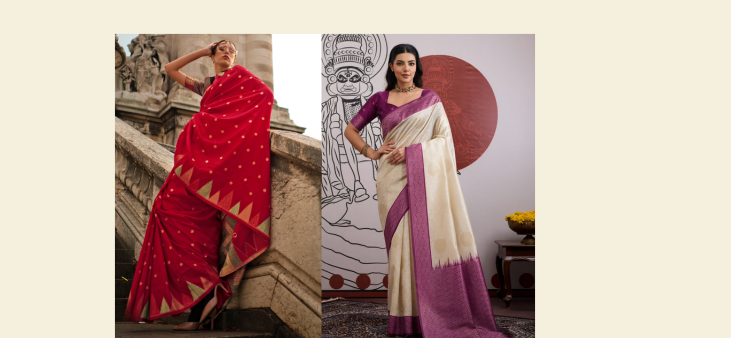
At this level you are buying a properly handwoven pure Katan or Kora silk Banarasi with substantial weight and real-zari jaal or buti work. The brocade has depth, the reverse of the saree shows clean float threads, and the saree carries a GI tag. This is the realistic budget for a beautiful wedding-guest or festive Banarasi that lasts decades. Cream, ivory, and burnt-orange Banarasis in this band are among our most-searched colours.
₹25,000–₹1,50,000+ — Bridal Katan with tested gold zari
Heirloom and bridal territory. Pure Katan silk, dense kadhua weaving (each motif woven separately by hand with no floating threads cut away), wide contrast borders, and tested real-zari that uses silver wrapped in gold. A single saree at the top of this range can take a weaver family 4 to 6 months. Price reflects the silk purity, the zari weight in grams, and the labour — not the margin.

How to Spot a Fake (or Power-loom) Banarasi Before You Pay
Turn the saree over. On a genuine handloom Banarasi, the reverse shows the floating zari threads between motifs — a power-loom piece looks suspiciously neat with a gummy, uniform back. Check the zari itself: real tested zari shows a faint reddish-silver thread when gently scraped, while synthetic zari stays white or flakes. Look for the GI tag and Silk Mark label. And use price as the honest signal — a "pure silk handloom Banarasi" advertised at ₹1,500 is, by the economics of the craft, not what it claims to be.
Which Banarasi Should You Actually Buy?
For an everyday-festive or gifting saree on a tight budget, a georgette or organza Banarasi at ₹3,000–₹6,000 is the smart, practical pick. For a wedding-guest saree you will re-wear for years, stretch to a genuine handloom Katan in the ₹10,000–₹20,000 band. For your own bridal saree or a family heirloom, the ₹25,000+ pure Katan with tested zari is the only tier that delivers the real thing. If you are deciding between weaves entirely, our Kanjivaram vs Banarasi comparison walks through which suits your occasion, and our real vs fake Banarasi guide goes deeper on authentication.

Frequently Asked Questions
What is the price of a real Banarasi silk saree?
A genuine handwoven Banarasi starts around ₹6,000–₹8,000 for entry handloom and rises to ₹25,000–₹1,50,000+ for pure Katan silk bridal pieces with real gold zari. Power-loom Banarasi-style sarees sell for under ₹3,000 but are not handwoven.
Why are some Banarasi sarees so cheap?
Cheap Banarasis are power-loom woven in art silk or georgette with synthetic zari, produced in a day or two rather than hand-woven over weeks. They are fine for festive and gifting use but are not the handloom Varanasi craft and will not have the weight, depth, or longevity of a real Katan silk piece.
How can I tell if my Banarasi is handloom or power-loom?
Check the reverse: handloom Banarasis show floating zari threads between motifs, while power-loom backs look uniform and gummy. Genuine pieces carry a GI tag and Silk Mark, and the zari shows a reddish-silver thread when gently scraped.
Is a georgette Banarasi a real Banarasi?
Yes — Khaddi Georgette and Georgette Banarasi are legitimate Banarasi weaves; the term refers to the Varanasi weaving tradition, not only to Katan silk. Georgette Banarasis are lighter and drapier, which is why they are popular for receptions and warm-weather functions.
Browse our full Banarasi silk saree collection — handwoven in Varanasi, GI-tagged, with free shipping, COD, and easy 7-day returns.

Where to shop each tier
The full Banarasi collection is linked just above. Matching the tiers in this guide to the narrower shelves we run, and being straight about where our range stops:
- Katan, placed honestly. Our Banarasi Katan sarees page is built from the word Katan in the listing title and only lists pieces with stock on hand. At its bestselling end the regular list prices run from ₹5,484 to ₹6,492, which keeps it out of the ₹8,000–₹25,000 Katan tier this guide describes.
- Handloom across weaves. The handloom saree collection is built from the handloom tag and gated on stock; its bestselling end mixes Banarasi and Kanjivaram handloom pieces.
- The colours this guide names. Cream and ivory are among the Banarasi colours this guide calls most searched. Our ivory Banarasi sarees page is built from the Banarasi and cream colour tags and only lists pieces with stock on hand; at its bestselling end the regular list prices run from ₹4,649 to ₹7,484, below that tier's ₹8,000 floor.
One honest limit: our own Banarasi range does not reach the bridal Katan tier described above. If a tested-gold-zari kadhua bridal saree is what you want, buy it from a GI-registered Varanasi weaver or a specialist bridal house — we would rather point you there than sell you the tier below it under the same name.

Leave a comment
This site is protected by hCaptcha and the hCaptcha Privacy Policy and Terms of Service apply.