
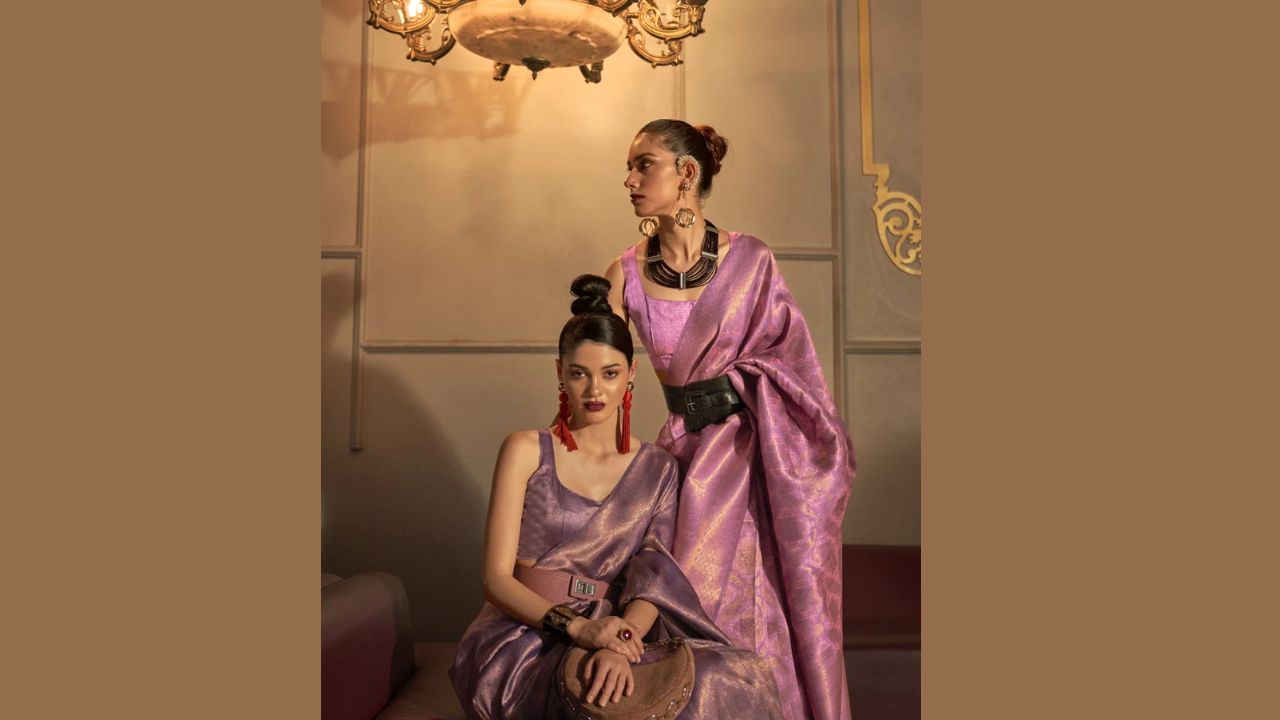
Kanjivaram vs Banarasi: Which Silk Saree Should You Actually Buy?
A genuine Kanjivaram saree and a genuine Banarasi saree can both cost ₹12,000 to ₹1,20,000. They're both woven in silk. They both scream bridal. But they are completely different sarees — different silk, different technique, different occasion energy. Choosing the wrong one is like buying a sitar when you needed a tabla. Here's the real breakdown.
Where They Come From — And Why It Matters
Kanjivaram (also spelled Kanchipuram) sarees come from Kanchipuram, Tamil Nadu — a town that has been weaving silk since the Pallava dynasty, roughly 1,500 years ago. The weavers here belong to the Devangas and Saligars communities and have passed down the craft through generations of temple-town tradition.
Banarasi sarees come from Varanasi (Banaras), Uttar Pradesh — a city equally ancient, but shaped by Mughal patronage. The Mughal emperors brought Persian motifs — vines, florals, kalga-buti — into the weaving, and that influence is visible in every genuine Banarasi you pick up today.
Both sarees have GI (Geographical Indication) protection under Indian law. A saree cannot legally be called a Kanjivaram unless it's woven in Kanchipuram district using the specified silk and zari standards. Same for Banarasi. If a seller is vague about origin — walk away.

The Fabric Difference Is Everything
Kanjivaram uses pure mulberry silk sourced mostly from Karnataka — thick, tightly twisted threads that give the saree its signature stiffness and heft. A standard Kanjivaram weighs between 700g and 900g. A heavy bridal piece can touch 1 kg. You'll feel it on your shoulder — and that's actually the point. The weight signals substance.
Banarasi uses katan silk — a finer, softer thread that drapes like water. A typical Banarasi weighs 500–700g. It falls differently on the body: more fluid, less structured. If you're someone who finds heavy sarees exhausting, Banarasi is the more wearable choice for long events.
Here's an expert opinion you won't read on most sites: for outdoor summer weddings, a Banarasi will be significantly more comfortable than a Kanjivaram — especially for someone draping their first saree. The lighter silk forgives fidgeting. A stiff Kanjivaram needs a practiced hand to stay neat over four hours.

The Weaving Technique — The Korvai Secret
The most distinctive technical feature of a Kanjivaram is the korvai technique. The body, border, and pallu of a Kanjivaram are each woven separately on different looms and then interlocked thread by thread by hand. This is why Kanjivaram sarees can have a body in deep teal and a border in burnt gold — true contrast colours that don't bleed into each other at the join.
Run your finger along the border join of a Kanjivaram. You should feel a very subtle ridge — that's the korvai join. No ridge? It may not be handwoven Kanjivaram.
Banarasi sarees, by contrast, are woven as a single continuous piece. The zari brocade patterns — the curling vines, the kalga-buti motifs, the tiny floral butis — are created by supplementary weft threads being woven in as the saree progresses. The border flows from the same loom as the body, which is why genuine Banarasis have a more unified, continuous design language.

Zari: Gold Threads Are Not Equal
Both sarees use zari — metallic thread — but the GI standards differ.
For a GI-certified Kanjivaram, the zari must contain 57% silver with 0.6% gold plating (Tamil Nadu government has relaxed this to 40% silver / 0.5% gold in some cases). Pure zari Kanjivaram sarees have a warm, slightly antique gold lustre that deepens with age.
Banarasi zari historically used fine real gold and silver thread — hence the term kinkhab for the richest brocades. Today, genuine handwoven Banarasi uses real zari that passes the rub test: rub the zari thread gently on a white cloth. If it leaves a metallic streak — it's likely real. If the colour transfers — it's likely synthetic.
Our Jaffa Orange Gold Handcrafted Kanjivaram is a great example of the warm zari palette — the antique gold border against the orange body is a classic korvai contrast that's nearly impossible to achieve in machine-made silk.

Price: What Are You Actually Paying For?
Kanjivaram price range: ₹8,000 (basic, lighter weight) → ₹1,20,000+ (heavy bridal, pure zari, complex motifs). The price is driven by silk weight, zari type (pure vs copper-core), and the number of colour contrasts in the body-border korvai join.
Banarasi price range: ₹5,000 (georgette Banarasi) → ₹1,00,000+ (pure katan silk with real zari brocade). The Banarasi range is wider because the base fabric varies — pure katan silk sits at the top, georgette and organza at the entry level.
One honest insight: a ₹12,000 Kanjivaram and a ₹12,000 Banarasi are not equivalent quality. At that price, the Kanjivaram will likely be thinner and the zari will be copper-core. The Banarasi at ₹12,000 might still be genuine katan with real zari. Banarasi tends to offer better value at the mid-price range.
Our Carmine Red Designer Banarasi sits at ₹11,472 — genuine woven zari on katan silk, the kind of saree that will still look stunning at your daughter's wedding.

Which One Should You Buy?
Choose Kanjivaram if: You're dressing for a South Indian wedding, a temple ceremony, or any occasion where traditional weight and structure is expected. Kanjivaram is also the better heirloom investment — the thick mulberry silk ages beautifully over decades. A well-kept Kanjivaram is something you pass down, not replace.
Choose Banarasi if: You want versatility. A Banarasi can move from wedding guest to Diwali dinner to corporate festive day far more easily than a stiff Kanjivaram. If you live outside India and pack sarees in luggage, Banarasi travels better too — it crumples less dramatically and steams back to shape faster.
For a deeper look at everything you need to know before buying either, read our complete Silk Saree Buying Guide — authentication tests, price benchmarks, and what questions to ask your seller.

FAQ: People Also Ask
How do I tell a real Kanjivaram from a fake?
Check the korvai join — run your finger along the border edge and feel for the slight ridge where body and border are interlocked. Also, burn a loose thread: pure mulberry silk smells like burnt hair and leaves a crushable ash. Synthetic silk smells like burning plastic and leaves a hard bead.
Can I wear a Kanjivaram to a North Indian wedding?
Absolutely — a rich jewel-toned Kanjivaram with temple border is increasingly worn at North Indian weddings, especially as a reception saree. The south-meets-north look is genuinely striking. Pair it with kundan jewellery and a contrast blouse to own the room.
Which lasts longer — Kanjivaram or Banarasi?
Kanjivaram, typically. The thick mulberry silk is more resistant to wear and the korvai join holds even after repeated draping. Banarasi organza and georgette variants are delicate and can snag. Pure katan Banarasi, however, is nearly as durable — the fabric type matters more than the city of origin.
Both are extraordinary. Both deserve a place in a serious saree wardrobe. But if you're buying just one — know which occasion you're buying for, check the silk weight, and always ask for the GI certificate.

Shop Kanjivaram Sarees at MySilkLove → mysilklove.com/collections/kanjivaram-sarees
Shop Banarasi Sarees at MySilkLove → mysilklove.com/collections/banarasi-sarees
Shop the Look
Decided which weave is right for you? Browse the full live collections:
- Going traditional for a South Indian wedding? Explore our complete Kanjivaram silk saree collection — entry-level festive pieces through to heavy bridal Kanjivarams.
- Want the more versatile, lighter drape? Browse our full Banarasi silk saree collection.
- Shopping the entry tier this guide describes? Compare Kanjivaram sarees under ₹5,000 against Banarasi sarees under ₹5,000 — the clearest way to see the value difference side by side.

Leave a comment
This site is protected by hCaptcha and the hCaptcha Privacy Policy and Terms of Service apply.