

Varalakshmi Vratam 2026 Saree Guide: 21 or 28 August, and What to Wear

Varalakshmi Vratam 2026 falls on two different Fridays depending on the panchang you follow: 21 August in the South Indian (Telugu, Tamil and Kannada) tradition, and 28 August by the North Indian Drik calendar. If your family keeps the vratam the way most Kanchipuram and Andhra households do, mark Friday, 21 August 2026. And when it comes to what to wear, one weave sits at the centre of this festival for good reason: a Kanjivaram silk saree, ideally in green.
21 or 28 August — which date is really yours?
The confusion is real, and it comes down to how the month of Shravana is counted. Varalakshmi Vratam is observed on the Friday that falls just before the Shravana full moon (Purnima). In 2026 that Friday lands on 21 August for the Telugu, Tamil and Kannada panchangs — which is why Andhra Pradesh, Telangana, Karnataka and Tamil Nadu will largely observe it then.
The Drik / North Indian reckoning places the vratam a week later, on Friday, 28 August 2026 (the same day as Shravana Purnima and Raksha Bandhan this year). Neither is wrong. The golden rule for any vratam is simple: follow the date your mother and grandmother kept. If you have no family custom to anchor to and you are South Indian by tradition, 21 August is the safer choice.
Why the saree matters more here than at almost any other puja
Here is a detail people outside the tradition often miss: on Varalakshmi Vratam, the goddess is not just worshipped — she is dressed. Women set up a kalash (a brass or silver pot), give it a face, adorn it with gold and flowers, and drape it in a saree so the pot becomes the living form of Lakshmi. Practically, that means many households buy two sarees: one to drape the kalash and one for the sumangali performing the puja. It is one of the few festivals where a new saree is close to non-negotiable, which is exactly why silk-saree demand spikes across the South in the fortnight before.

The colours that carry the day
Varalakshmi is a Lakshmi vratam, so the palette leans warm, auspicious and full: green, red, mustard-gold, and deep maroon all belong. If I had to name one, I would pick green over red for this particular festival. Red is beautiful but it is the default wedding-and-everything colour; green is the shade of growth, fertility and abundance — the literal wish of the vratam — and it photographs like a dream against a lamp-lit puja. A green Kanjivaram with a contrast red-and-gold border gives you both worlds in one drape.
If green feels done, mustard-yellow and rani pink are strong, camera-friendly alternatives that still read as festive rather than casual. Save pastels and greys for another day; a Lakshmi puja wants saturation.
Why Kanjivaram is the classic Varalakshmi weave
There is a reason grandmothers reach for Kanchipuram silk on this day and not a lightweight chiffon. A true Kanjivaram is woven from pure mulberry silk with real zari, and its border is often made using the korvai technique — where the body and the contrast border are interlocked by two weavers working in tandem, so the border never separates even when you tug it. That structure is what gives a Kanjivaram its temple-bell weight and its stand-on-its-own drape. For a three-hour puja where you are sitting, bending and doing aarti, that heft reads as gravitas, not as a burden. A good handloom Kanjivaram is also the one saree in your cupboard that genuinely improves with age — the reason it so often becomes the heirloom that gets draped on the next generation's kalash.
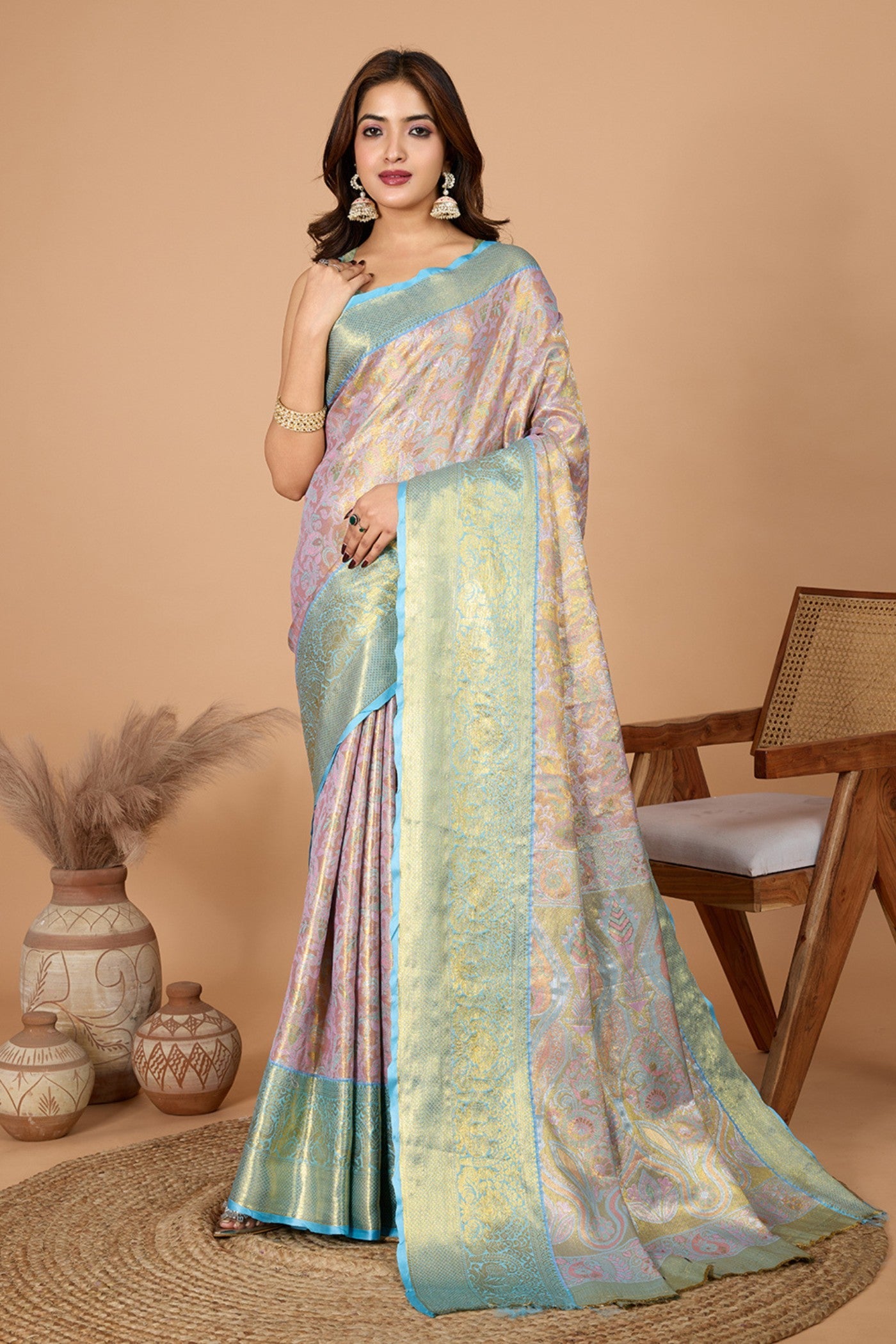
Shop the Edit: Varalakshmi-ready Kanjivarams
These are all pure-silk Kanjivaram drapes currently in stock, chosen for the auspicious palette above. Prices shown are regular list prices; seasonal offers at checkout often bring these lower.
- Jungle Green Kanjivaram Handloom Saree — a rich pure-silk body with a contrast border, the exact green-for-abundance pick (₹4,964).
- Paris Green Handloom Kanjivaram Saree — a brighter, lighter green woven by South Indian master weavers, lovely under puja lamps (₹4,964).
- Casal Green Woven Kanjivaram Saree — a deeper occasion-ready green if you want something more subdued (₹4,647).
- Rose Pink Handloom Kanjivaram Saree — if you would rather honour Lakshmi in pink, this rani-leaning rose is festive without being loud (₹4,964).
- Hot Pink Woven Tanchoi Kanjivaram Saree — a bolder Tanchoi weave for those who like their festival colour turned all the way up (₹5,169).

Want the full range to compare borders and pallus? Browse the complete Kanjivaram silk saree collection, or the wider South silk sarees edit for pattu and soft-silk alternatives. For the deeper background on this weave — how to tell handloom from powerloom and what each tier costs — our Kanjivaram silk saree guide walks through it in detail.
How to drape and carry it for the puja
Keep the styling classic: a well-pinned nivi drape, a contrast blouse pulled from the border colour, fresh mallige (jasmine) in the hair, and temple jewellery rather than anything trend-led. Because you will be seated on the floor for the puja, pleat a little shorter than usual so the pleats don't crush, and pin the pallu at the shoulder so both hands are free for the aarti and the tying of the sacred thread.
Frequently asked questions
Is Varalakshmi Vratam on 21 or 28 August in 2026?
Both dates are valid depending on your calendar. South Indian panchangs (Telugu, Tamil, Kannada) place it on Friday, 21 August 2026 — the Friday before Shravana Purnima — while the Drik / North Indian calendar observes it on Friday, 28 August 2026. Most Andhra, Telangana, Karnataka and Tamil Nadu families will keep the 21 August date, but the safest guide is the panchang your own family and temple follow.
What colour saree is best for Varalakshmi Vratam?
Auspicious, saturated colours are traditional: green, red, mustard-gold and deep maroon. Green is especially favoured because it symbolises growth and abundance — the very blessing the vratam seeks. Rani pink and mustard-yellow are strong festive alternatives. It is best to avoid pastels, greys and black for a Lakshmi puja.
Why is a silk saree used to dress the kalash?
On Varalakshmi Vratam the kalash (pot) is treated as the living form of the goddess, so it is draped in a saree, given a face and adorned with jewellery. A silk saree is used because it signals reverence and prosperity. Many families keep a dedicated saree for the kalash and buy a second new one for the woman performing the puja.

Ready to pick yours? Explore the full Kanjivaram silk saree collection and choose your Varalakshmi drape early — the auspicious greens and reds are the first to sell out in festival season.
Shop the auspicious Varalakshmi palette
Beyond Kanjivaram, shop the festival's lucky colours direct: explore our green sarees for the shade of abundance the vratam invokes, or browse rich red sarees for a classic Lakshmi-puja drape.

%20tradition,%20and%2028%20August%20by%20the%20North%20Indian%20...)
Leave a comment
This site is protected by hCaptcha and the hCaptcha Privacy Policy and Terms of Service apply.