
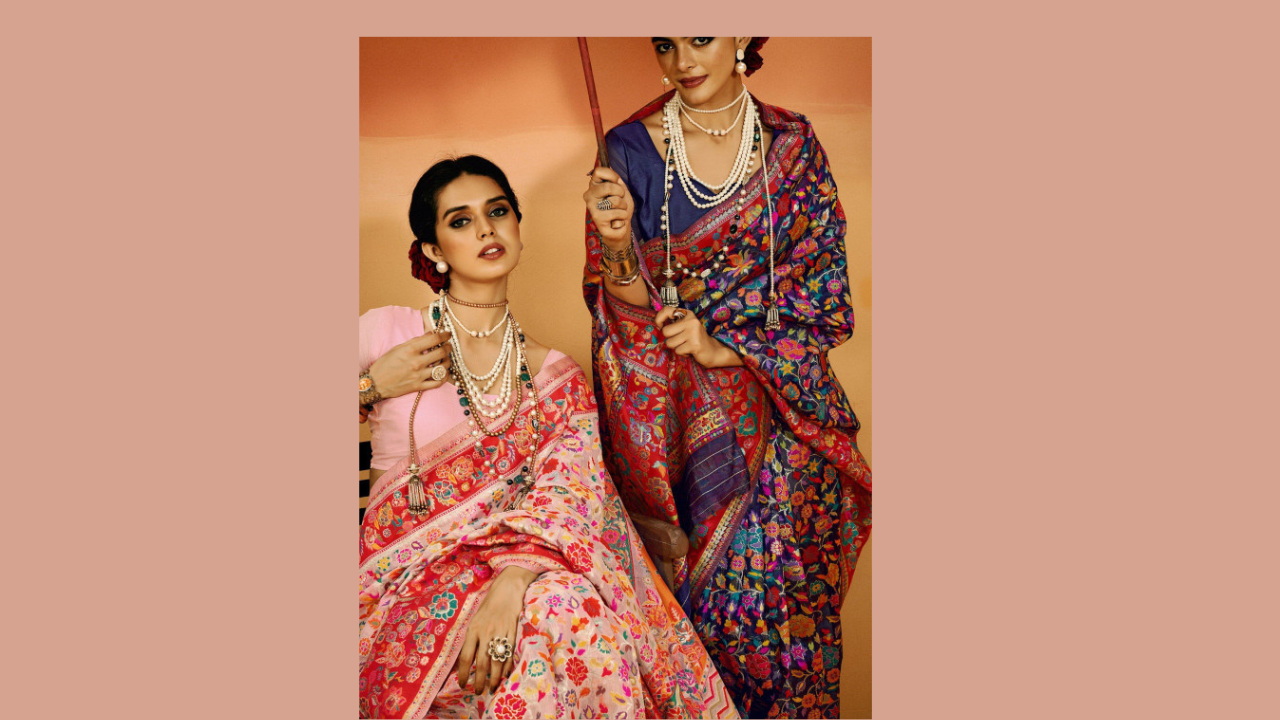
Types of Kashmiri Sarees: A Complete Guide to Kashmir's Finest Weaves
Kashmir has gifted India some of its most exquisite textiles — intricate weaves and hand-embroidered fabrics that carry centuries of craft tradition. If you are searching for a Kashmiri saree, understanding the distinct types will help you choose the right one for your occasion and budget.
1. Kashmiri Jamawar Sarees
Jamawar is the crown jewel of Kashmiri weaving. The word derives from jama (robe) and war (yard) — a reference to the full-body garments once woven for Mughal royalty. Authentic Kashmiri Jamawar sarees are woven on a traditional kani loom using fine twill-tapestry technique, where coloured weft threads are interlaced to create dense, painterly patterns — typically paisleys (buta), vines (jaal), and floral clusters. A single Jamawar saree can take 6 months to 2 years to complete, which explains why genuine pieces begin at ₹15,000. At MySilkLove, our Jamawar collection features semi-Jamawar weaves that retain the same visual richness, starting from ₹3,500.

2. Pashmina Silk Sarees
Pashmina comes from the underbelly fleece of the Changthangi goat, found only at altitudes above 14,000 feet in Ladakh. Blended with silk (typically 70% Pashmina, 30% silk), it produces a saree that is exceptionally soft, warm without weight, and drapes like liquid. A genuine Pashmina-silk saree passes the ring test — a 6-yard saree should pass through a finger ring. They are ideal for cool-weather events like winter weddings or formal evenings, with authentic blends starting from ₹8,000.
3. Kashmiri Sozni Embroidery Sarees
Sozni is a needle-embroidery technique worked on both sides of fine wool or georgette fabric, producing identical patterns on the reverse — a hallmark of genuine craftsmanship. The motifs — delicate chinar leaves, almond shapes, and flowing vines — are drawn freehand by master craftsmen (nakash) before the embroiderer follows the outline with a single fine needle. A sozni-work saree on georgette is a popular choice for receptions and festive occasions due to its lightness and visual elegance.

4. Kashmiri Kani Weave Sarees
The Kani technique — named after the wooden kani spool used instead of a shuttle — is what produces true Jamawar fabric. Each colour in the pattern requires a separate kani spool, and a complex design can involve 300+ spools working simultaneously. The resulting fabric has no loose threads on the reverse, making it fully reversible. Kani-woven saree borders are increasingly popular as contemporary bridal accessories.
5. Kashmiri Tilla Embroidery Sarees
Tilla work uses real metallic threads — traditionally silver and gold — couched onto the fabric surface to create glittering geometric and floral patterns. It is the heaviest of Kashmir's embroidery styles and is traditionally reserved for bridal wear, particularly in Kashmiri Pandit weddings. Today, tilla sarees on silk or velvet bases are sought by brides looking for a heritage-inspired alternative to South Indian bridal silk.

6. Kashmiri Modal Silk Print Sarees
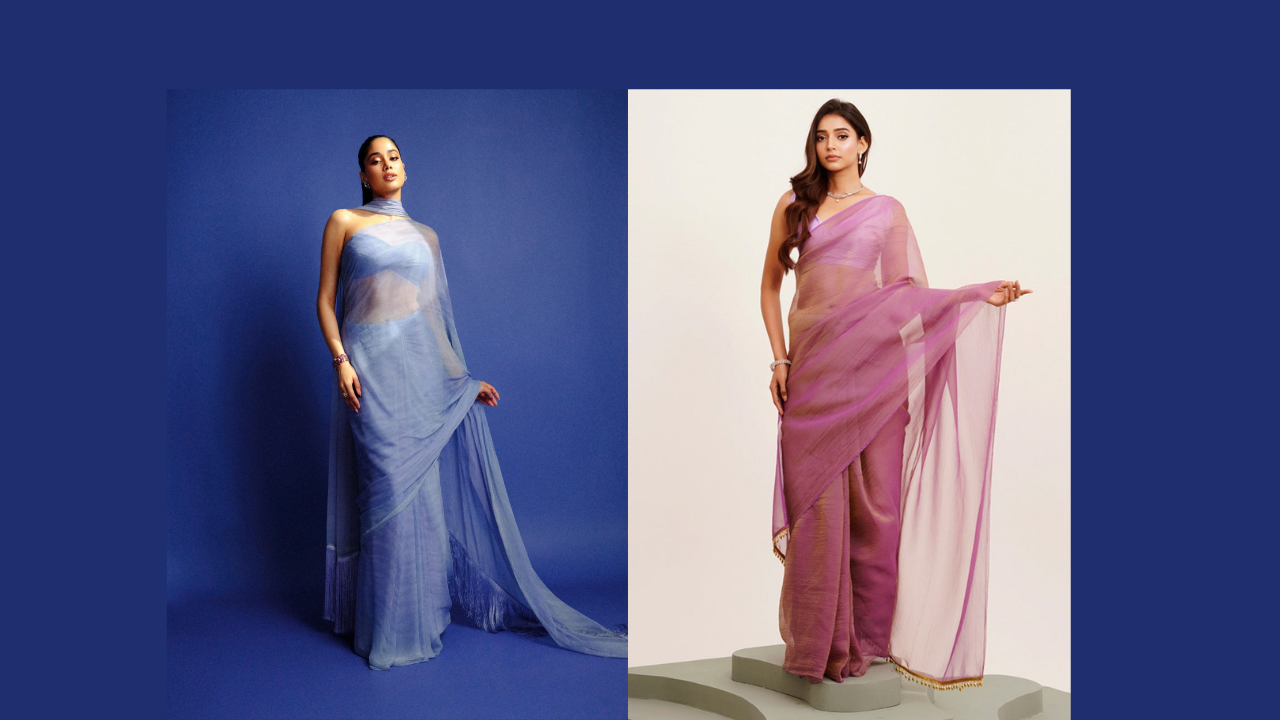
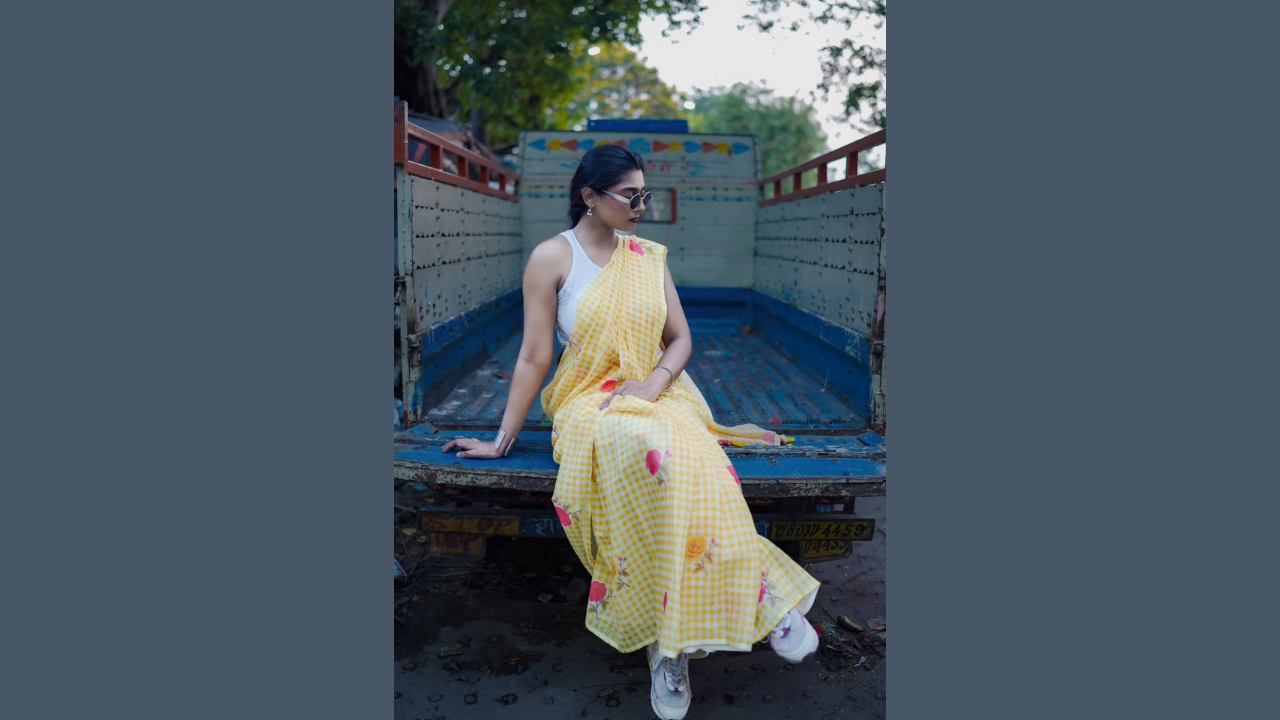
A modern adaptation combining Kashmiri hand-block or digital print motifs — particularly the iconic paisley (kairi) — on lightweight Modal silk. These sarees retail from ₹1,500–₹4,000 and are perfect for casual occasions, office wear, or gifting. They carry the visual language of Kashmir without the weight or price of traditional weaves.
How to Identify an Authentic Kashmiri Saree
Look for the GI (Geographical Indication) tag on Jamawar and Pashmina products. Genuine Jamawar has slight texture irregularities under close inspection — a sign of hand-weaving; machine-made imitations have perfectly uniform patterns. For Pashmina, the burn test (genuine wool burns like hair, not plastic) and the ring test remain reliable field checks.

Frequently Asked Questions
Which Kashmiri saree is best for a wedding?
Jamawar and Tilla embroidery sarees are the top choices for bridal wear. For daytime ceremonies, a Pashmina-silk blend offers warmth and elegance without heaviness.
What is the price of a Kashmiri Jamawar saree?
Handwoven Jamawar starts at ₹15,000 and can reach ₹2 lakh. Semi-Jamawar weaves on MySilkLove start at ₹3,500 and offer the same visual richness at accessible prices.
Is a Pashmina saree warm enough for winter?
Yes. A 70:30 Pashmina-silk blend provides noticeable warmth while remaining lightweight — ideal for winter weddings and formal dinners in cooler climates.
Can I wash a Kashmiri saree at home?
Jamawar and Pashmina sarees should be dry-cleaned only. Modal Silk Kashmiri print sarees can be gently hand-washed in cold water.

Explore our full Kashmiri Jamawar Saree collection — sourced directly from weavers in Kanihama — or browse our complete saree catalogue for the full range of India's weaving traditions.
Shop Kashmir's Finest Weaves
Ready to bring a piece of Kashmir home? Each of the six types above maps to a live collection:
- Kashmiri Jamawar sarees — kani-woven and semi-Jamawar pieces, the deepest Kashmiri range we stock.
- Pashmina silk sarees — the warmth-without-weight blend described in section two.
- printed sarees — where the lightweight paisley and modal-silk print pieces from section six sit.
- handloom sarees from across India — to compare Kashmir's looms with the country's other weaving traditions.

Leave a comment
This site is protected by hCaptcha and the hCaptcha Privacy Policy and Terms of Service apply.