
Article: How to Buy an Authentic Kanjivaram Silk Saree Online in the USA (2026 Guide)
How to Buy an Authentic Kanjivaram Silk Saree Online in the USA (2026 Guide)
To buy an authentic Kanjivaram silk saree online in the USA, check four things: a Silk Mark or GI-linked weaver source, a visible korvai (interlocked) border join, zari that is genuinely metallic rather than plastic-coated, and a seller that shows prices in US dollars with shipping and returns spelled out. A real Kanjivaram is woven in pure mulberry silk on a handloom around Kanchipuram in Tamil Nadu, and it should feel dense and heavy in the hand, never slippery or thin.
What makes a Kanjivaram "authentic"?
Kanjivaram (Kanchipuram) silk carries a Geographical Indication tag, which protects the name for sarees woven in the Kanchipuram region to a defined standard. The hallmarks are a sturdy three-ply warp, a body and border woven separately and then interlocked, and zari woven in as part of the fabric rather than printed on afterwards.
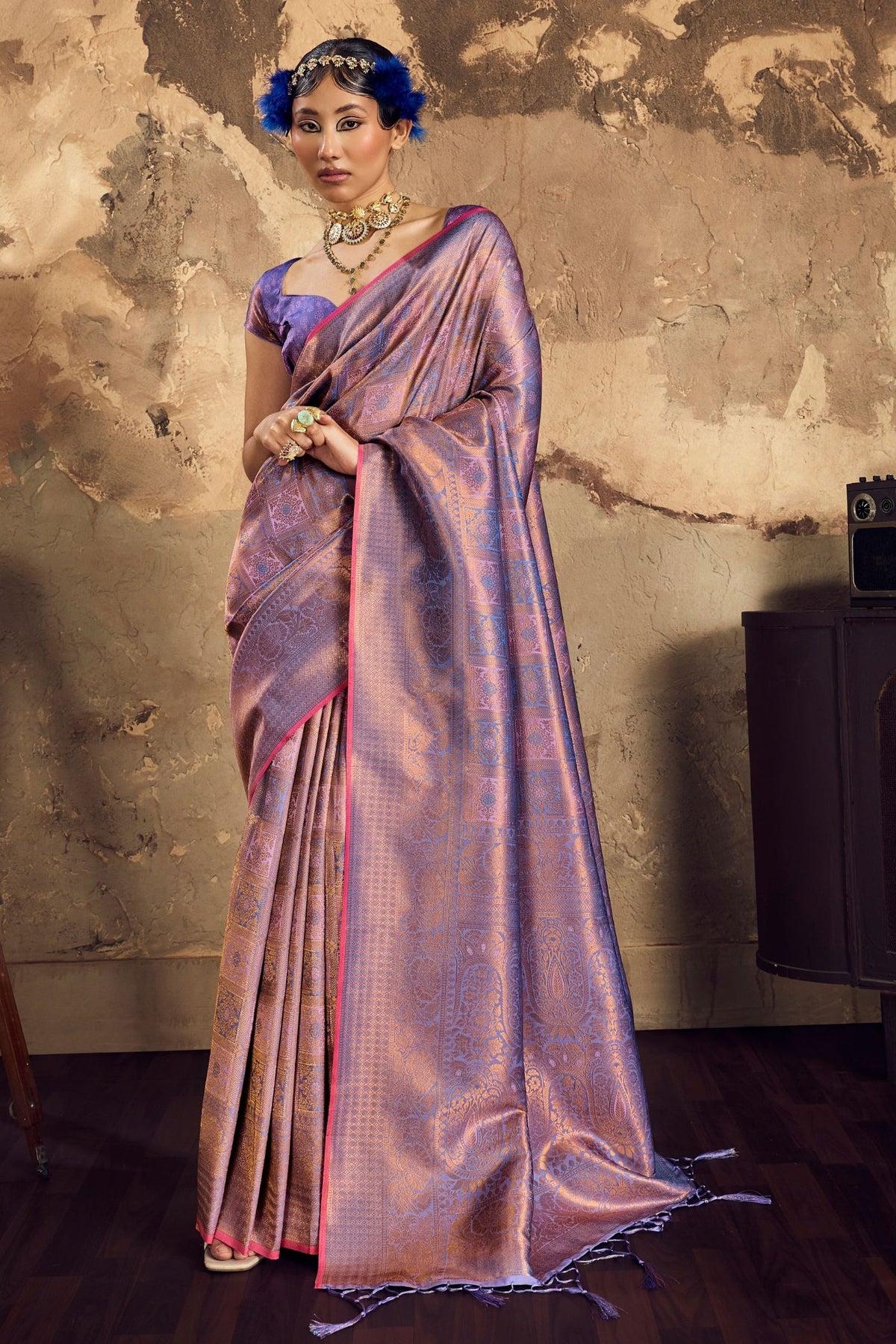
The interlocking is called korvai (or kora). The weaver joins the body and the contrasting border with an interlocking weft so that the two colours meet in a zig-zag, almost toothed line. Turn the saree over: on a genuine korvai join, you can see the two colours interlock on both sides. If the border is simply stitched or printed onto the body, the join will look like a flat seam.
Five checks before you pay
- Silk Mark: The Silk Mark Organisation of India (set up under the Central Silk Board) issues a hologram label for pure silk. It certifies the silk content, not the Kanchipuram origin, so treat it as one check rather than the only one.
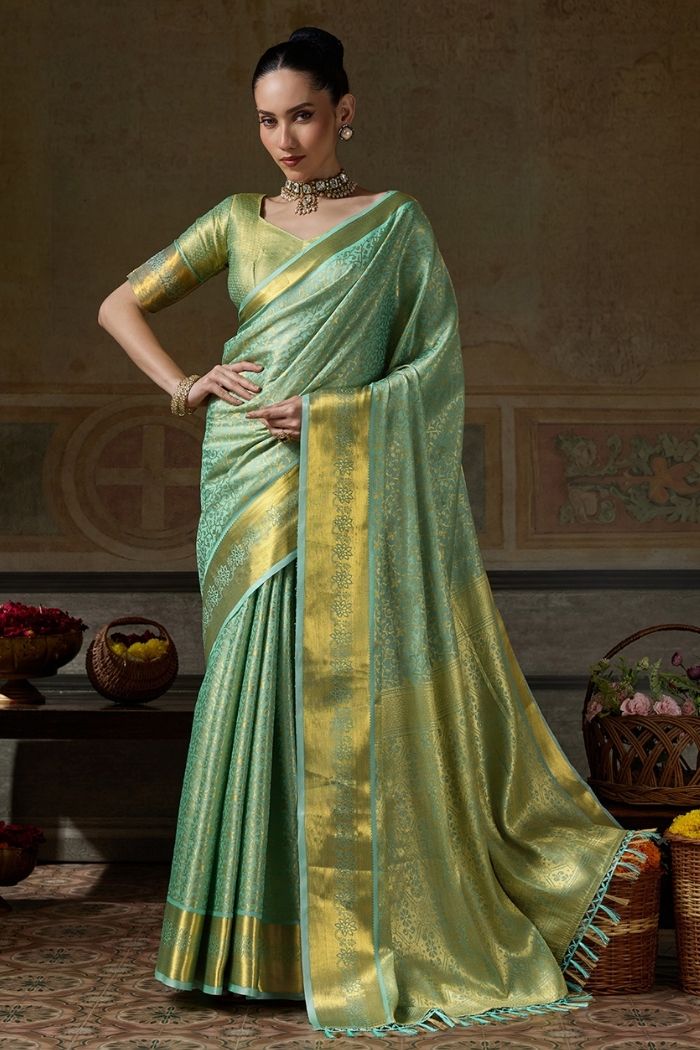
- Zari: Traditional Kanchipuram zari is silk thread wound with metallic silver, often gold-plated. Real zari is slightly stiff, has a warm metallic tone and does not peel. Cheap imitations are polyester with a metallic coating and look flat and glaring.
- Weight and drape: A bridal Kanjivaram with heavy zari is substantially heavier than a plain soft silk. Ask the seller for the stated weight and compare it across listings.
- Pallu join: The pallu is often woven separately and joined to the body; a clean, well-matched join is normal and a sign of handloom work.
- Burn test (a fibre check, not a purity guarantee): Pure silk thread pulled from the fall edge smells of burnt hair and crumbles to ash; synthetics melt into a bead. Do this only on a loose thread, never on the saree.
Buying online in the USA: what to compare
| What to check | Good sign | Red flag |
|---|---|---|
| Fibre claim | "Pure silk", Silk Mark mentioned, fibre and weave named | "Silk blend" or "art silk" in small print, vague "silk-like" |
| Weave detail | Korvai border, handloom, weaver cluster mentioned | "Kanjivaram-style", machine-made, print references |
| Pricing | Shown in USD with a clear total at checkout | Rupee price only, surprise fees later |
| Shipping | Tracked shipping, stated delivery window | No timelines, no tracking |
| Photos | Close-ups of border join, zari and reverse side | One styled shot, stock images |
Why heavy zari and weight matter to US buyers
Kanjivaram sarees are woven on handlooms, often by weaver families working in clusters around Kanchipuram, and a single bridal piece can take days of loom time. That labour is why a genuine heavy-zari Kanjivaram is priced differently from a power-loom imitation. When you compare listings, ask for the weave type, whether it is a single-weaver or cluster product, and whether the zari is stated as silver-based or gold-plated, so you compare like with like rather than just the headline price.
Shipping, currency and duties
At MySilkLove, international orders are served through our global store, where prices display in your local currency, so US buyers see dollars rather than doing rupee conversions. Shipping is free worldwide. Import duties and taxes depend on the rules in force at the time of delivery and on the declared value, so check the current US customs guidance for textile imports before a large order. Our silk sarees for the USA page explains how ordering and delivery work for US customers.
Which silk saree for which occasion?
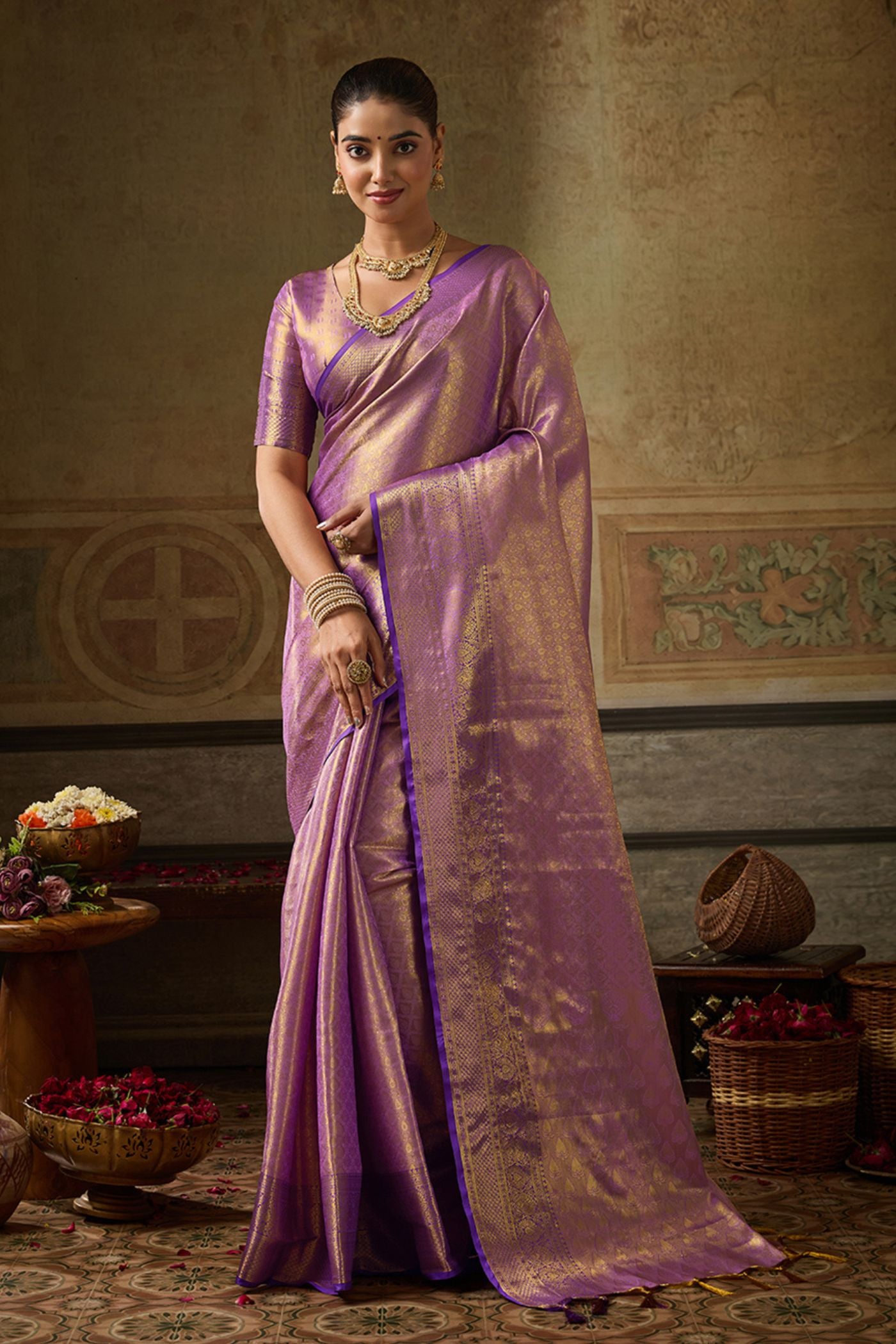
For a wedding or a major ceremony, a Kanjivaram with a rich korvai border and heavier zari is the classic choice; browse our Kanjivaram collection and the Wedding Edit for bridal options. If you want a different weave for the same occasion, compare it with a Banarasi (brocade, floral and jaal patterns) or a Paithani (peacock and lotus motifs, a Maharashtrian weave). For a lighter, festive look, organza sarees are easier to carry through a long evening.
Planning around a US wedding season or a festival? Allow time for production, dispatch and transit, and order well ahead of the date you need the saree.
How to keep it looking authentic after it arrives
Store the saree in a muslin or cotton cloth rather than plastic, refold it along new lines every few months so the zari does not crack along one crease, and dry-clean only. Avoid perfume or hairspray near the zari, which can tarnish silver-based thread over time.

FAQ
How can I tell a real Kanjivaram from a fake online?
Look for the korvai border join visible on both sides, real metallic zari, a pure-silk claim backed by a Silk Mark, and close-up photos. Be cautious of "Kanjivaram-style" wording and unusually low prices for a heavy zari saree.
Does the Silk Mark prove a saree is from Kanchipuram?
No. It certifies that the fibre is pure silk. Origin is established by the weaver source and the GI-tagged Kanchipuram weave, so ask the seller where it was woven.
Can I see prices in US dollars?
Yes. Prices display in local currency on the MySilkLove global store, and shipping is free worldwide.
Will I pay customs on a saree shipped to the USA?
Possibly. Duties and taxes depend on current US rules and the declared value, so check official customs guidance before ordering.

%20border%20join,%20zari%20that%20is%20genuinely%20metallic%20r...)
Leave a comment
This site is protected by hCaptcha and the hCaptcha Privacy Policy and Terms of Service apply.