
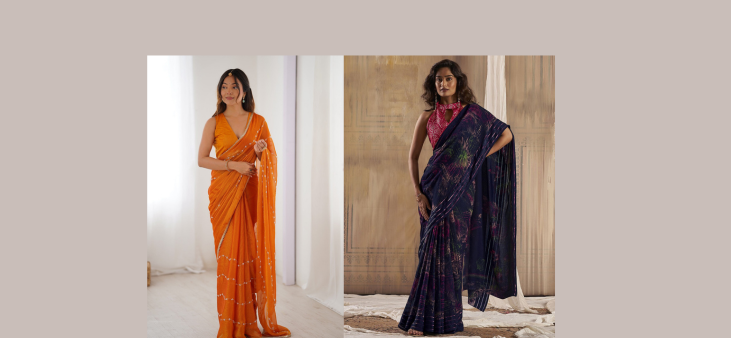
How the Chiffon Saree Conquered India: From a Maharani's Paris Trunk to Sridevi's Swiss Alps
The chiffon saree is not Indian by birth — it arrived from France in the 1920s, carried home by Indian queens who fell for its weightless drape, and it became a national obsession only after Bollywood put it on the snowy meadows of Switzerland. In other words: a French fabric, an Indian royal, and a film director turned chiffon into one of the most romantic things a woman can wear. Here is exactly how that happened.

The Fabric That Travelled the Wrong Way
Almost every famous Indian textile travelled out — Banarasi brocade to Mughal courts, Kanjivaram silk down trade routes, Bengal muslin to Europe. Chiffon is the rare one that travelled in. The word itself is French (chiffe, meaning a rag or scrap of cloth), and in 1920s Paris it was an evening-wear and scarf fabric, not saree material at all.
What makes chiffon feel the way it does is the yarn. It is woven from highly twisted (crepe-twisted) filaments in both warp and weft, and those twists pull against each other so the cloth has a slight puckered stretch and that signature floating fall. That is also why a real silk chiffon saree weighs almost nothing — a 5.5-metre drape can come in well under 400 grams — and why it slips off the shoulder if you do not pin the pleats. Anyone who has actually worn one to a long evening function knows the truth: chiffon looks effortless and is secretly high-maintenance.

The Maharanis Who Smuggled Glamour Home
The chiffon saree story in India begins not with a designer but with royalty. Indira Devi, the Maharani of Cooch Behar, is widely credited as the first Indian woman to commission chiffon sarees abroad — she discovered the fabric in France and had French houses make sheer, pastel sarees to her order in the early 20th century. She paired them with strings of pearls and a famously rebellious sense of style, and the rest of India's princely women noticed.
Then came the legend of the Maharani of Indore. The Holkar royals married in 1924 and spent the late 1920s and '30s as fixtures of the international jet set — and the Maharani is said to have owned close to a thousand French chiffon sarees, each reportedly with its own matching shoes and bag. A French mill is even said to have produced sarees specifically for her household. Whether the count is exact or has grown in the retelling, the point stands: chiffon entered India as a status symbol of the ultra-elite, decades before it became a high-street staple.

Bollywood Turned a Royal Whim Into a National Romance
For thirty years chiffon stayed aristocratic. What democratised it was the cinema screen — and one director above all.
Yash Chopra built an entire visual language around the chiffon saree. "Women are beautiful and it is my duty to present them beautifully," he once said, and he kept that promise by draping his heroines in flowing pastel chiffon and setting them against the green valleys and snow of Switzerland. The turning point was Sridevi's yellow chiffon saree in Chandni (1989), especially in the song Mere Haathon Mein and the film's dreamy mountain sequences. That single look launched a nationwide trend — brides, college students and aunties alike wanted "that Chandni saree."

Here is a position I will happily defend: the chiffon saree, not any handloom silk, is Bollywood's single most influential contribution to Indian fashion. A Kanjivaram is admired; a chiffon saree was copied, instantly, by millions. Chopra's obsession with Switzerland ran so deep that in 2011 the town of Interlaken made him an honorary ambassador and Jungfrau Railways named a train after him — a film director memorialised by a country, largely because of women in floating sarees.

Why It Still Works Today (and What to Buy)
The reason chiffon never went out of fashion is simple physics: it is the most flattering fabric for movement. It does not add bulk, it catches light softly rather than reflecting it harshly, and it photographs beautifully — which is exactly why it survived the jump from celluloid to Instagram reels. For a summer reception or an evening sangeet in a warm Indian hall, a chiffon drape will out-perform a heavy silk every single time.
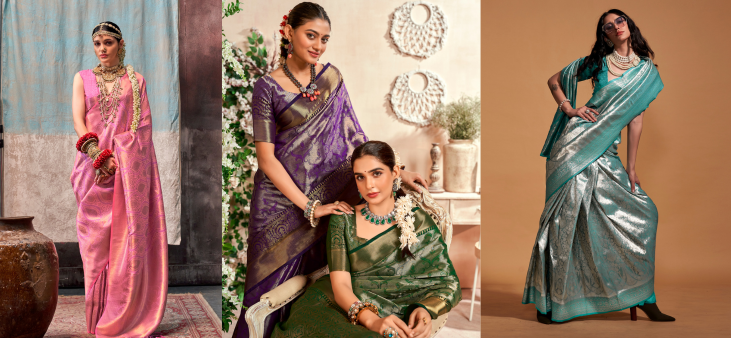
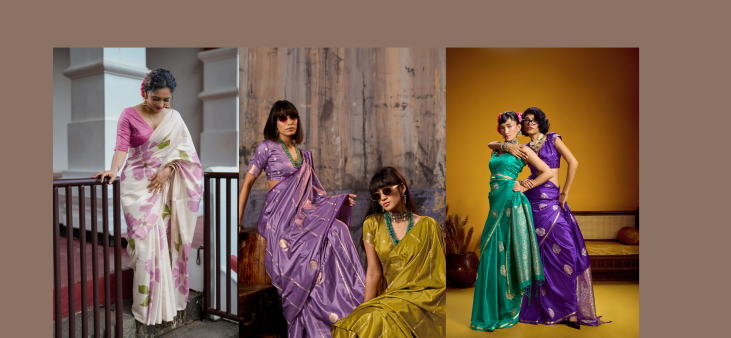
If you want the Chopra-heroine effect, stay in his palette — soft, romantic, slightly washed-out colours rather than hard primaries. A piece like the Spanish Pink Chiffon Partywear Saree sits squarely in that pastel-romance tradition, while the Han Purple Chiffon Partywear Saree updates it with a deeper, more contemporary jewel tone. For something with a little more body that still moves like chiffon, a woven georgette such as the French Rose Pink Woven Georgette Saree is a smart middle ground.
One practical tip from handling these sarees: chiffon and pure-silk chiffon need to breathe. Never store them folded tightly in plastic — roll them in soft muslin instead, the same way the old royal wardrobes did. If you want the full picture on draping these lightweight fabrics so the pleats actually stay put, our how-to-drape-a-saree guide walks through the pinning technique step by step.

Frequently Asked Questions
Is the chiffon saree originally Indian?
No. Chiffon is a French fabric — the name comes from the French word for cloth or rag — and it was first developed for European evening wear. It became a saree in India only in the early 20th century, when royal women like the Maharani of Cooch Behar commissioned chiffon sarees from France and brought the trend home.
Why is the chiffon saree linked to Yash Chopra and Switzerland?
Director Yash Chopra repeatedly filmed his heroines in flowing pastel chiffon sarees against the Swiss Alps, beginning with films like Silsila and peaking with Sridevi in Chandni (1989). The pairing was so iconic that Switzerland made him an honorary ambassador of Interlaken in 2011.
Is a chiffon saree good for everyday or formal wear?
Chiffon is best for evening and festive occasions — receptions, sangeets, parties — because it is lightweight, drapes elegantly, and keeps you cool in warm halls. It is more delicate than cotton or heavy silk, so it is less suited to long, rough daily wear, but it is unbeatable when you want graceful movement.
Shop the Chiffon Saree collection at MySilkLove →
Shop the Chopra Palette
The chiffon collection itself is linked just above — what is harder to find is the colour story this article is really about. Sridevi's Chandni saree was yellow, and the yellow saree edit is where that shade sits. The Han Purple piece above belongs to the purple sarees collection, and the soft Spanish-pink and French-rose tones that define the Chopra heroine run right through pink sarees. And because chiffon comes alive at evening functions rather than daytime ones, the reception saree edit — tag-built and inventory-gated, so what it shows is what the warehouse currently holds — is the occasion shelf to pair them with.

Leave a comment
This site is protected by hCaptcha and the hCaptcha Privacy Policy and Terms of Service apply.