
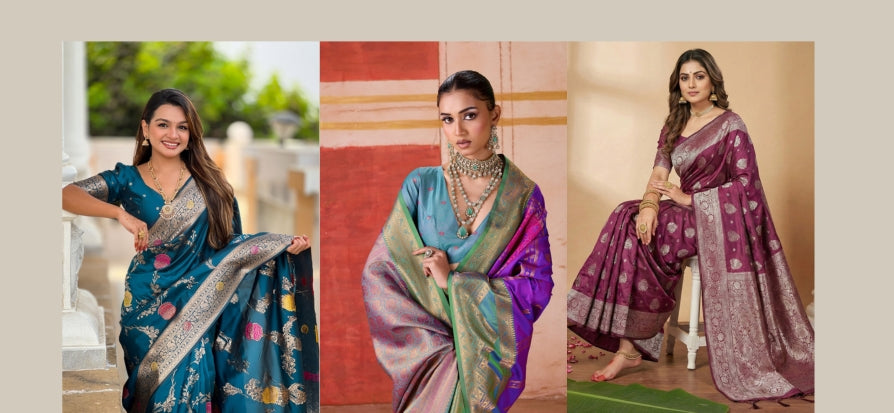
Buying a Saree from India for an NRI Wedding: Authenticity Checks + Shipping & Customs (2026)
Buying a silk saree from India for an NRI wedding is straightforward once you know two things: how to verify the saree is genuine handloom before you pay, and how international shipping and customs actually work. For weddings in the USA, UK, UAE, Australia, Singapore and Canada, a real handloom Kanjivaram or Banarasi will ship worldwide, clear customs in days, and arrive with the weave certification you need to know it's authentic. This guide walks through both halves so your bridal saree budget goes into the silk, not into avoidable mistakes.

First, verify authenticity before you pay
The single biggest risk when ordering from India isn't shipping — it's paying handloom prices for a power-loom or art-silk imitation. Three checks separate the real thing from the fake, and you can ask any reputable seller to confirm all three in writing before you check out.
1. The Silk Mark. Genuine mulberry silk sarees carry the Silk Mark — a hologram tag issued by the Silk Mark Organisation of India, a body under the Central Silk Board. It certifies the saree is 100% natural silk, not a blended or synthetic substitute. If a saree is sold as pure silk, ask whether it carries the Silk Mark. Note that many beautiful sarees are honestly described as silk blends; that's fine for a wedding guest look, but for a bridal Kanjivaram you typically want certified pure silk.
2. The weave signature. Authentic Kanjivaram (Kanchipuram) silk is woven in the Kanchipuram cluster of Tamil Nadu, and the giveaway is the korvai border — the body and the contrast border are woven on separate sets of warp threads and physically interlocked by two weavers working in tandem, so the border can't be pulled away as a single seam. A genuine Banarasi from the Varanasi weaver clusters carries dense brocade zari with a soft, slightly raised hand, and the reverse shows floating threads between motifs rather than a clean machine-printed back. Ask the seller which cluster the saree comes from.
3. The zari and the burn test logic. Traditional zari is silver thread electroplated with gold, wound on a silk or cotton core; modern "tested zari" is more affordable but should be disclosed. You can't burn-test a saree you're buying online, but a trustworthy seller will tell you the zari composition and GSM/weight, and genuine silk burns to a fine ash that smells of burnt hair — never a hard plastic bead. Reputable stores publish these details on the product page.

How international shipping and customs work for sarees
For most NRI destinations, a saree is a low-risk, low-duty textile import. International orders on MySilkLove are served through the global store, where prices display in your local currency and worldwide shipping is free, so the figure you see at checkout is the figure you pay. Here's what to expect by country.
| Country | Currency shown | Typical delivery | Customs / duty note |
|---|---|---|---|
| USA | USD ($) | ~5–8 business days | Personal-use textiles usually clear with minimal or no duty under de-minimis thresholds |
| UK | GBP (£) | ~5–7 business days | VAT may apply on higher-value parcels; courier collects it on delivery |
| UAE | AED (د.إ) | ~4–6 business days | Low duty on personal apparel; fast Dubai/Abu Dhabi/Sharjah clearance |
| Australia | AUD ($) | ~6–9 business days | GST may apply above the low-value threshold; collected at import |
| Singapore | SGD ($) | ~4–6 business days | GST may apply on the parcel value; generally minimal for a single saree |
Two practical tips. First, order your bridal saree early — at least three to four weeks before the function — so you have room for a blouse stitch and any customs hold. Second, keep the invoice handy; couriers occasionally ask the recipient to confirm the declared value before releasing a parcel, and an accurate invoice means no delay. Duty and tax rules change, so treat the table as guidance and check your country's current threshold for the exact figure.

What an NRI wedding saree actually costs
Because UK and Australian average order values run several times higher than India's, NRI buyers often shop the bridal tiers rather than everyday silks. Here's how the budget tiers map for a wedding purchase.
| Tier | What you get | Best for |
|---|---|---|
| Entry silk | Soft-silk and silk-blend sarees, lighter zari, festive sheen | Sangeet, mehndi, guest looks |
| Mid handloom | Genuine Kanjivaram/Banarasi with tested zari, certified silk | Reception, family functions |
| Bridal heirloom | Heavy pure-silk korvai Kanjivaram or dense Banarasi brocade, real-zari work | The wedding day itself |
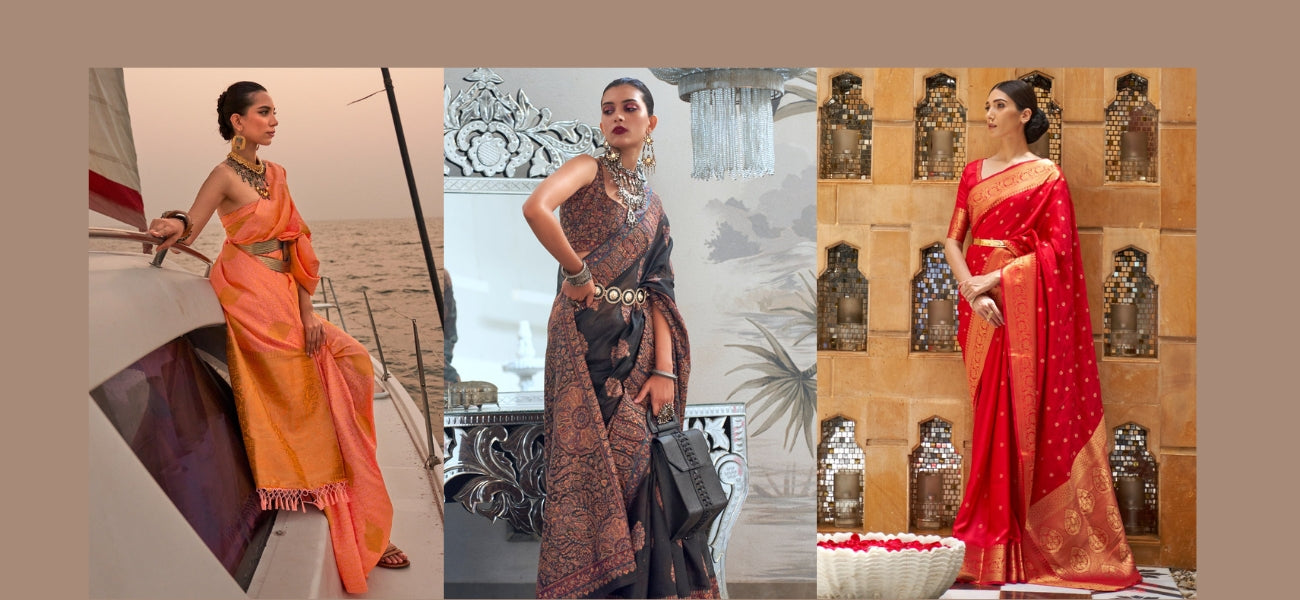
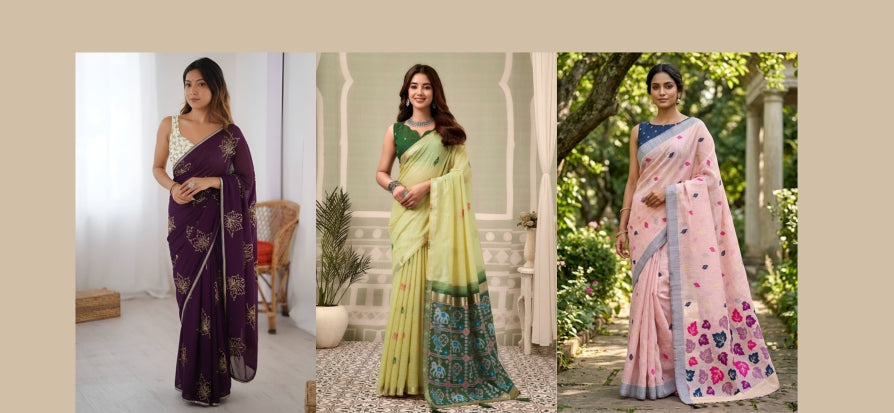
Start with the Wedding Edit for bridal-weight pieces, then narrow by weave: the Kanjivaram silk collection for South Indian temple-border grandeur, or the Banarasi silk collection for North Indian brocade. For lighter sangeet and reception looks, the Paithani and Organza collections work beautifully.
Order from your country's landing page
Shopping from the page built for your market keeps currency, shipping and delivery estimates accurate: USA, UK, UAE, Australia, and Singapore.

FAQ
Will I pay customs duty on a saree shipped to my country?
For a single personal-use saree, duty is usually minimal or zero in the USA and UAE, while the UK, Australia and Singapore may apply VAT/GST above their low-value thresholds, collected by the courier at delivery. Worldwide shipping is free, so only any local tax is extra.
How do I know the silk is real before I pay?
Ask the seller to confirm three things: the Silk Mark certification for pure-silk pieces, the weaver cluster (Kanchipuram for Kanjivaram, Varanasi for Banarasi), and the zari composition. A genuine Kanjivaram also has an interlocked korvai border that can't be pulled apart as a seam.
How early should I order a bridal saree for a wedding abroad?
Three to four weeks ahead. That covers shipping, any customs hold, and time to get the blouse stitched to fit before the function.
Can I see prices in my own currency?
Yes. The global store displays prices in USD, GBP, AED, AUD, SGD and other local currencies, so the checkout figure is what you actually pay — no surprise conversion at the end.

Shop your wedding saree in your own currency
Ready to choose? Shop the global store, where prices show in USD, GBP, AED, AUD and SGD with free worldwide shipping. For bridal-day grandeur, browse our pure Kanjivaram silk sarees with their korvai temple borders, or the dense brocade of our Banarasi silk sarees. To see every bridal-weight piece in one place, explore the Wedding Edit — sortable by price to match your budget and your function.

Leave a comment
This site is protected by hCaptcha and the hCaptcha Privacy Policy and Terms of Service apply.